




OSHA Revises Recordkeeping Rules
The U.S. Occupational Safety and Health Administration has issued revised recordkeeping rules it says will simplify and improve the system employers us
The U.S. Occupational Safety and Health Administration has issued revised recordkeeping rules it says will simplify and improve the system employers use
to track and record workplace injuries and illnesses.
Among other things, motor carriers and other employers will no longer be required to immediately report fatalities resulting from motor vehicle accidents on public highways or streets, unless the accident occurred in a highway construction zone. They will, however, still have to include the accident on accident logs.
The changes are effective Jan. 1, 2002, in order to give employers ample time to revise their systems and learn new requirements. As before, companies with 10 or fewer employees are exempt from most requirements.
Here are the highlights of the changes:
Three recordkeeping forms are updated: Form 300, Log of Work-Related Injuries and Illnesses; Form 301, Injury and Illness Incident Report; and Form 300A, Summary of Work-Related Injuries and Illnesses.
One set of criteria will be used for recording work-related injuries and work-related illnesses.
The criteria for recording musculoskeletal disorders, covered under OSHA's new ergonomics standards, will be the same as that for all other injuries and illnesses. Employers retain flexibility to determine whether an event or exposure in the work environment caused or contributed to the MSD. Forms include columns dedicated to MSD cases.
New definitions of medical treatment, first aid and restricted work intended to simplify recording decisions.
The rules now require a "significant" degree of aggravation before a preexisting injury or illness becomes recordable.
Additional exemptions to the definition of work-relationship intended to limit recording of cases involving the eating and drinking of food and beverages, common colds and flu, blood donations, exercise programs, mental illnesses, etc.
Changes clarify the recording of "light duty" or restricted work cases. Employers are required to record cases when the injured or ill employee is restricted from their "normal duties," which are defined as work activities the employee regularly performs at least once weekly.
A new column on Form 300 is added to capture statistics on hearing loss. Employers are required to record adverse changes in employees' hearing.
The term "lost workdays" is eliminated. The new recording rules instead focus on days away or days restricted or transferred. New counting rules rely on calendar days instead of workdays.
A requirement that employers establish a procedure for employees to report injuries and illnesses. Employers are prohibited from discriminating against employees who do report. Employee representatives will have access to portions of reporting forms that are relevant to the employees they represent.
Annual summaries must be posted for three months instead of one, and the summary must be certified by a company executive.
Several new provisions are designed to protect employee privacy. Employers are prohibited from entering an individual's name on reporting forms for certain types of illnesses or injuries such as HIV infections, mental illness and sexual assaults. Employers can elect not to describe the nature of sensitive injures where the employee’s identity would be known. Employee representatives would have access only to reporting information that contains no personal identifiers. Employers will be required to remove employees' names before providing information to persons that don't have access rights under the regulations.
A discussion of all changes as well as the new rules are contained in a 220-page document published in the Jan. 19 Federal Register, which can be accessed at accessed at www.nara.gov/fedreg. The new rules and other information can also be found on OSHA's website at www.osha.gov.
More Drivers
Platform Science Adds Dispatch and Safety Tools
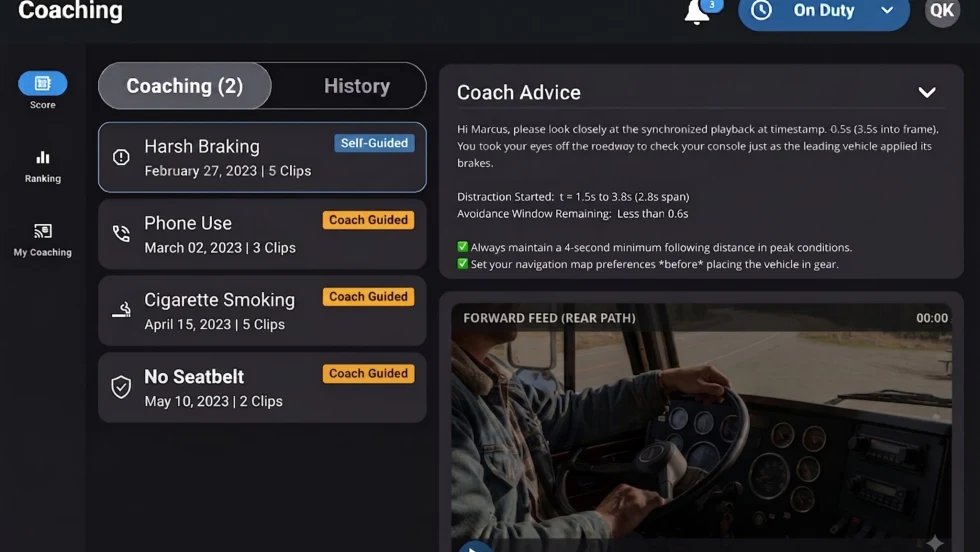
Four additions to PS Fleet help fleets monitor loads, manage driver coaching, share truck locations and adjust video system settings.
Read More →
When Language Stops the Truck: The Return of ELP Out-of-Service Orders
English language proficiency rules for commercial drivers aren’t new, but renewed out-of-service enforcement has raised the stakes. Here’s what carriers need to know before a driver reaches a roadside inspection.
Read More →
Samsara Launches Custom AI Agent Builder
Agent Studio lets fleets create AI tools for hours-of-service monitoring, reporting and driver support, including agents that communicate by phone.
Read More →
Trucker Path Expands Reserved Parking Network
Trucker Path has added close to 6,000 more truck parking spaces to its Trucker Path Reserved Parking Network with the addition of Safe Truck Parking.
Read More →
EEOC Sues Texas Trucking Company Over Driver Age Limits
The agency says Trancasa USA rejected applicants over 65 and applied tougher driving-record standards to those over 60.
Read More →
Nussbaum, Roehl Announce Second Driver Pay Increase This Year
This year has seen a swath of major truck driver pay increases as freight capacity has tightened.
Read More →
From One Generation to the Next: How Mentorship Builds Safer Truck Drivers
After three decades in trucking, Harold Perry shares what he's learned about driver safety, mentorship, and helping the next generation build confidence behind the wheel.
Read More →
Truck Drivers Need More Than Another Alert
Fleets have more visibility into truck health, safety events, and driver activity than ever. The next challenge is turning all that information into useful guidance for the person who has to decide what to do next.
Read More →
FMCSA Removes 110 Truck Driver Training Schools from Certified ELDT List
Federal regulators also are targeting more than 160 additional training providers and launching a nationwide audit of third-party CDL skills testers as part of a broader crackdown on trucking fraud.
Read More →
Hours of Service Pilot Programs: FMCSA Readies for 2027 Rollout
Two pilot programs could eventually reshape hours-of-service rules, giving truck drivers options to pause their 14-hour clock or use longer split sleeper rest periods.
Read More →