




OSHA Issues Long-Awaited Ergonomics Proposal
The Occupational Health and Safety Administration has issued a proposal for a long-awaited requirement that truckers and other companies establish comprehensive programs to protect workers from injuries
The Occupational Health and Safety Administration has issued a proposal for a long-awaited requirement that truckers and other companies establish comprehensive programs to protect workers from injuries.
The ergonomics rules target injuries attributed to repetitive motion, lifting objects or other work-related activities. OSHA says the rules are needed to reduce “musculoskeletal disorders” such as tendinitis, carpal tunnel syndrome and strained back.
Costs and benefits of the rules are in hot dispute. OSHA says these injuries cost employers up to $20 billion a year in workmen’s’ compensation and as much as $60 billion overall. It says the rule will cost employers $4.2 billion a year to implement.
Business interests, including American Trucking Assns., say the rules are unscientific and impossible to enforce, and would cost more than they would save. According to ATA, they would cost trucking $6.5 billion a year.
A recent study by the Small Business Administration found that OSHA’s estimate is much too low – from 2.5 to 15 times too low. And OSHA’s estimate of the benefits may be significantly overstated, SBA said.
Business has fought long and hard to keep OSHA from issuing this proposal. Earlier this year, the House passed a measure that would block the rules until the National Academy of Sciences completes a study that is due in 2001, but that plan did not survive the legislative process.
Now OSHA is looking for comments on the proposal, and expects to issue a final rule next year.
Here are the key points:
* The rules apply to manual handling jobs of the type that are common in trucking – moving freight across a dock, or delivering packages.
* The rules also apply whenever an employee reports a musculoskeletal disorder.
* A complete program includes six elements: management leadership and employee participation; hazard information and reporting; hazard analysis and control; training; musculoskeletal disorder management; and evaluation.
* All companies have to implement two elements – management leadership and employee participation, and hazard information and reporting – even if they have no disorders.
* If an employee reports a disorder, the other elements have to be implemented.
* A company can keep a program it already has, provided the program is acceptable to OSHA.
* Companies generally have to keep records for at least three years.
For more information, visit the OSHA web site at www.osha.gov. Or send comments by February 1, 2000, to the OSHA Docket Office, Docket No. S-777, U.S. Department of Labor, 200 Constitution Avenue, N.W., Room N-2625, Washington, DC 20210 (202 693-2350).
More Drivers

Competition Heating Up for Truck Drivers
New report reveals rising driver hiring costs, the return of sign-on bonuses, growing AI advantages, and the operational factors shaping driver retention.
Read More →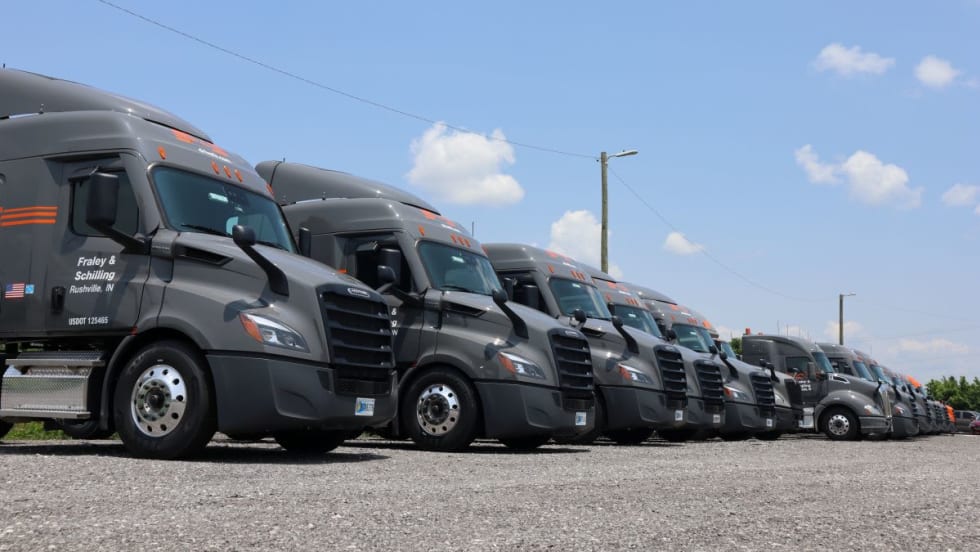
How Fraley & Schilling Improved Logbook Compliance by Over 50%
Fraley & Schilling needed a way to close a compliance workflow gap in its ELD system without adding more work from driver training, reminders, and back-office follow-ups. It found the answer in a custom driver app.
Read More →
Volvo Goes Gaming
Volvo has roared into American Truck Simulator with two new flagship trucks.
Read More →
What the Best Fleets to Drive For Teach About Driver Retention
Survey fatigue, AI-powered routing, owner-operator expectations, and the decline of social media all emerged as themes from this year's Best Fleets to Drive For program.
Read More →
Driver Retention Lessons From the Best Fleets to Drive For
What separates trucking's best workplaces from the rest? Jane Jazrawy shares the biggest lessons from this year's Best Fleets to Drive For program on driver retention, communication, AI, and workforce trends on the HDT Talks Trucking podcast.
Read More →
Farewell, CDL: Why I'm Giving Up My Commercial Driver's License
After more than 20 years as a CDL holder, HDT Executive Editor Jack Roberts is letting his commercial license expire. Not because he wants to — but because trucking's nuclear verdict crisis has made the risks of public-road test drives too great for editors, manufacturers, and everyone involved.
Read More →
How Top Trucking Fleets Improve Driver Retention [Video]
What do healthy snacks, optimized routing, and just picking up the phone have in common? They're all strategies the Best Fleets to Drive For are using to retain truck drivers.
Read More →
Trucker Path Adds Verisk CargoNet Theft Data to Navigation Platform
Trucker Path’s new cargo theft risk overlays give drivers and fleets visibility into high-risk areas, stolen commodity trends, and theft hotspots.
Read More →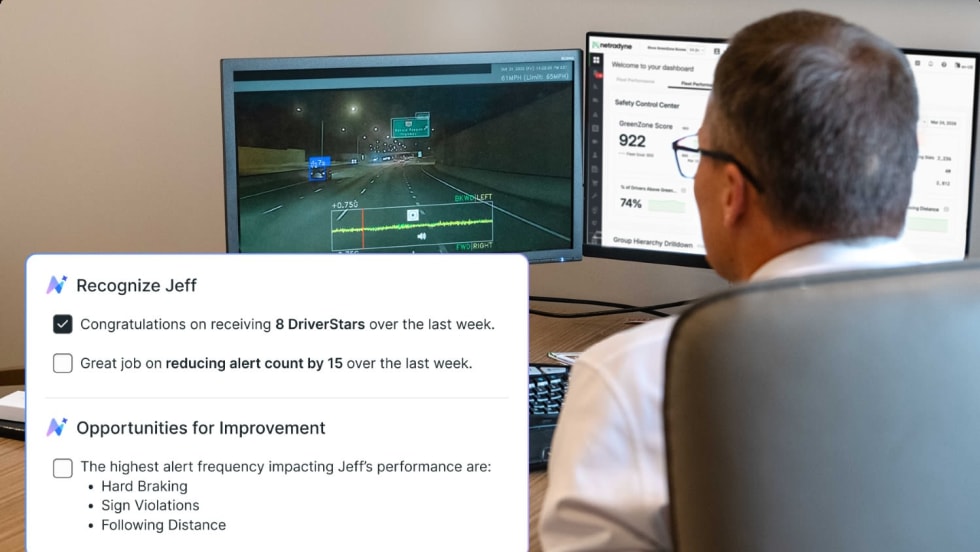
Netradyne Intelligence Uses New AI Agents to Automate Response to In-Cab Camera Data
The company called the next-generation in-cab camera safety platform "a fundamental shift from systems that report on what happened to systems that actively drive what should happen next."
Read More →
Why Truck Detention Keeps Costing Fleets Time and Money
A 2024 ATRI study found detention affects nearly 40% of truckload stops and costs the industry more than $15 billion annually. Despite the toll on drivers, fleets, and supply chains, the problem remains stubbornly persistent.
Read More →