




OSHA: Access to Self-Audits Necessary for Enforcement
The Occupational Safety and Health Administration says it has a right to see a company’s voluntary self-audit results and will exercise that right when necessary
The Occupational Safety and Health Administration says it has a right to see a company’s voluntary self-audit results and will exercise that right when necessary.
Last year the agency raised concerns when it issued a proposed policy stating it would not routinely request the reports at the beginning of inspections, but may ask to see the data in certain situations. It also said that the self-audits would be treated as “good faith” compliance, not willful violation, if sufficient corrective action was taken. OSHA requested public comment on the policy, although it emphasized that notice and comment rulemaking procedures were not necessary in this case.
The final policy, issued Monday, does have some minor changes -- for instance, “competent” employees and management, not just safety and health professionals, can conduct an “objective”self-audit. And the agency has promised that its inspectors “will receive instructions in order to ensure the consistent and appropriate applications of the policy.” But it held tight to the basic policy.
OSHA flatly refused requests by many employers and industry groups to declare voluntary self-audits off limits to government inspectors. There are legitimate circumstances in which voluntary self-audit data is important to enforcement of the Occupational Safety and Health Act, it argued. For example, if an inspector has already identified a hazard, the self-audit information may help determine the scope of the hazard and possible corrective action. Moreover, OSHA argued, it has the obligation to demonstrate that an employer had knowledge of a cited hazardous condition and the obligation to demonstrate that the employer was “so indifferent” to safety hazards that more significant penalties are justified.
Many employers suggested that OSHA inspectors shouldn’t issue citations for violations already identified in a self-audit if the company is in the process of correcting the problem. But OSHA said that such a policy might in fact diminish an employer’s incentive to promptly and completely eliminate workplace hazards.
OSHA also refused requests for more specific details as to what situations might trigger a request of self-audit data. Given the diversity of situations inspectors encounter, such specificity “would not be feasible,” the agency argued. Moreover, it said that inspectors must have some discretion in implementing the policy and specific examples could, in fact, be interpreted as mandates.
So here’s what employers can expect:
* OSHA will not routinely request self-audit reports, but may do so if there is basis to believe that a specific safety or health hazard exists.
* Citations will not be issued for violations discovered through self audits (even if they occurred within the 6 month inspection window ) if the employer can show that it corrected the hazardous condition and has taken steps to prevent recurrence.
* Voluntary self-audit won’t be used as evidence of willfulness if an employer is responding in good faith to a hazardous condition discovered through a self-audit.
* Voluntary self-audits will be treated as “good faith” efforts to correct and prevent hazards if in fact the employer acted promptly after the self-audit. Good faith efforts can reduce the penalty assessed for violations.
The policy was published in the July 28, 2000, Federal Register which can be accessed at www.nara.gov/fedreg.
More Drivers

Competition Heating Up for Truck Drivers
New report reveals rising driver hiring costs, the return of sign-on bonuses, growing AI advantages, and the operational factors shaping driver retention.
Read More →
How Fraley & Schilling Improved Logbook Compliance by Over 50%
Fraley & Schilling needed a way to close a compliance workflow gap in its ELD system without adding more work from driver training, reminders, and back-office follow-ups. It found the answer in a custom driver app.
Read More →
Volvo Goes Gaming
Volvo has roared into American Truck Simulator with two new flagship trucks.
Read More →
What the Best Fleets to Drive For Teach About Driver Retention
Survey fatigue, AI-powered routing, owner-operator expectations, and the decline of social media all emerged as themes from this year's Best Fleets to Drive For program.
Read More →
Driver Retention Lessons From the Best Fleets to Drive For
What separates trucking's best workplaces from the rest? Jane Jazrawy shares the biggest lessons from this year's Best Fleets to Drive For program on driver retention, communication, AI, and workforce trends on the HDT Talks Trucking podcast.
Read More →
Farewell, CDL: Why I'm Giving Up My Commercial Driver's License
After more than 20 years as a CDL holder, HDT Executive Editor Jack Roberts is letting his commercial license expire. Not because he wants to — but because trucking's nuclear verdict crisis has made the risks of public-road test drives too great for editors, manufacturers, and everyone involved.
Read More →
How Top Trucking Fleets Improve Driver Retention [Video]
What do healthy snacks, optimized routing, and just picking up the phone have in common? They're all strategies the Best Fleets to Drive For are using to retain truck drivers.
Read More →
Trucker Path Adds Verisk CargoNet Theft Data to Navigation Platform
Trucker Path’s new cargo theft risk overlays give drivers and fleets visibility into high-risk areas, stolen commodity trends, and theft hotspots.
Read More →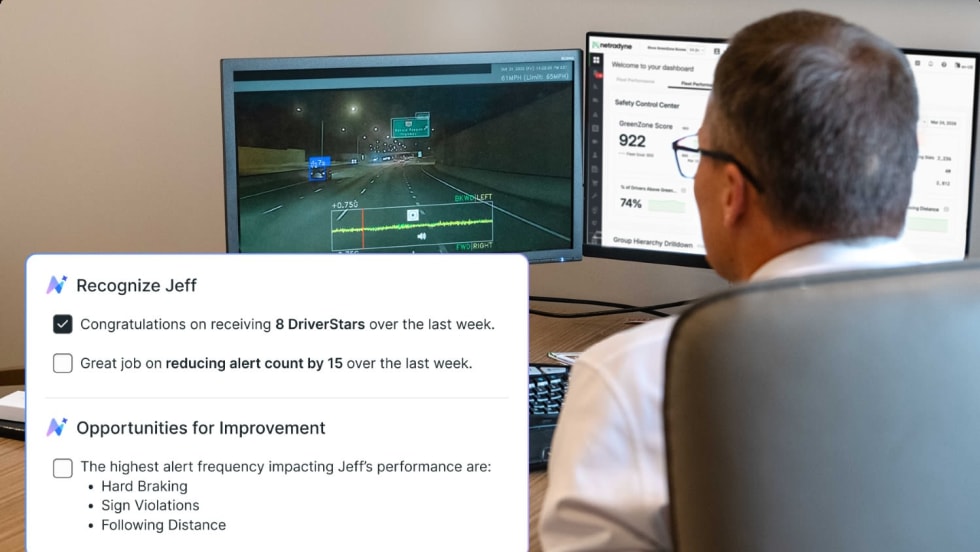
Netradyne Intelligence Uses New AI Agents to Automate Response to In-Cab Camera Data
The company called the next-generation in-cab camera safety platform "a fundamental shift from systems that report on what happened to systems that actively drive what should happen next."
Read More →
Why Truck Detention Keeps Costing Fleets Time and Money
A 2024 ATRI study found detention affects nearly 40% of truckload stops and costs the industry more than $15 billion annually. Despite the toll on drivers, fleets, and supply chains, the problem remains stubbornly persistent.
Read More →