




Orange EV Approved for Calif. Incentives
Orange EV announced that California fleets can save at least $95,000 per truck on the purchase of brand new T-Series pure electric terminal trucks with the extended-duty battery pack.
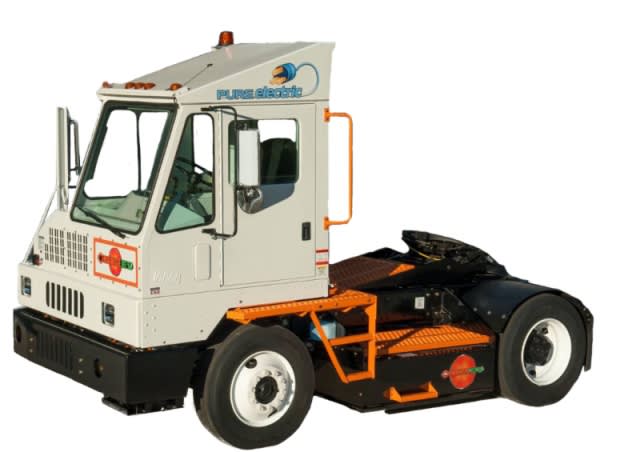
Orange EV Class 8 pure-electric heavy-duty terminal truck. (PHOTO: Orange EV)
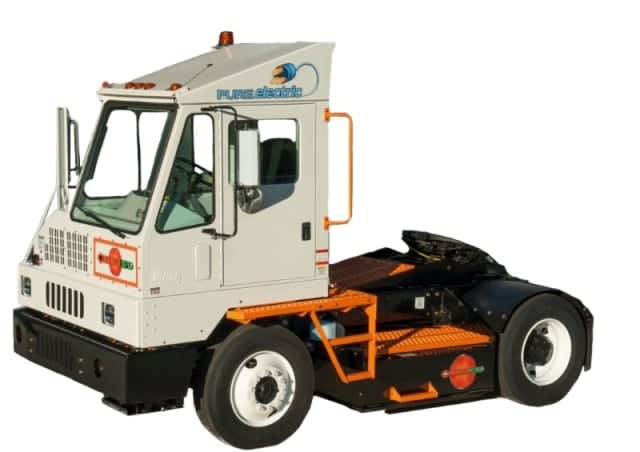
Orange EV Class 8 pure-electric heavy-duty terminal truck. (PHOTO: Orange EV)
Orange EV announced that California fleets can save at least $95,000 per truck on the purchase of brand new T-Series pure electric terminal trucks with the extended-duty battery pack.
Orange EV electric terminal trucks have been operating up to 24-plus hours per charge at sites from single-shifts to 24x7 use in railroad intermodal, LTL freight, manufacturing, retail distribution, waste management, and warehouse container handling. Businesses and organizations with fleets in California can get a preliminary voucher amount of $95,000 per truck, increasable up to $120,000 and stackable with other incentive programs to lower initial purchase price.
Businesses and organizations with fleets in California can get a preliminary voucher amount of $95,000 per truck, increasable up to $120,000 and stackable with other incentive programs to lower initial purchase price.
“California HVIP vouchers dramatically simplify and speed up the process of obtaining funds, thereby accelerating vehicle deployment,” said Mike Saxton, Orange EV chief commercial officer. “Orange EV’s T-series and the corresponding voucher amount are all pre-approved, eliminating uncertainty and enabling fleets to execute deployment plans without having to go out-of-pocket for the additional capital.”
The voucher request including purchase terms & conditions is a total of four pages long; vouchers can be approved within days. Participating fleets commit to operating trucks in California for a minimum of three years, after which they may redeploy vehicles as needed. HVIP funds are paid directly to Orange EV thus directly reducing the capital fleets need to purchase T-Series trucks.
Orange EV has consistently been the first OEM approved, funded and delivering commercially available terminal trucks under incentive programs that can pay more than half of vehicle purchase price. The balance can be financed, further reducing initial cash outlay and helping fleets pay the balance from savings in large expense items like diesel fuel.
Fleets can spend annually on diesel fuel half or more of what they spend to buy the diesel truck in the first place. The penalties companies pay for operating older, dirtier trucks in California further increase the true cost of diesel-powered vehicles. Because fleets can see a reduced total cost of ownership with electric compared to diesel terminal trucks, financing enables them to deploy electric trucks using budgets planned to buy and operate diesel-powered vehicles. Incentives will continue to be an important tool to accelerate initial deployments, but it’s the per truck savings that will drive fleet-wide adoption.
“It makes financial sense to begin deployment now," according to Saxton, "But, if the financial upside of going electric isn’t enough, regulatory mandates have increased the urgency."
Strict mandates like those in California Assembly Bill 32 aim to reduce GHG emissions to 1990 levels by 2020, with another 80 percent reduction below 1990 levels by 2050. Companies adopting now using available incentives are renewing their fleet assets and lowering annual operating costs at a lower capital investment.
To learn more about Orange EV’s pure electric terminal trucks visit www.OrangeEV.com.
More Fuel Smarts

How Volvo Updated Its D13 for EPA 2027 [Watch]
Volvo’s updated D13 promises lower emissions without sacrificing performance or fuel economy. Take a closer look at what changed inside the engine in this HDT Spotlight video.
Read More →
Diesel Price Spike Shortens Payback for Natural Gas Trucks, Report Says
Energy Vision estimates fleets could recover the higher purchase price of an RNG-fueled Class 8 tractor in 1.3 to 2.8 years under current fuel-price scenarios.
Read More →
Calstart Becomes Catalyst Mobility, Reflecting Broader Focus
Calstart is now Catalyst Mobility, reflecting the nonprofit’s growing national role in clean transportation, including zero-emission trucks, infrastructure and incentive programs.
Read More →

Record Diesel Prices Squeeze Trucking Fleets
Average U.S. diesel prices have climbed to nearly $6 a gallon, surpassing the 2022 record as tight refinery capacity and Middle East disruptions keep fuel costs elevated.
Read More →
How Fuel Delivery Shapes Engine Performance
Fuel delivery depends on more than what happens at the injector. For fleet, maintenance and technical professionals, looking at the full path from pump to injector can provide useful context for understanding engine performance.
Read More →
East Coast Port Launches $45M Electric Truck Push
The Port Authority of New York and New Jersey announced millions in incentives for zero-emission drayage trucks, yard tractors, and new charging hubs near the port.
Read More →
California Bill Could Shed Light on Electric Truck Prices
Why do battery-electric Class 8 trucks remain so expensive? A California bill headed to Gov. Gavin Newsom would give fleets and state agencies more visibility into what manufacturers charge.
Read More →
Detroit Opens Orders for EPA 2027 Engines
Detroit isn’t starting from scratch to meet EPA 2027 diesel emissions standards. Its Gen 6 DD13 and DD15 engines keep much of today’s platform while updating the fuel and aftertreatment systems.
Read More →
Zero-Emission Truck Corridor Planned for West Coast
California, Oregon, Washington, British Columbia and Baja California are coordinating plans for truck charging and hydrogen fueling from Canada to Mexico.
Read More →
A Closer Look at Kenworth’s Electric T880E Vocational Truck [Video]
Learn more about Kenworth's T880E battery-electric vocational truck at the Paccar Technical Center, including its range, applications, upfitting considerations, and PTO options, in this HDT Spotlight video.
Read More →