




Related: Port Trucking Group Unveils Plan to Reduce Congestion
Oakland Port Tests Sensors to Measure Wait Times
The Port of Oakland has announced that it is testing sensors to measure how long trucks servicing the port are waiting to enter marine terminals.
by Staff
June 26, 2015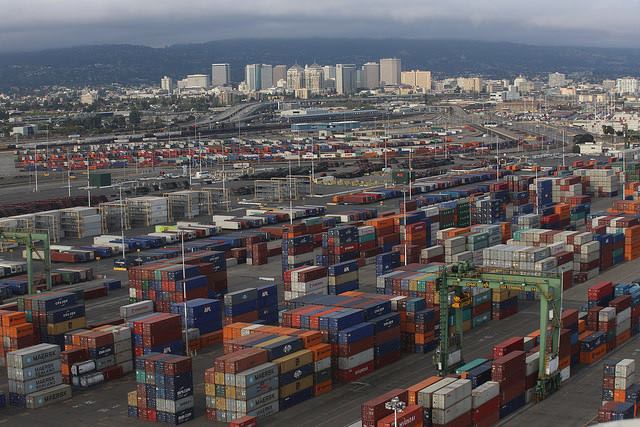
Photo via Port of Oakland
2 min to read
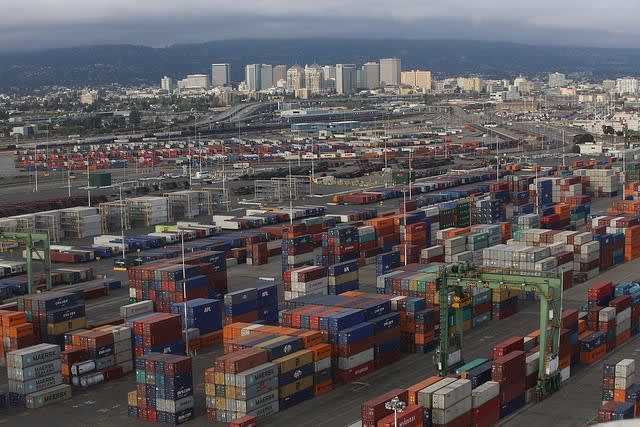
Photo via Port of Oakland
The Port of Oakland has announced that it is testing sensors to measure how long trucks servicing the port are waiting to enter marine terminals.
The Northern California port is installing Bluetooth sensors along thoroughfares in the Outer Harbor area of the Port of Oakland. The sensors will automatically detect anonymous signals emitted from phones or other mobile devices in truck cabs. They will measure the time between the first and last of each signal to calculate wait times.
With wait time information, drivers could avoid peak periods and shippers could collect cargo at less crowded times. The information is then sent to truckers and cargo owners through mobile devices and computers.
“Our customers want to get in and out of the Port with their cargo quickly,” said John Driscoll maritime director at the port. “We think this technology can provide an important component of wait-time metrics to our Port stakeholders.”
The technology is the same type currently used on major freeways to calculate rush-hour commute times. The system will also include cybersecurity measures like network security, access control and audit and accountability to protect critical infrastructure.
The pilot program will last for several months and is one way the port is looking to accelerate cargo movement. The technology will be deployed throughout the port if the test is successful. In the future, the sensors may also be used for turn-time measurement within its terminals.
“This is proven technology for determining travel times and a cost-effective approach for determining port drayage truck wait times,” said Taso Zografos of Leidos Inc., the firm conducting the test. “If the test is successful, then it would be applicable to implement portwide.”
More Fleet Management

Sponsored•September 16, 2026
Color Match Smarter: Tools That Restore & Perform
For fleet managers and collision repair professionals keeping heavy-duty trucks on the road, getting the color right the first time isn't just about appearance — it's about efficiency, turnaround time, and bottom-line results. Discover how today's digital color tools are transforming the repair process from guesswork to precision.
Read More →
FMCSA Pauses Biennial-Update Enforcement Amid Motus Transition
Carriers whose updates were due on or after June 1 have more time, while FMCSA works to stabilize its new registration system and warns of phishing sites impersonating its new carrier registration system, Motus.
Read More →
Sponsored•September 14, 2026
2026 Blueprint for Countering Smarter Supply Chain Theft
Cargo theft is no longer just the cost of doing business. It's a multi-billion-dollar criminal enterprise exploiting vulnerabilities across your fleet, drivers, and supply chain.
Read More →


Sponsored•September 1, 2026
How Telematics Improves Visibility, Control, and Performance in Refrigerated Fleets
Explore how telematics help refrigerated fleets improve visibility, uptime, efficiency, compliance, and cargo protection across connected cold chain operations.
Read More →
What the U.S.-Canada Trade War Means for Trucking
Escalating U.S.-Canada tariffs could disrupt cross-border freight, reduce truck volumes, raise costs, and create new uncertainty for carriers on both sides of the border.
Read More →
What Are Trucking’s Top Concerns for 2026?
The American Transportation Research Institute wants to know what's worrying trucking fleet managers, drivers, and other stakeholders in its annual Industry Issues survey.
Read More →
American Trucking Associations Looks for a New Leader
ATA President and CEO Chris Spear abruptly left his job at the association on August 21, at a pivotal time for the trucking industry.
Read More →
Public Wi-Fi Cybersecurity Risks: How Truck Drivers and Fleets Can Protect Their Data
Public Wi-Fi can expose truck drivers and fleets to credential theft, malware, and other cyber threats. Here’s how to reduce the risk on the road.
Read More →
For Nicky Cupp, Fleet Innovation Starts With Frustration
HDT Truck Fleet Innovator Nicky Cupp turns everyday pain points at Fraley & Schilling into opportunities for better technology and smarter processes.
Read More →
Adam Buttgenbach’s Approach to Electric Trucks: Start With Where They Fit
HDT Truck Fleet Innovator Adam Buttgenbach helped PepsiCo build one of North America’s largest EV fleets by focusing on where electric trucks make operational sense.
Read More →