




Related: Autonmous Tech May Bring Massive Changes to Trucking
NTSB to Investigate Latest Autonomous Vehicle Crash
Despite human error appearing to be the cause of the crash of an autonomous shuttle van in Las Vegas earlier this week, the National Transportation Safety Board is sending investigators to look at the accident more closely, according to a report by Reuters News Agency.
by Staff
November 10, 2017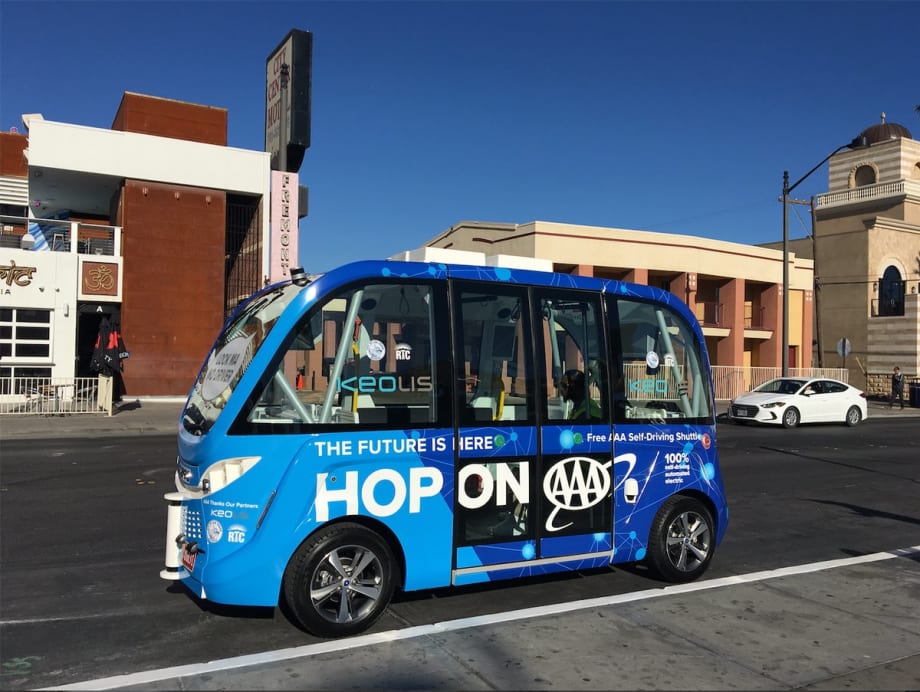
NTSB will investigate the latest autonomous vehicle crash, which occured the first day on the job for this AAA/Keolis electric van. Photo: Twitter
2 min to read
NTSB will investigate the latest autonomous vehicle crash, which occured the first day on the job for this AAA/Keolis electric van. Photo: Twitter
Despite human error appearing to be the cause of the crash of an autonomous shuttle van in Las Vegas earlier this week, the National Transportation Safety Board is sending investigators to look at the accident more closely, according to a report by Reuters News Agency.
According to news reports, an autonomous, electric-powered van called Navya Arma, operated by Keolis North America, went into service in Las Vegas on Nov. 8. A few hours after starting its maiden voyage, a delivery truck backed into the stopped shuttle, according to a reporter on the shuttle and one of its sponsor companies. The Automobile Association of America, which is co-sponsoring the autonomous van’s deployment with Keolis, said it would assist NTSB in the investigation.
Past accidents involving autonomous vehicles have been blamed on the inflexibility of the programing in a dynamic driving environment and inability to adapt to minor situational variations as a human driver would. And that seems to be the case in this instance as well.
According to Reuters, reporter Jeff Zurschmeide, who was on the shuttle at the time of the crash, said the self-driving vehicle did what it was programmed to do-- but not everything a human driver might do.
“That’s a critical point,” Zurschmeide wrote on digitaltrends.com. “We had about 20 feet of empty street behind us (I looked), and most human drivers would have thrown the car into reverse and used some of that space to get away from the truck. Or at least leaned on the horn and made our presence harder to miss.”
Indeed, it seems a fundamental flaw in autonomous vehicle programming is the technology’s inability to deal with unpredictable human drivers. According to Reuters, the Las Vegas crash follows a rising number of incidents involving human drivers behaving improperly or recklessly around self-driving cars.
There have been 12 such crashes in California alone since Sept. 8 involving General Motors Co’s self-driving unit, Cruise Automation. All were the fault of human drivers in other vehicles, GM told regulators.
More Drivers

From One Generation to the Next: How Mentorship Builds Safer Truck Drivers
After three decades in trucking, Harold Perry shares what he's learned about driver safety, mentorship, and helping the next generation build confidence behind the wheel.
Read More →
Truck Drivers Need More Than Another Alert
Fleets have more visibility into truck health, safety events, and driver activity than ever. The next challenge is turning all that information into useful guidance for the person who has to decide what to do next.
Read More →
FMCSA Removes 110 Truck Driver Training Schools from Certified ELDT List
Federal regulators also are targeting more than 160 additional training providers and launching a nationwide audit of third-party CDL skills testers as part of a broader crackdown on trucking fraud.
Read More →
Hours of Service Pilot Programs: FMCSA Readies for 2027 Rollout
Two pilot programs could eventually reshape hours-of-service rules, giving truck drivers options to pause their 14-hour clock or use longer split sleeper rest periods.
Read More →
Medical Cards, English Proficiency Reshape Roadcheck Violations
Medical-card violations jumped to the top of the driver out-of-service list during CVSA’s 2026 International Roadcheck, while English-language proficiency violations appeared among the leading violations for the first time.
Read More →
Driver Trust Can Make or Break the Success of Fleet Safety Technology
New Teletrac Navman research suggests that onboarding, transparency about driver data, and positive feedback can play a significant role in how commercial drivers respond to safety and coaching technology.
Read More →
EEOC Sues KLLM Over Alleged Sex Discrimination in Driver Training
KLLM is facing a federal sex-discrimination lawsuit over policies the EEOC alleges put female truck driver trainees at a disadvantage.
Read More →
FMCSA Moves to Codify English Language Requirements for Commercial Drivers
By changing regulations on English-language proficiency requirements for commercial drivers, rather than relying on a guidance memo, the FMCSA said future administrations won't be able to walk back the Trump administration's stricter enforcement with just a memo.
Read More →
Drivers Put Western Star Trucks to the Test at Star Nation Experience
Watch to get an inside look at the Western Star trucks, technology, and community behind the Star Nation Experience 2026!
Read More →
Trump Administration Looks to Put More Veterans Behind the Wheel
The Freedom Haulers program pulls together existing and expanded programs at several federal agencies to recruit veterans to drive commercial heavy-duty trucks and cut the red tape for them to get a CDL, training, and employment.
Read More →