




NHTSA Asks Comments on Priority Plan
The National Highway Traffic Safety Administration has asked for public comment on its plan for vehicle safety priorities in 2002-2003, including several truck-related projects
The National Highway Traffic Safety Administration has asked for public comment on its plan for vehicle safety priorities in 2002-2003, including several truck-related projects.
One priority is to shorten stopping distances and improve braking of heavy duty trucks. The agency noted that longer stopping distances than light vehicles increase the chance of collisions in panic stopping situations and that truck brake performance has been identified as a major factor in crashes involving large trucks.
NHTSA and several manufacturers are currently looking at electronic controlled braking systems (ECBS) which would replace the current pneumatic brake application signal with an electronic actuation signal. The major issue, the agency said, is to identify what performance requirements should be established in FMVSS No. 121 to ensure a minimum requirement for stopping capabilities and fail-safe performance. Research is expected to be completed in 2003, with a rulemaking decision expected that same year.
In the nearer term, rulemaking revisions to FMVSS No. 121 include final regulatory action identifying performance requirements for ABS on straight trucks and buses, which the agency hopes to have finalized this year.
NHTSA will also look at increasing foundation brake capacity and improving tractor-trailer brake compatibility. It said it hopes to pursue a rulemaking to improve heavy truck tire performance, including upgraded FMVSS 119 requirements and the required use of tire pressure monitoring systems on commercial vehicles over 10,000 pounds GVWR. Following a recommendation by the National Transportation Safety Board, NHTSA is conducting related research on the safety benefits of adding traction control to antilock brake systems.
Another priority is the reduction of heavy vehicle tire failures, possibly using tire pressure monitoring systems or blowout resistant tires. NHTSA is targeting 2003 for a proposed rule regarding upgrade requirements for heavy truck tires. A decision on tire pressure warning systems for heavy trucks would come in 2003 or 2004.
Next year NHTSA also hopes to conclude research and field testing of drowsy driver sensing systems that would alert drivers before they fell asleep at the wheel. “Although the vast majority (95.5%) of drowsy driver crashes involved drivers of passenger vehicles, drowsiness played a role in a disproportionally high number of truck crashes,” the agency noted. “In addition, the role of drowsiness in crashes may be largely underestimated due to unreported off-roadway crashes, police inability to verify drowsiness, and driver reporting error.”
NHTSA hopes to establish performance specification requirements for drowsy sensing systems for heavy trucks by 2005, possibly adding performance requirements for car systems later that year.
The plan can be found on NHTSA’s website, www.nhtsa.dot.gov/cars/rules/rulings. Comments are due Sept. 23, 2003, and can be submitted electronically at http://dms.dot.gov. Refer to docket number NHTSA-2002-12391.
More Drivers
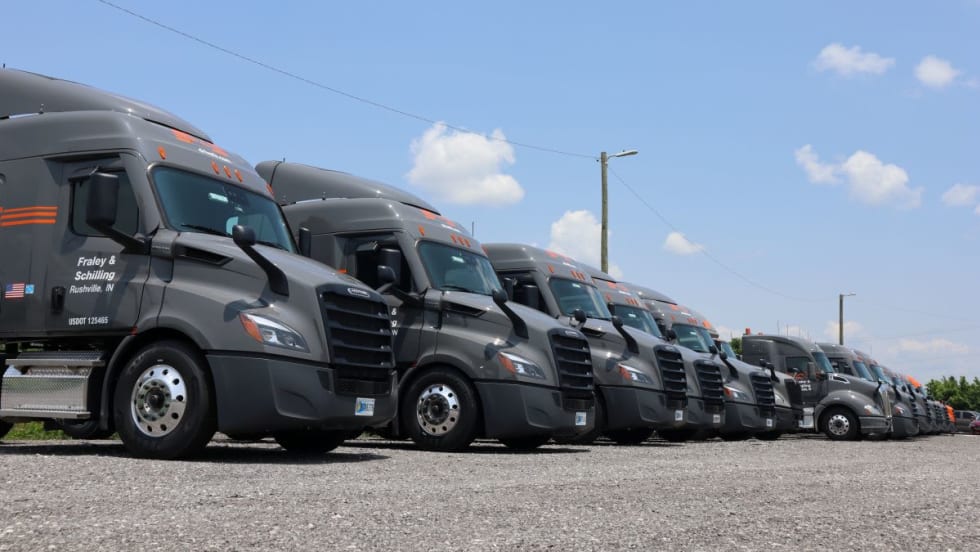
How Fraley & Schilling Improved Logbook Compliance by Over 50%
Fraley & Schilling needed a way to close a compliance workflow gap in its ELD system without adding more work from driver training, reminders, and back-office follow-ups. It found the answer in a custom driver app.
Read More →
Volvo Goes Gaming
Volvo has roared into American Truck Simulator with two new flagship trucks.
Read More →
What the Best Fleets to Drive For Teach About Driver Retention
Survey fatigue, AI-powered routing, owner-operator expectations, and the decline of social media all emerged as themes from this year's Best Fleets to Drive For program.
Read More →
Driver Retention Lessons From the Best Fleets to Drive For
What separates trucking's best workplaces from the rest? Jane Jazrawy shares the biggest lessons from this year's Best Fleets to Drive For program on driver retention, communication, AI, and workforce trends on the HDT Talks Trucking podcast.
Read More →
Farewell, CDL: Why I'm Giving Up My Commercial Driver's License
After more than 20 years as a CDL holder, HDT Executive Editor Jack Roberts is letting his commercial license expire. Not because he wants to — but because trucking's nuclear verdict crisis has made the risks of public-road test drives too great for editors, manufacturers, and everyone involved.
Read More →
How Top Trucking Fleets Improve Driver Retention [Video]
What do healthy snacks, optimized routing, and just picking up the phone have in common? They're all strategies the Best Fleets to Drive For are using to retain truck drivers.
Read More →
Trucker Path Adds Verisk CargoNet Theft Data to Navigation Platform
Trucker Path’s new cargo theft risk overlays give drivers and fleets visibility into high-risk areas, stolen commodity trends, and theft hotspots.
Read More →
Netradyne Intelligence Uses New AI Agents to Automate Response to In-Cab Camera Data
The company called the next-generation in-cab camera safety platform "a fundamental shift from systems that report on what happened to systems that actively drive what should happen next."
Read More →
Why Truck Detention Keeps Costing Fleets Time and Money
A 2024 ATRI study found detention affects nearly 40% of truckload stops and costs the industry more than $15 billion annually. Despite the toll on drivers, fleets, and supply chains, the problem remains stubbornly persistent.
Read More →
Prime Inc. to Open $7.9M Flagship Used-Truck Dealership
A new driver-focused facility to sell Prime Inc's used trucks and trailers will be the first purpose-built location in the company's history.
Read More →