




Newer Trucks Serving Port of L.A. Contribute to Overall Emissions Decline
Following the implementation of programs at the Port of Los Angeles to reduce emissions from trucks, ships, trains and other equipment, a new report shows the facility has made big strides in cutting back on air pollution.

The Port of Los Angeles.
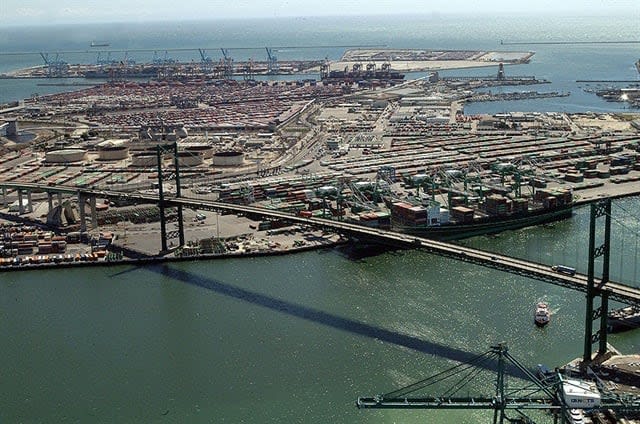
The Port of Los Angeles.
Following the implementation of programs at the Port of Los Angeles to reduce emissions from trucks, ships, trains and other equipment, a new report shows the facility has made big strides in cutting back on air pollution.
The port’s newly released 2013 Inventory of Air Emissions shows the facility has set new records with diesel particulate matter down 80%, nitrogen oxides down 57% and sulfur oxides down 90% over the previous eight years. The findings also reflect significant progress in curbing greenhouse gases, down 23% since a regional plan was adopted in 2006.
Part of the reason for the reductions is the number of newer clean trucks is on the rise at the port, according to the report. Although heavy-duty trucks with 2007 model year engines meet the requirement for drayage trucks allowed in the port, the trend among companies updating their fleets is to buy 2010 or newer models. Today, 26% of the drayage moves to and from the port are handled by trucks with engines that meet 2010 federal emissions standards, which are less polluting the 2007 models.
“This port’s commitment to clean air is stronger than ever,” said Port of Los Angeles Executive Director Gene Seroka. “These latest results show that our industry partners, who have been key to our success all along, are voluntarily expanding their sustainable practices to ensure these gains will last.”
According to the Port of L.A. the latest clean air gains were made during a year in which no major regulations took effect.
Officials believe pollution numbers will continue to improve with more ships nearby the facility voluntarily reducing their speed to help lower emissions and power requirements for ships that took effect the first of this year establishing rules for container, refrigerated and cruise vessels to run on shore-side electricity while at berth in Los Angeles and five other ports.
The Port of Los Angeles is the largest U.S. port handling about 40% of the nation’s container traffic.
More Fuel Smarts

How Volvo Updated Its D13 for EPA 2027 [Watch]
Volvo’s updated D13 promises lower emissions without sacrificing performance or fuel economy. Take a closer look at what changed inside the engine in this HDT Spotlight video.
Read More →
Diesel Price Spike Shortens Payback for Natural Gas Trucks, Report Says
Energy Vision estimates fleets could recover the higher purchase price of an RNG-fueled Class 8 tractor in 1.3 to 2.8 years under current fuel-price scenarios.
Read More →
Calstart Becomes Catalyst Mobility, Reflecting Broader Focus
Calstart is now Catalyst Mobility, reflecting the nonprofit’s growing national role in clean transportation, including zero-emission trucks, infrastructure and incentive programs.
Read More →

Record Diesel Prices Squeeze Trucking Fleets
Average U.S. diesel prices have climbed to nearly $6 a gallon, surpassing the 2022 record as tight refinery capacity and Middle East disruptions keep fuel costs elevated.
Read More →
How Fuel Delivery Shapes Engine Performance
Fuel delivery depends on more than what happens at the injector. For fleet, maintenance and technical professionals, looking at the full path from pump to injector can provide useful context for understanding engine performance.
Read More →
East Coast Port Launches $45M Electric Truck Push
The Port Authority of New York and New Jersey announced millions in incentives for zero-emission drayage trucks, yard tractors, and new charging hubs near the port.
Read More →
California Bill Could Shed Light on Electric Truck Prices
Why do battery-electric Class 8 trucks remain so expensive? A California bill headed to Gov. Gavin Newsom would give fleets and state agencies more visibility into what manufacturers charge.
Read More →
Detroit Opens Orders for EPA 2027 Engines
Detroit isn’t starting from scratch to meet EPA 2027 diesel emissions standards. Its Gen 6 DD13 and DD15 engines keep much of today’s platform while updating the fuel and aftertreatment systems.
Read More →
Zero-Emission Truck Corridor Planned for West Coast
California, Oregon, Washington, British Columbia and Baja California are coordinating plans for truck charging and hydrogen fueling from Canada to Mexico.
Read More →
A Closer Look at Kenworth’s Electric T880E Vocational Truck [Video]
Learn more about Kenworth's T880E battery-electric vocational truck at the Paccar Technical Center, including its range, applications, upfitting considerations, and PTO options, in this HDT Spotlight video.
Read More →