




New Study Advocates Tolling Interstates to Pay for Improvements
Over the next two decades most of the aging Interstate highway system will need to be reconstructed and will cost approximately $1 trillion, nearly $600 billion in rebuilding costs plus $400 billion to add capacity, according to a new study from the right/libertarian leaning think-tank the Reason Foundation.

A new Reason Foundation study claims tolling Interstates would raise around $1 trillion needed for road projects. Photo: Evan Lockridge
Over the next two decades most of the aging Interstate highway system will need to be reconstructed and will cost approximately $1 trillion - nearly $600 billion in rebuilding costs plus $400 billion to add capacity, according to a new study from the right/libertarian leaning think-tank the Reason Foundation.

A new Reason Foundation study claims tolling Interstates would raise around $1 trillion needed for road projects. Photo: Evan Lockridge
Robert Poole, director of transportation policy for the group, says that the price tag, while extremely large, could be covered almost entirely by toll revenues generated by charging drivers and truckers via all-electronic toll collection on the rebuilt Interstates.
"The current transportation funding system is failing and won't be able to rebuild or upgrade the Interstate system," he said. "This study shows that alternative financing, via all-electronic tolling, is a feasible way to transform the Interstate system."
According to a release Poole created detailed traffic forecasts, identified areas that need additional Interstate capacity, pinpointed key shipping corridors that would benefit from truck-only lanes, and made construction cost calculations for every state. The costs of reconstructing urban Interstates, for example, ranged from a low of $315 million in Vermont to a high of $59 billion in California.
In 37 of the 50 states revenues from modest toll rates would be sufficient to cover 90% or more of the costs associated with reconstructing and widening the Interstates. The baseline toll rates would be 3.5 cents per mile for cars and 14 cents a mile for trucks. The tolls would be indexed to inflation and adjusted annually. Some states, like California, New York and Alaska, would require higher toll rates, as detailed in the study.
The study comes as the nation’s highway funding authorization expires in just over a year and it will be up to Congress to come up with a new multi-year plan with some calling for increasing highway funding.
The full report, "Interstate 2.0: Modernizing the Interstate Highway System Via Toll Finance," is available online at:http://reason.org/studies/show/modernizing-the-interstate-highway
More Fleet Management

How Telematics Improves Visibility, Control, and Performance in Refrigerated Fleets
Explore how telematics help refrigerated fleets improve visibility, uptime, efficiency, compliance, and cargo protection across connected cold chain operations.
Read More →
What the U.S.-Canada Trade War Means for Trucking
Escalating U.S.-Canada tariffs could disrupt cross-border freight, reduce truck volumes, raise costs, and create new uncertainty for carriers on both sides of the border.
Read More →
What Are Trucking’s Top Concerns for 2026?
The American Transportation Research Institute wants to know what's worrying trucking fleet managers, drivers, and other stakeholders in its annual Industry Issues survey.
Read More →

American Trucking Associations Looks for a New Leader
ATA President and CEO Chris Spear abruptly left his job at the association on August 21, at a pivotal time for the trucking industry.
Read More →
Public Wi-Fi Cybersecurity Risks: How Truck Drivers and Fleets Can Protect Their Data
Public Wi-Fi can expose truck drivers and fleets to credential theft, malware, and other cyber threats. Here’s how to reduce the risk on the road.
Read More →
For Nicky Cupp, Fleet Innovation Starts With Frustration
HDT Truck Fleet Innovator Nicky Cupp turns everyday pain points at Fraley & Schilling into opportunities for better technology and smarter processes.
Read More →
Adam Buttgenbach’s Approach to Electric Trucks: Start With Where They Fit
HDT Truck Fleet Innovator Adam Buttgenbach helped PepsiCo build one of North America’s largest EV fleets by focusing on where electric trucks make operational sense.
Read More →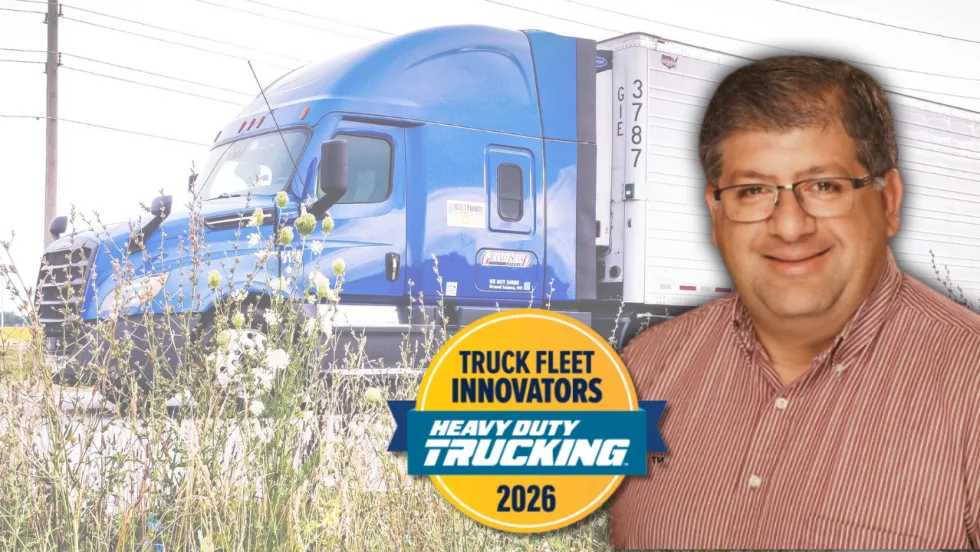
Deen Albert: Let Automation Do the Math, People Make the Decisions
HDT Truck Fleet Innovator Deen Albert makes sure people are still at the heart of operations at Grand Island Express, even while adopting artificial intelligence tools. AI-assisted dispatch helped boost revenue 25% with the same number of trucks.
Read More →
Trimble’s New AI Agent Takes Aim at Fleet Back-Office Busywork
Arc Agent works across Trimble TMS products to automate repetitive tasks such as freight orders, maintenance, invoices, fuel costs and more.
Read More →
How HDT’s 2026 Truck Fleet Innovators Are Rethinking Fleet Operations
Meet five trucking leaders who are challenging assumptions, solving operational problems, and putting innovative ideas to work.
Read More →