




New Rules For Bureau-Set Rates
Motor carriers that participate in rate-setting bureaus now must provide a “truth in rates” notice whenever they reference bureau-set rates, according to the Surface Transportation Board
Motor carriers that participate in rate-setting bureaus now must provide a “truth in rates” notice whenever they reference bureau-set rates, according to the Surface Transportation Board.
In other recent decisions, STB also ordered changes in classification bureau procedures and said that carriers cannot use bureau-set class rates as the basis for late payment penalties.
Under current law, collective ratemaking by interstate motor carriers is immune from federal antitrust laws as long as participants follow procedures approved by STB. The agency, which is part of the U.S. Department of Transportation, announced in 1998 that it would impose more rigorous conditions on the agreements governing classifications and rate setting. After soliciting and reviewing public comments, STB issued the following decisions.
Classification
The agency imposed numerous conditions regarding the exchange of information and the provision for advance notice designed to open up the classification process to more shipper participation. The most significant change is inclusion of arbitration rights. STB said it found that shippers currently do not fully participate because they do not believe that they can get a fair hearing. The addition of a neutral arbitrator would instill shipper confidence in the process and encourage more shipper participation.
Truth in rates
Before motor carriers were deregulated in 1980, class rates set by the rate bureaus tended to be the rates that were actually charged to most shippers, STB noted. But as the industry became more competitive, bureau-set rates came to be known as "benchmark" rates. These “list prices” are sometimes charged to “less sophisticated” shippers, the agency said, but in most cases they are merely the basis for discounts.
STB initially ordered the bureaus to set rates at a more realistic level, but it found there was no feasible way to determine what the appropriate rate reductions should be. Moreover, carriers and shippers argued that broad reductions could unduly disrupt existing business relationships. The agency said it found no basis for specifying a minimum discount available to every shipper because such a requirement "would give shippers of some traffic a windfall far beyond what they could expect in competitive market dealings between knowledgeable shippers and carriers."
This final decision requires motor carriers to give a “truth-in-rates” notice to potential shippers whenever they offer a rate based on, or referencing, a bureau-set class rate. The notice must prominently disclose the range of discounts that the motor carriers in the rate bureau have provided to shippers. In this way, STB said, all shippers will be informed that the bureau-set benchmark (or list) rates are not necessarily the prevailing market rates and that a wide range of discounted rates may be available.
Loss-of-discount provisions
These are provisions under which a shipper must pay the full or undiscounted class rate if it doesn’t pay its freight bill on time. STB said loss-of-discount provisions are permitted so that carriers may recover collection costs, but the penalties should not be imposed simply to enrich carriers. Noting that discounts can run as high as 70%, the agency argued that these provisions could result in penalties far beyond the collection costs incurred by the carrier. Thus STB said carriers cannot use bureau-set class rates as the basis for loss-of-discount penalties. The bureaus will enforce this rule by making it a condition of membership.
The rate and classification bureaus have four months to make the necessary changes. The full decisions are available on the Internet at www.stb.dot.gov. Printed copies are available for a fee from Da-2-Da Legal, (202) 293-7776.
More Drivers
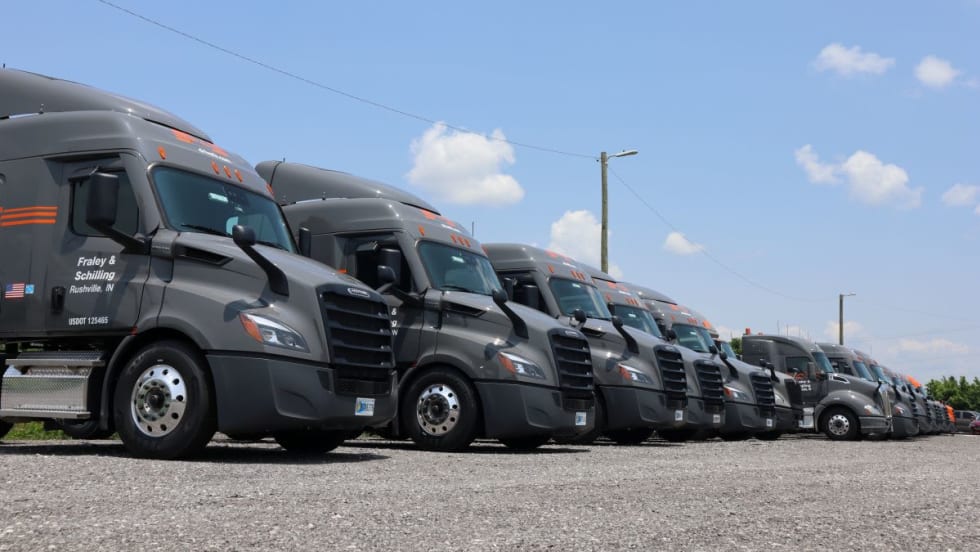
How Fraley & Schilling Improved Logbook Compliance by Over 50%
Fraley & Schilling needed a way to close a compliance workflow gap in its ELD system without adding more work from driver training, reminders, and back-office follow-ups. It found the answer in a custom driver app.
Read More →
Volvo Goes Gaming
Volvo has roared into American Truck Simulator with two new flagship trucks.
Read More →
What the Best Fleets to Drive For Teach About Driver Retention
Survey fatigue, AI-powered routing, owner-operator expectations, and the decline of social media all emerged as themes from this year's Best Fleets to Drive For program.
Read More →
Driver Retention Lessons From the Best Fleets to Drive For
What separates trucking's best workplaces from the rest? Jane Jazrawy shares the biggest lessons from this year's Best Fleets to Drive For program on driver retention, communication, AI, and workforce trends on the HDT Talks Trucking podcast.
Read More →
Farewell, CDL: Why I'm Giving Up My Commercial Driver's License
After more than 20 years as a CDL holder, HDT Executive Editor Jack Roberts is letting his commercial license expire. Not because he wants to — but because trucking's nuclear verdict crisis has made the risks of public-road test drives too great for editors, manufacturers, and everyone involved.
Read More →
How Top Trucking Fleets Improve Driver Retention [Video]
What do healthy snacks, optimized routing, and just picking up the phone have in common? They're all strategies the Best Fleets to Drive For are using to retain truck drivers.
Read More →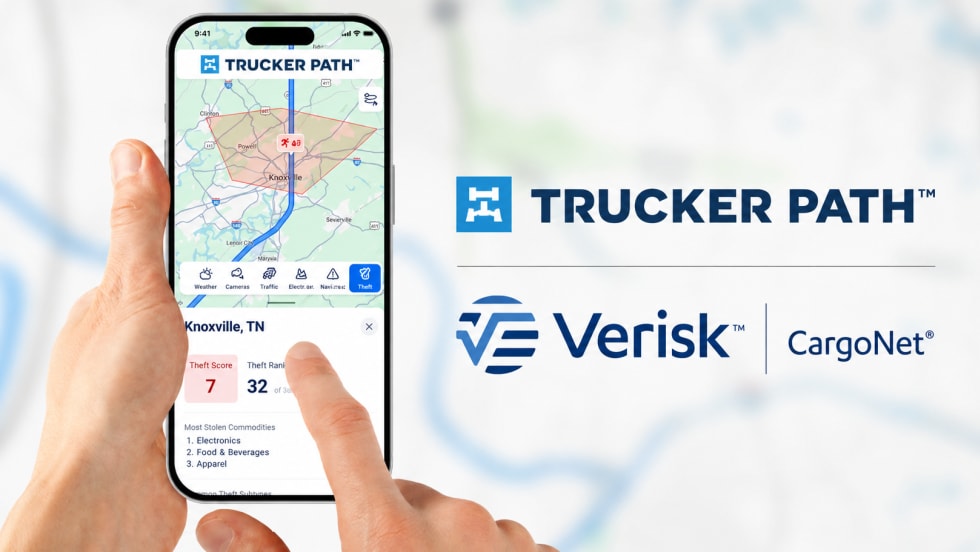
Trucker Path Adds Verisk CargoNet Theft Data to Navigation Platform
Trucker Path’s new cargo theft risk overlays give drivers and fleets visibility into high-risk areas, stolen commodity trends, and theft hotspots.
Read More →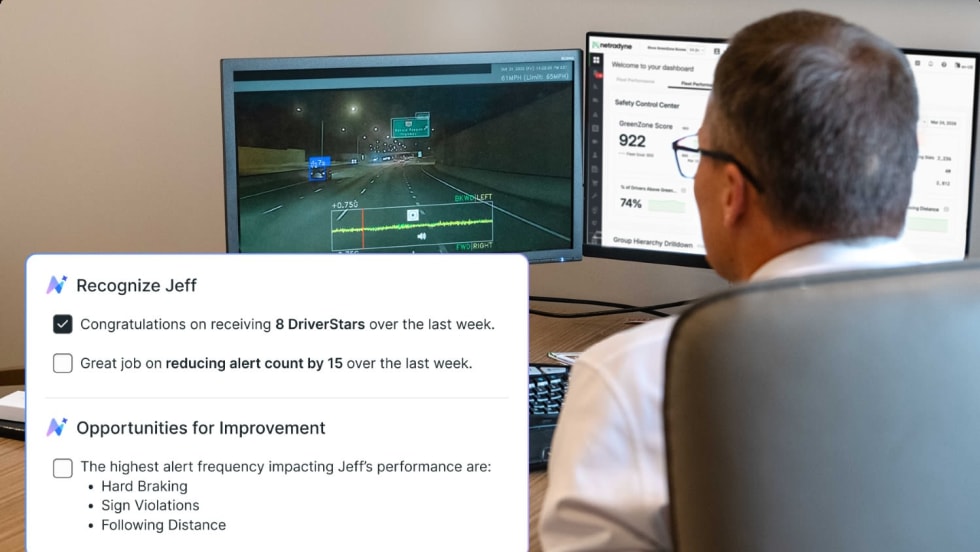
Netradyne Intelligence Uses New AI Agents to Automate Response to In-Cab Camera Data
The company called the next-generation in-cab camera safety platform "a fundamental shift from systems that report on what happened to systems that actively drive what should happen next."
Read More →
Why Truck Detention Keeps Costing Fleets Time and Money
A 2024 ATRI study found detention affects nearly 40% of truckload stops and costs the industry more than $15 billion annually. Despite the toll on drivers, fleets, and supply chains, the problem remains stubbornly persistent.
Read More →
Prime Inc. to Open $7.9M Flagship Used-Truck Dealership
A new driver-focused facility to sell Prime Inc's used trucks and trailers will be the first purpose-built location in the company's history.
Read More →