




New Research Adds to Hours of Service Mix
Just as the hours of service changes take effect, here’s new research on how the rules could affect operations and safety. Two academics, Asvin Goel of Jacobs University in Bremen, Germany, and Thibaut Vidal of MIT and the Centre for Research on Transportation in Montreal, studied how carriers can use route optimization to get the most out of their operations under the new rules.

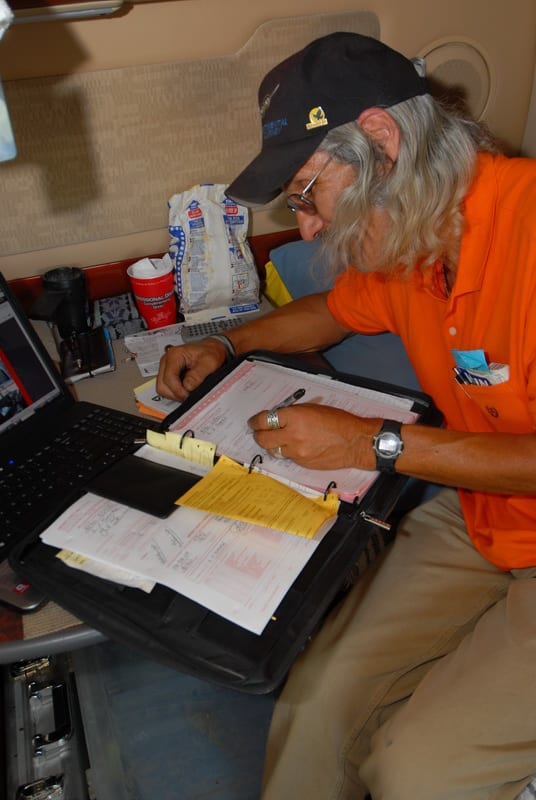
Photo: Jim Park
Photo: Jim Park
Just as the hours of service changes take effect, here’s new research on how the rules could affect operations and safety.
Two academics, Asvin Goel of Jacobs University in Bremen, Germany, and Thibaut Vidal of MIT and the Centre for Research on Transportation in Montreal, studied how carriers can use route optimization to get the most out of their operations under the new rules.
In a separate study they analyzed the impact of the new 34-restart and rest break requirements, finding that they will reduce accident risk by up to 2% while increasing costs by less than 0.2%.
This cost assessment is significantly lower than others. The economist Nöel Perry, for example, believes the new rule will lead to a 2% to 3% reduction in overall industry productivity. Goel and Vidal also said that the risk of crashes could be cut by 5% if daily driving time were limited to 10 hours rather than the current 11. The cutback would increase transportation costs by less than 1%, they said.
“Our results indicate that in their regulatory impact assessment the Federal Motor Carrier Safety Administration may have underestimated the safety benefit of reducing the daily driving time limit and overestimated the resulting cost increase,” the researchers said.
“It may well be that the net benefit of reducing the daily driving time to 10 or even 9 hours is positive,” Goel said.
This observation runs counter to what FMCSA found in its analysis. The agency considered cutting daily driving time to 10 hours, but decided not to because its cost-benefit analysis showed that 11 hours offered a greater net benefit than either 10 hours or nine hours.
But the work of Goel and Vidal may yet play into the hours of service debate, because the agency has said it is committed to conducting a comprehensive analysis of risk, hour-by-hour, and it does not consider the case for the 10-hour limit closed.
In the route optimization study, the researchers said they developed an algorithm that enabled them to compare carrier operations under hours of service rules in different countries.
“Our experiments demonstrate that European Union rules lead to the highest safety, whereas Canadian regulations are the most competitive in terms of economic efficiency,” they said.
“Australian regulations appear to have unnecessarily high risk rates with respect to operating costs. The recent rule change in the United States reduces accident risk rates with a moderate increase in operating costs.”
The optimization method also gives carriers a way to adapt their operations to changes in hours of service rules, they said.
More Fleet Management

Geotab Links Fleet Card to Vehicle Data
The new card combines fuel discounts with telematics-based purchase controls. Geotab’s analysis also points to potential savings from choosing lower-priced fuel stops.
Read More →
How MFA Helps Protect Trucking Fleets
Multi-factor authentication adds protection when passwords are stolen. Here’s how it works and where fleets should start.
Read More →
How Better Freight Data Helps Trucking Teams Get Ahead of Disruption
Trucking and logistics teams have plenty of data. The problem is getting the right information in front of the right people soon enough to act. Better-connected data can help teams spot trouble earlier and make smarter decisions before small problems become big ones.
Read More →

Trimble: Taking Artificial Intelligence in Trucking Beyond Faster Tasks
At Insight 2026, Trimble executives argued that fleets may need to redesign workflows to get more from AI as it introduced new products and enhancements. AI’s value will depend on how fleets combine automation with their people's knowledge.
Read More →
Build a bulletproof fleet: Uniting ELDs and dash cams for total compliance
An ELD can prove compliance, but it cannot always prove what happened on the road. Discover how uniting accurate ELD data with AI-powered dash cam video can help your fleet strengthen compliance, defend against liability, protect drivers and reduce operational costs.
Read More →
Nominations Open for HDT Emerging Leaders
Heavy Duty Trucking is looking for accomplished trucking fleet professionals under 40 who are making an impact and helping lead the industry forward.
Read More →
Why Private Fleets Are Taking More Freight
Private fleets are putting their own trucks on demanding customers and high-cost lanes as companies seek greater control over service, costs, and capacity.
Read More →
Color Match Smarter: Tools That Restore & Perform
For fleet managers and collision repair professionals keeping heavy-duty trucks on the road, getting the color right the first time isn't just about appearance — it's about efficiency, turnaround time, and bottom-line results. Discover how today's digital color tools are transforming the repair process from guesswork to precision.
Read More →
FMCSA Pauses Biennial-Update Enforcement Amid Motus Transition
Carriers whose updates were due on or after June 1 have more time, while FMCSA works to stabilize its new registration system and warns of phishing sites impersonating its new carrier registration system, Motus.
Read More →
2026 Blueprint for Countering Smarter Supply Chain Theft
Cargo theft is no longer just the cost of doing business. It's a multi-billion-dollar criminal enterprise exploiting vulnerabilities across your fleet, drivers, and supply chain.
Read More →