




New Report Shows Fatal Crashes Involving Trucks Up from a Year Earlier
Newly released figures from the Federal Motor Carrier Safety Administration show an increase in the number of large trucks involved in fatal crashes over the past year, but there are improvements when compared to longer time periods.


Newly released figures from the Federal Motor Carrier Safety Administration show an increase in the number of large trucks involved in fatal crashes over the past year, but there are improvements when compared to longer time periods.
In 2011, the most recent year figures are available, 3,608 large trucks were involved in fatal crashes, a 3% increase from 2010. However, from 2008 through 2011, the number of large trucks involved in fatal crashes declined by 12%, while the number of passenger vehicles involved in fatal crashes fell by 13%.
Numbers for trucking have greatly improved over the past decade, but there were also some encouraging signs over the relatively short term.
From 2008 through 2011, the number of large trucks involved in fatal crashes declined by 12%, from 4,089 to 3,608, and the vehicle involvement rate for large trucks in fatal crashes (vehicles involved in fatal crashes per 100 million miles traveled by large trucks) increased by 2%.
The number of large trucks involved in injury crashes dropped by 5%, from 66,000 to 63,000. The vehicle involvement rate for large trucks in injury crashes increased by 10%.
The number of large trucks involved in property-damage-only crashes decreased by 28%, from 309,000 to 221,000. The vehicle involvement rate for large trucks in property-damage-only crashes declined by 17%.
Over the past 10 years, 2001 through 2011, the number of large trucks involved in fatal crashes fell from 4,823 to 3,608, a drop of 25%.
The number of large trucks involved in injury crashes fell from 90,000 to 63,000, a drop of 30%. The number of large trucks involved in property-damage-only crashes decreased from 335,000 to 221,000, a drop of 34%.
Alcohol was detected in the blood of 2.5% of large truck drivers in fatal crashes in 2011, compared with 27.3% of passenger vehicle drivers. For 1.2% of large truck drivers in fatal crashes in 2011, the blood alcohol concentration was 0.08 grams per deciliter or more, compared with 23.7% of passenger vehicle drivers.
Large truck and bus fatalities per 100 million vehicle miles traveled by all motor vehicles increased by 2%, from 0.133 in 2010 to 0.136 in 2011.
Of the 3,757 drivers of large trucks involved in fatal crashes, 341 or 10% were not wearing a safety belt at the time of the crash and of them nearly one-third were completely or partially ejected from the vehicle.
The full report is available on the FMCSA website.
More Drivers

EEOC Sues KLLM Over Alleged Sex Discrimination in Driver Training
KLLM is facing a federal sex-discrimination lawsuit over policies the EEOC alleges put female truck driver trainees at a disadvantage.
Read More →
FMCSA Moves to Codify English Language Requirements for Commercial Drivers
By changing regulations on English-language proficiency requirements for commercial drivers, rather than relying on a guidance memo, the FMCSA said future administrations won't be able to walk back the Trump administration's stricter enforcement with just a memo.
Read More →
Drivers Put Western Star Trucks to the Test at Star Nation Experience
Watch to get an inside look at the Western Star trucks, technology, and community behind the Star Nation Experience 2026!
Read More →
Trump Administration Looks to Put More Veterans Behind the Wheel
The Freedom Haulers program pulls together existing and expanded programs at several federal agencies to recruit veterans to drive commercial heavy-duty trucks and cut the red tape for them to get a CDL, training, and employment.
Read More →
Putting Mack’s Command Steer to the Test
A test drive of Mack’s Command Steer active steering system evaluates how it can make truck driving easier and less tiring.
Read More →
Competition Heating Up for Truck Drivers
New report reveals rising driver hiring costs, the return of sign-on bonuses, growing AI advantages, and the operational factors shaping driver retention.
Read More →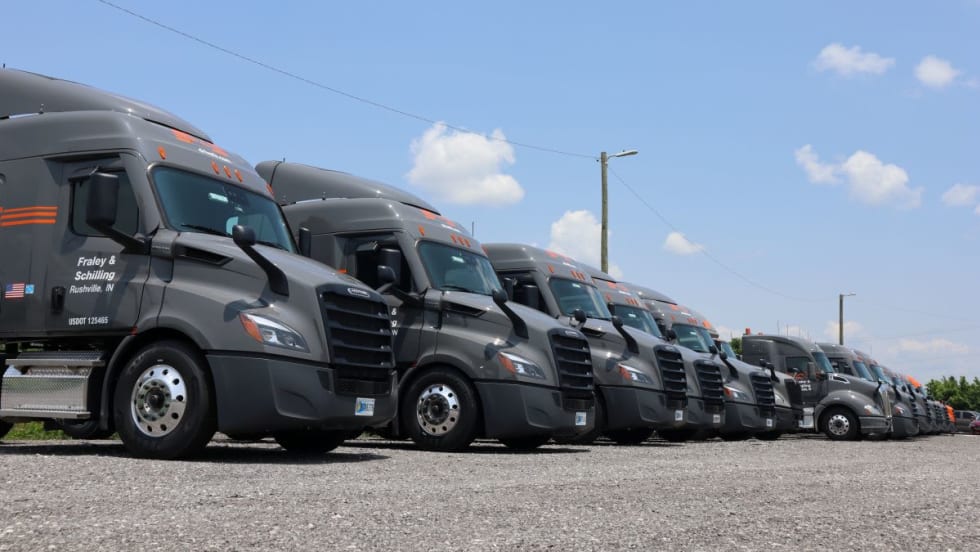
How Fraley & Schilling Improved Logbook Compliance by Over 50%
Fraley & Schilling needed a way to close a compliance workflow gap in its ELD system without adding more work from driver training, reminders, and back-office follow-ups. It found the answer in a custom driver app.
Read More →
Volvo Goes Gaming
Volvo has roared into American Truck Simulator with two new flagship trucks.
Read More →
What the Best Fleets to Drive For Teach About Driver Retention
Survey fatigue, AI-powered routing, owner-operator expectations, and the decline of social media all emerged as themes from this year's Best Fleets to Drive For program.
Read More →
Driver Retention Lessons From the Best Fleets to Drive For
What separates trucking's best workplaces from the rest? Jane Jazrawy shares the biggest lessons from this year's Best Fleets to Drive For program on driver retention, communication, AI, and workforce trends on the HDT Talks Trucking podcast.
Read More →