




Related: Another Record-Setting Month in For-Hire Freight Movements
New Gauge of Freight Shipping and Economy Debuts at ATA
ORLANDO - U.S. Bank announced the launch of a new barometer for assessing the nation’s shipping industry on Sunday during the American Trucking Associations’ Management Conference and Exhibition in Florida.

Evan Lockridge・Former Business Contributing Editor

Bob Costello, chief economist for the American Trucking Associations, explains about the new U.S. Bank Freight Payment Index. Photo: Evan Lockridge
3 min to read
ORLANDO - U.S. Bank announced the launch of a new barometer for assessing the nation’s shipping industry on Sunday during the American Trucking Associations’ Management Conference and Exhibition in Florida.
The U.S. Bank Freight Payment Index measures quantitative changes in shipment and spend activity, based on data from transactions processed through U.S. Bank Freight Payment.
These transactions are made on behalf of clients across a range of industries, including automotive, manufacturing, food and retail.
U.S. Bank Freight Payment has been providing automated freight audit and payment services for 20 years and processes around $23 billion in global freight payments, according to the company.

Published quarterly, the U.S. Bank Freight Payment Index includes regional and national breakdowns along with expert commentary from Bob Costello, chief economist for the American Trucking Associations.
Highlights and analysis of the U.S. Bank Freight Payment Index for the third quarter include:
An 8.3% jump in the U.S. Bank National Spend Index, the largest quarterly gain since the final quarter in 2014, reflects a tighter truck market, in part from increased vehicle demand in the aftermath of Hurricanes Harvey and Irma.
The U.S. Bank National Shipment Index increased 3.3%, which was slower than the 5.8% surge in the second quarter, but still solid, considering the impacts from the hurricanes.
One of the most important developments for the transportation sector has been the acceleration in factory output as the U.S. dollar retreated from high levels and businesses began reinvesting in capital equipment.
A unique feature of the index is that it breaks the data down into five U.S. regions; West, Southwest, Midwest, Southeast and Northeast; based on the state of origin for a shipment.
“Freight shipments are generally not uniform across the country,” said Costello. “That’s what makes the U.S. Bank Freight Payment Index so useful. It is regional and gives a good snapshot into the differences in economic climate from one end of the country to the other.”
Regional highlights and analysis for the third quarter include:
The Northeast region saw the biggest shipment index gain, at 10%. The gain was helped along by better manufacturing activity and slightly higher housing starts compared to the second quarter.
Shipments in the Southeast inched up a mere 0.1%, as Hurricane Irma disrupted the supply chain. At the same time, spend volume jumped nearly 5% as truck capacity undoubtedly tightened.
The Midwest led the pack in overall spend, jumping 13.3% to a record high. The region was assisted by a rebound in general manufacturing activity.
Though the U.S. Bank Freight Payment Index is new, its aggregated data goes back to 2010, allowing readers a sense of trend lines over time.
When asked during the press conference why this historical data did not go further back than 2010, to during the Great Recession, for example, Bobby Holland, director of freight data solutions for U.S. Bank Freight Payment said because that is when the company started to take on so-called “big data,” so it could statistically validate that its results were accurate.
Costello also responded by saying 2010 is a good place to start because it’s the beginning of the current upward cycle in trucking.
“We are really starting at where the most current cycle really began,” he said. “I think it’s a good starting point. This shows what we have done and where we have gone since the great recession.”
More Fleet Management

How Innovative Trucking Leaders Turn Change Into an Advantage
As the pace of change accelerates in trucking, the fleets that adapt best have more than the latest technology. They have cultures that embrace improvement.
Read More →
Freight Broker Bonds Just Got Harder to Get. Here's What That Means for Your Fleet.
When it gets harder for a freight broker to prove they are financially sound, the ones who cannot clear that bar get pushed out of the market. And those are exactly the brokers who used to leave motor carriers holding the bag.
Read More →
Long-Awaited Canadian Border Bridge to Open in Detroit
For trucking, the bridge opening should offer immediate improvements in efficiency and reliability, with new customs facilities, expanded inspection capacity, and direct freeway-to-freeway connections.
Read More →
Aurora Rolls Out Next Generation of Driverless Trucks for Commercial Freight
Aurora's latest autonomous trucks it's rolling out with International feature lower-cost hardware designed for a million miles as the company expands commercial driverless freight operations across the U.S. Sun Belt.
Read More →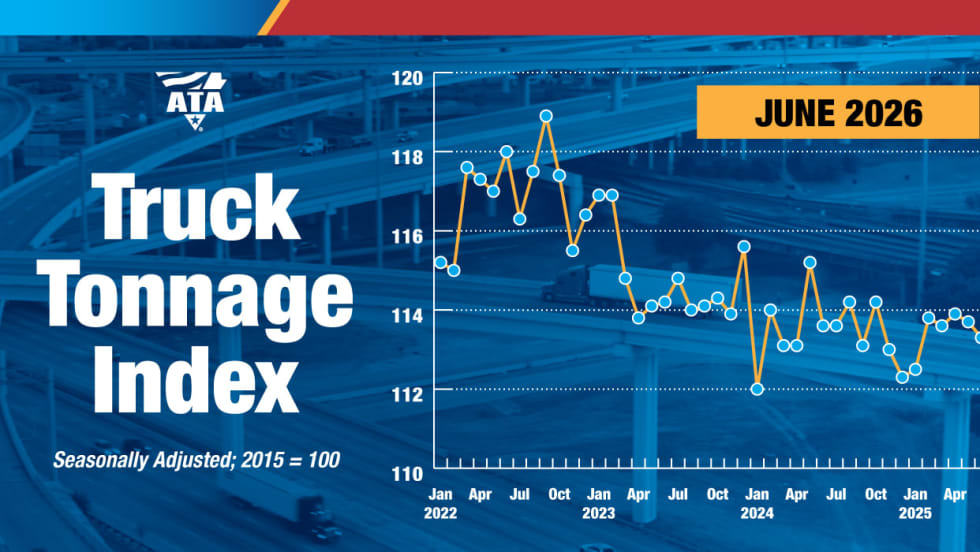
Freight Tonnage Down, Rates up, as Lower Capacity Powers Trucking Recovery
The recovery from the freight recession continues to be driven by reduction in capacity rather than by increased demand.
Read More →
Think Your Trucking Fleet Isn't Using Much AI? Think Again
Shadow AI — the use of unauthorized artificial intelligence tools at work — is becoming increasingly common, putting sensitive company data at risk. Learn how trucking fleets can protect sensitive data while embracing AI.
Read More →
ArcBest Consolidates Brands, Cuts Workforce
The company will bring three business units under the ArcBest brand, eliminate about 2% of positions, and expects the changes to generate $40 million in annual savings.
Read More →
Trucking Fleets Faced Record Operating Costs During Third Year of Freight Recession
ATRI's annual operational cost report shows carriers trimmed fleets, delayed equipment purchases, and ran older trucks as expenses continued to outpace freight rates.
Read More →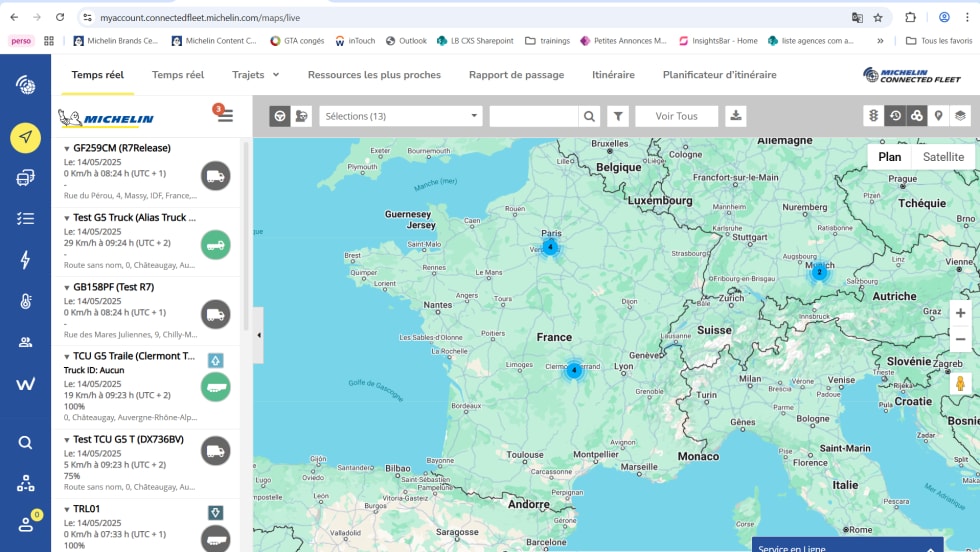
Michelin Adds AI Assistant to MyConnectedFleet Platform
Michelin’s new generative AI tool delivers instant fleet insights, helping managers analyze fuel use, tire maintenance, vehicle status, and operational performance without manually creating reports.
Read More →
LytxOne Platform Now Features AI, Compliance, and Asset Tracking Tools
New enhancements add AI-powered insights, asset tracking, compliance automation, and configurable privacy controls to Lytx's all-in-one fleet management platform.
Read More →