




New EPA Emission Proposal Seen Having Little Impact on Trucking
The Environmental Protection Agency's proposed new standard for fine particle pollution is not likely to have much impact on highway trucking, although it could lead to retrofit requirements and anti-idling regulations in a few places

Jefferson County, Ala., home to Birmingham, is one of the areas the EPA projects will fail to meet the proposed standards.
The Environmental Protection Agency's proposed new standard for fine particle pollution is not likely to have much impact on highway trucking, although it could lead to retrofit requirements and anti-idling regulations in a few places.
The EPA proposal would require states to reduce their fine-particle count from 15 to between 12 and 13 micrograms per cubic meter by 2020.
EPA, which was responding to a court order to issue the proposal, said that these microscopic particles can penetrate deep into the lungs and have been linked to numerous health problems, including heart attacks, strokes and bronchitis.
Glenn Kedzie, a vice president at American Trucking Associations, said he thinks the impact on trucking will be minimal.
EPA projects that just a half-dozen counties in the U.S. would fall short of the standard in 2020, Kedzie said. On the list: Riverside and San Bernandino, Calif.; Santa Cruz, Ariz.; Wayne County, Mich.; Jefferson County, Ala.; and Lincoln County, Mont.
Allen Schaeffer, executive director of the Diesel Technology Forum, agreed.
"It's speculative at this point to think that new standards would have an immediate effect on the industry," he said.
Retrofits and idling restrictions would certainly be a way to bring older diesels into compliance, but regulators have other options because diesel emissions are a relatively small part of the particulate matter problem, he said.
"You have to look at this from a national perspective. All sources of diesel emission, locomotive, marine and on- and off-road, add up to less than 6% of pm emissions," he said.
It is likely that the majority of the on-road diesel fleet will be compliant with EPA's 2007 emission standards by 2020, Schaeffer said. These trucks would meet the 2020 particulate matter standard.
The story might be different for off-road diesels, Schaeffer said. That equipment tends to be in service longer and may not turn over as quickly as highway equipment.
EPA has not made any official statement about whether or not states could mandate diesel retrofits, he said. Certainly California's retrofit program could be seen as a precedent for other states, but Schaeffer thinks legal decisions will have to be made before it's clear what the policy will be.
The diesel engine manufacturers that Schaeffer's group represents say the work they have done over the past decade puts the industry ahead of the curve should the EPA proposal go into effect.
"For the last decade, diesel technology has undergone a fundamental transformation to near zero emissions, based on ultra low sulfur diesel fuel, advanced clean-burning engines and new emissions control technology," he said.
EPA said it is taking comments on the proposal for two months, and will publish final standards by December 14.
More Drivers

Hours of Service Pilot Programs: FMCSA Readies for 2027 Rollout
Two pilot programs could eventually reshape hours-of-service rules, giving truck drivers options to pause their 14-hour clock or use longer split sleeper rest periods.
Read More →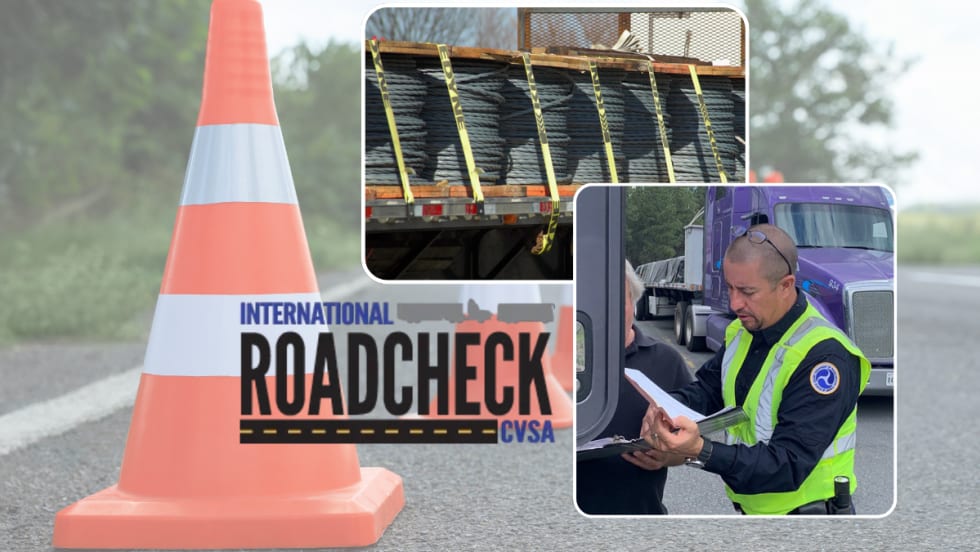
Medical Cards, English Proficiency Reshape Roadcheck Violations
Medical-card violations jumped to the top of the driver out-of-service list during CVSA’s 2026 International Roadcheck, while English-language proficiency violations appeared among the leading violations for the first time.
Read More →
Driver Trust Can Make or Break the Success of Fleet Safety Technology
New Teletrac Navman research suggests that onboarding, transparency about driver data, and positive feedback can play a significant role in how commercial drivers respond to safety and coaching technology.
Read More →
EEOC Sues KLLM Over Alleged Sex Discrimination in Driver Training
KLLM is facing a federal sex-discrimination lawsuit over policies the EEOC alleges put female truck driver trainees at a disadvantage.
Read More →
FMCSA Moves to Codify English Language Requirements for Commercial Drivers
By changing regulations on English-language proficiency requirements for commercial drivers, rather than relying on a guidance memo, the FMCSA said future administrations won't be able to walk back the Trump administration's stricter enforcement with just a memo.
Read More →
Drivers Put Western Star Trucks to the Test at Star Nation Experience
Watch to get an inside look at the Western Star trucks, technology, and community behind the Star Nation Experience 2026!
Read More →
Trump Administration Looks to Put More Veterans Behind the Wheel
The Freedom Haulers program pulls together existing and expanded programs at several federal agencies to recruit veterans to drive commercial heavy-duty trucks and cut the red tape for them to get a CDL, training, and employment.
Read More →
Putting Mack’s Command Steer to the Test
A test drive of Mack’s Command Steer active steering system evaluates how it can make truck driving easier and less tiring.
Read More →
Competition Heating Up for Truck Drivers
New report reveals rising driver hiring costs, the return of sign-on bonuses, growing AI advantages, and the operational factors shaping driver retention.
Read More →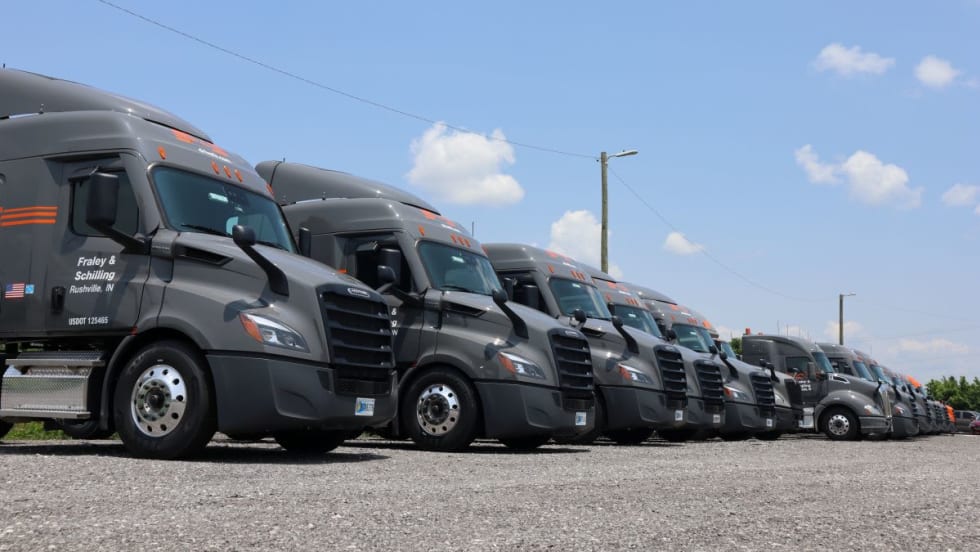
How Fraley & Schilling Improved Logbook Compliance by Over 50%
Fraley & Schilling needed a way to close a compliance workflow gap in its ELD system without adding more work from driver training, reminders, and back-office follow-ups. It found the answer in a custom driver app.
Read More →