




New Climate Legislation Draws Mixed Reactions
Sens. John Kerry (D-Mass.) and Joe Lieberman (I-Conn.) introduced climate change legislation Wednesday, drawing mixed results from the trucking and construction industries
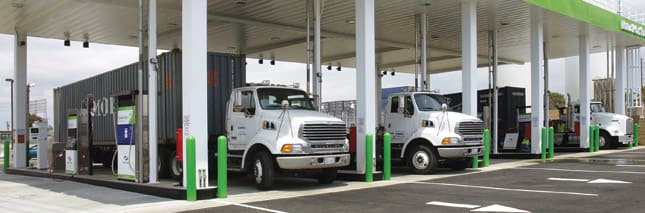
The new bill would provide tax incentives for conversion to clean natural gas vehicles, such as these. But the ATA says the incentives wouldn't be enough to spur NG infrastructure.
Sens. John Kerry (D-Mass.) and Joe Lieberman (I-Conn.) introduced climate change legislation Wednesday, drawing mixed results from the trucking and construction industries.
The American Power Act would establish a hard price collar on carbon emissions credits that operators would have to purchase. The initial floor rate would be at $12 a ton, increasing at 3 percent over inflation annually. The ceiling would be at $25 a ton, increasing at 5 percent over inflation each year.
The legislation also includes $7 billion a year to improve the transportation infrastructure and efficiency. To address dependence on foreign oil, the bill would provide tax incentives to truck buyers and fleets for conversion to clean natural gas vehicles. The legislation would also support "efforts to create strong federal standards for greenhouse gas emissions and efficiency improvements in our vehicle fleet."
Other provisions of the bill include investments in clean coal, nuclear, and renewable energy technologies.
Clean energy groups and alternative fuels supporters were on board with the new bill.
"We applaud Senators Kerry and Lieberman for their efforts to move forward with a broad energy package that includes replacing imported petroleum products with natural gas in America's vehicle fleets," said Andrew Littlefair, president and CEO of Clean Energy. "The introduction of this bill, particularly the tax incentives specified for natural gas vehicles, is a highly meaningful step in national efforts to help ensure U.S. energy security and preserve environmental quality."
"The United States is behind many other countries in using natural gas as a transportation fuel, and the provisions in this legislation will encourage more fleets to switch to clean burning, domestically produced natural gas," said Richard Kolodziej, president of NGVAmerica.
However, the American Trucking Associations announced it would not support the bill, saying it's a hidden tax on transportation because costs would be passed on to consumers.
"While others might object to our characterization, the climate bill clearly imposes a tax on transportation fuels and reallocates revenue from that tax for non-transportation purposes," said Bill Graves, ATA president and CEO. "Part of our concern is that with this cap and tax bill, trucking companies are being asked to pay for the reduction of carbon output three times over. The first payment will take the form of equipment cost increases for large truck fuel efficiency regulations referred to earlier. The second will be an increase in excise fees we pay into the Highway Trust Fund as the cost of trucks and tires rise under this legislation. And the third will be the enormous hidden fuel taxes that result from the Kerry-Lieberman bill."
ATA also said the tax incentives are insufficient to ensure the build-out of a competitive natural gas refueling infrastructure.
The Associated General Contractors of America was not pleased with the legislation either. The bill would give the Environmental Protection Agency free reign to approve or deny construction and rehabilitation projects, and this would create regulatory obstacles for builders, said Stephen E. Sandherr, CEO.
"Worse, by taking funds raised through the proposal's new transportation fees and committing all but a small percentage to unrelated spending, the legislation leaves our aging and inefficient roads, airways and transit systems vastly underfunded," he said. "The inevitable consequences of this bill are higher taxes, fewer jobs, and continued reliance on wasteful buildings, inefficient infrastructure and leaky water systems. Stifling economic growth and neglecting our primary environmental challenges is not an effective way to address climate change."
The American Association of State Highway and Transportation Officials said it was against the legislation because it preempts funding from the Highway Trust Fund.
"The Highway Trust Fund has been a reliable source of revenue for more than 50 years," said John Horsley, AASHTO executive director. "Today, however, the Highway Trust Fund is in trouble. Three transfers from the general fund have had to be made to the Highway Trust Fund over in the past 18 months to keep it solvent. The evidence is clear; Congress can ill afford to consider any legislation that preempts funding from the Highway Trust Fund which supports the vital transportation systems every American relies on."
More Drivers

Truck Drivers Need More Than Another Alert
Fleets have more visibility into truck health, safety events, and driver activity than ever. The next challenge is turning all that information into useful guidance for the person who has to decide what to do next.
Read More →
FMCSA Removes 110 Truck Driver Training Schools from Certified ELDT List
Federal regulators also are targeting more than 160 additional training providers and launching a nationwide audit of third-party CDL skills testers as part of a broader crackdown on trucking fraud.
Read More →
Hours of Service Pilot Programs: FMCSA Readies for 2027 Rollout
Two pilot programs could eventually reshape hours-of-service rules, giving truck drivers options to pause their 14-hour clock or use longer split sleeper rest periods.
Read More →
Medical Cards, English Proficiency Reshape Roadcheck Violations
Medical-card violations jumped to the top of the driver out-of-service list during CVSA’s 2026 International Roadcheck, while English-language proficiency violations appeared among the leading violations for the first time.
Read More →
Driver Trust Can Make or Break the Success of Fleet Safety Technology
New Teletrac Navman research suggests that onboarding, transparency about driver data, and positive feedback can play a significant role in how commercial drivers respond to safety and coaching technology.
Read More →
EEOC Sues KLLM Over Alleged Sex Discrimination in Driver Training
KLLM is facing a federal sex-discrimination lawsuit over policies the EEOC alleges put female truck driver trainees at a disadvantage.
Read More →
FMCSA Moves to Codify English Language Requirements for Commercial Drivers
By changing regulations on English-language proficiency requirements for commercial drivers, rather than relying on a guidance memo, the FMCSA said future administrations won't be able to walk back the Trump administration's stricter enforcement with just a memo.
Read More →
Drivers Put Western Star Trucks to the Test at Star Nation Experience
Watch to get an inside look at the Western Star trucks, technology, and community behind the Star Nation Experience 2026!
Read More →
Trump Administration Looks to Put More Veterans Behind the Wheel
The Freedom Haulers program pulls together existing and expanded programs at several federal agencies to recruit veterans to drive commercial heavy-duty trucks and cut the red tape for them to get a CDL, training, and employment.
Read More →
Putting Mack’s Command Steer to the Test
A test drive of Mack’s Command Steer active steering system evaluates how it can make truck driving easier and less tiring.
Read More →