




Neste Expands Renewable Diesel Availability in Washington State
Neste is working with Coleman Oil Company to increase the availability of renewable diesel fuel in the state of Washington.

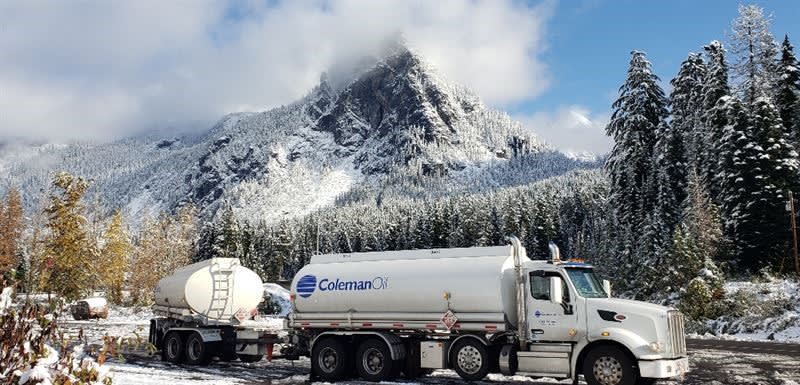
Impoved cold weather performance than conventional diesel fuel is one of the main benefits renewable diesel fuel has for Washington state fleets, according to Neste.
Photo: Neste
Neste has partnered with Coleman Oil Company to provide greater access to renewable diesel fuel in Washington state. Coleman is a provider of fuels, biofuels, lubricants, and related products, based in Lewiston, Idaho.
This partnership expands the availability of Neste MY renewable diesel to key locations in Coleman Oil’s network of commercial fueling stations and other distribution channels. These include bulk fuel delivery and retail stations across Washington.
The deal will help provide more of the lower-emission fuel to the state’s construction, agriculture, heavy duty trucking industries, and municipalities.
“Washington State has demonstrated its commitment to sustainability by becoming the latest state to implement a Clean Fuel Standard,” said Carrie Song, vice president, renewable road transportation, Americas at Neste.
“Today, Neste is supporting the state’s goal of reducing emissions from the transportation sector by providing renewable diesel to the companies and cities in Washington. We are excited to partner with Coleman Oil; their massive distribution network is crucial for us in making renewable diesel available across the state.”
Better in Cold Weather
Made from sustainably sourced, 100% renewable raw materials, Neste MY renewable diesel can reduce greenhouse gas emissions by up to 75% over the fuel’s life cycle compared with fossil diesel, the company said.
In addition to reducing GHG emissions, renewable diesel delivers strong performance, according to Neste. That’s because renewable diesel does not contain sulfur, oxygen or aromatic compounds. Therefore, it combusts cleaner than conventional diesel fuel.
Additionally, Neste, said MY renewable diesel performs well in extreme cold conditions (down to 4 degrees below zero) and can be stored over long periods of time without deterioration, making it an ideal choice for businesses that operate in Washington, where the average daytime temperatures can range from the upper 30s to around zero in the winter.
More Fuel Smarts

How Volvo Updated Its D13 for EPA 2027 [Watch]
Volvo’s updated D13 promises lower emissions without sacrificing performance or fuel economy. Take a closer look at what changed inside the engine in this HDT Spotlight video.
Read More →
Diesel Price Spike Shortens Payback for Natural Gas Trucks, Report Says
Energy Vision estimates fleets could recover the higher purchase price of an RNG-fueled Class 8 tractor in 1.3 to 2.8 years under current fuel-price scenarios.
Read More →
Calstart Becomes Catalyst Mobility, Reflecting Broader Focus
Calstart is now Catalyst Mobility, reflecting the nonprofit’s growing national role in clean transportation, including zero-emission trucks, infrastructure and incentive programs.
Read More →

Record Diesel Prices Squeeze Trucking Fleets
Average U.S. diesel prices have climbed to nearly $6 a gallon, surpassing the 2022 record as tight refinery capacity and Middle East disruptions keep fuel costs elevated.
Read More →
How Fuel Delivery Shapes Engine Performance
Fuel delivery depends on more than what happens at the injector. For fleet, maintenance and technical professionals, looking at the full path from pump to injector can provide useful context for understanding engine performance.
Read More →
East Coast Port Launches $45M Electric Truck Push
The Port Authority of New York and New Jersey announced millions in incentives for zero-emission drayage trucks, yard tractors, and new charging hubs near the port.
Read More →
California Bill Could Shed Light on Electric Truck Prices
Why do battery-electric Class 8 trucks remain so expensive? A California bill headed to Gov. Gavin Newsom would give fleets and state agencies more visibility into what manufacturers charge.
Read More →
Detroit Opens Orders for EPA 2027 Engines
Detroit isn’t starting from scratch to meet EPA 2027 diesel emissions standards. Its Gen 6 DD13 and DD15 engines keep much of today’s platform while updating the fuel and aftertreatment systems.
Read More →
Zero-Emission Truck Corridor Planned for West Coast
California, Oregon, Washington, British Columbia and Baja California are coordinating plans for truck charging and hydrogen fueling from Canada to Mexico.
Read More →
A Closer Look at Kenworth’s Electric T880E Vocational Truck [Video]
Learn more about Kenworth's T880E battery-electric vocational truck at the Paccar Technical Center, including its range, applications, upfitting considerations, and PTO options, in this HDT Spotlight video.
Read More →