




Navistar Names Troy Clarke CEO, Reports Smaller 1Q Loss
Citing significant progress in its turnaround plan and announcing a smaller first-quarter loss than it had a year ago, Navistar International has named Troy Clarke president and chief executive officer, with interim CEO Lewis Campbell stepping down April 15.
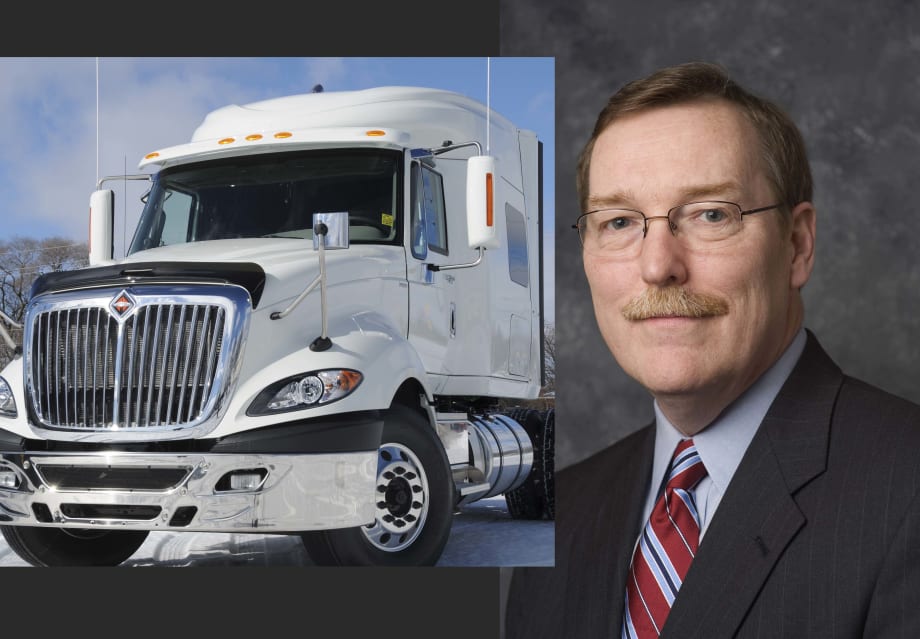
The SCR-equipped ProStar, left, and Troy A. Clarke, who will take over as Navistar CEO April 15.

The SCR-equipped ProStar, left, and Troy A. Clarke, who will take over as Navistar CEO April 15.
Navistar International has named Troy Clarke president and chief executive officer, effective April 15, when Lewis Campbell, who has served as executive chairman and interim CEO since August 2012, will step down.
The company also announced a first quarter 2013 net loss of $123 million, or $1.53 per diluted share, compared to a first quarter 2012 net loss of $153 million, or $2.19 per diluted share.
Clarke, currently the company's president and chief operating officer, will also join the board. Prior to serving as president and COO, Clarke was president of Navistar Asia Pacific. He joined Navistar in January 2010 after a 35-year career at General Motors.
James Keyes, who has served as a board member since 2002, will become non-executive chairman, also effective April 15.
For the first quarter, excluding discontinued operations, Navistar recorded a loss from continuing operations of $114 million, or $1.42 per diluted share, compared to a first quarter 2012 loss from continuing operations of $144 million, or $2.06 per diluted share.
The company reported year-over-year EBITDA increased $163 million, mainly due to $109 million in lower warranty adjustments and $70 million in reduced SG&A expenses, partially offset by lower volumes. Manufacturing revenues in the quarter were $2.6 billion, down 12% from the first quarter of 2012. The decline reflected lower overall industry demand and lower market share resulting from the company's transition to selective catalytic reduction to meet emissions regulations
"Over the past six months, Navistar has made significant progress on many important fronts, including on our three near-term priorities: improving quality, meeting each of our clean engine launch milestones, and delivering on our 2013 operating plan," Campbell said. "When I assumed the interim CEO role last August, I was prepared to stay as long as necessary to oversee the company through a transition period, and today I am pleased to announce our turnaround is firmly under way and our return to profitability is clearly in sight."
Campbell noted that during the quarter, Navistar submitted its 13-liter SCR engine for certification ahead of schedule, kicked off pilot production for ProStar+ vehicles with the 13-liter SCR engine earlier this week, and did well at managing things it can control, such as aggressively managing inventories and significantly reducing discretionary spending.
"In order to move forward on our path to profitability, we recognize the need to do even more given current industry volumes and our short-term market share outlook in North America," said Campbell. "We believe our market share will begin to improve in the second half of 2013 with the full launch of our clean engine lineup. And while we are already on track to exceed our goal of reducing structural costs by $175 million this year, we recently launched a benchmarking initiative that has already identified additional cost savings to further lower our breakeven point in 2013."
The company also continues to make progress on its return on invested capital (ROIC) initiatives. Already in the second quarter, Navistar completed the sale of its equity interests in its India truck and engine joint ventures; completed the sale of its Workhorse Custom Chassis brand; and subleased a portion of its Cherokee, Ala., manufacturing facility to a railcar manufacturing company.
More Fleet Management
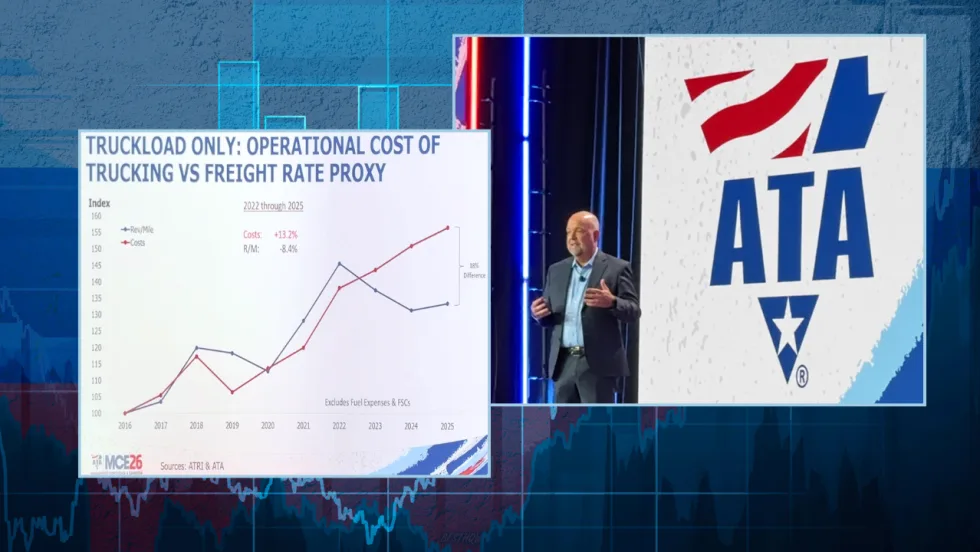
Why This Trucking Recovery Is Different
Freight demand remains sluggish, but rising costs and tougher enforcement have taken enough capacity out of the market to change the outlook for motor carriers.
Read More →
Platform Science Adds Dispatch and Safety Tools
Four additions to PS Fleet help fleets monitor loads, manage driver coaching, share truck locations and adjust video system settings.
Read More →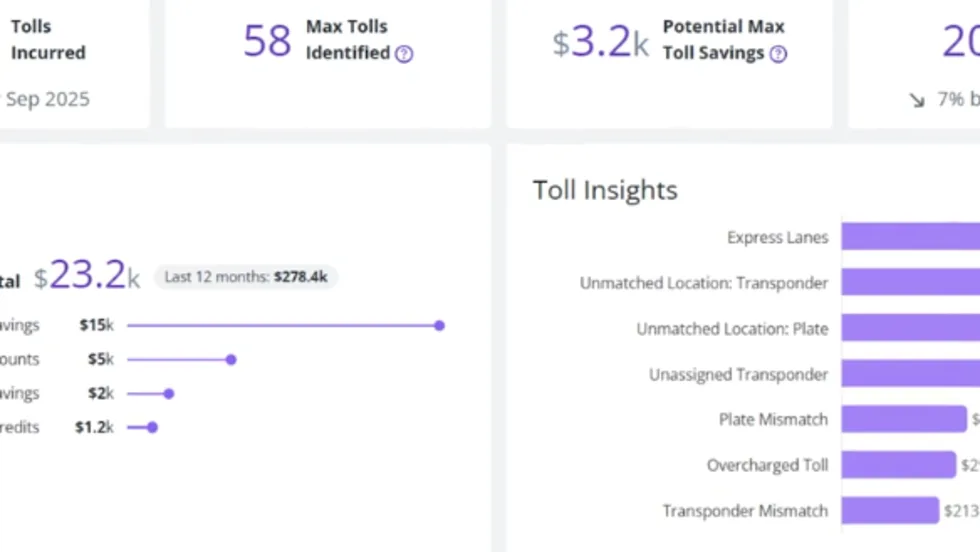
PrePass Intelligence Mines Fleet Bypass, Toll and Safety Data
PrePass Intelligence helps fleets measure bypass savings, flag potential toll overcharges, and spot suspicious transactions by combining data from separate systems.
Read More →
Motive Adds AI Agents for Fleet Operations
New tools automate follow-up on fleet data, from maintenance work orders to driver alerts, with two-way voice conversations planned for later this year.
Read More →
Can You Beat Our Trucking Trivia Challenge?
Test your truck knowledge with 19 trivia questions from Heavy Duty Trucking Exchange. Can you keep up with the fleet pros?
Read More →
BeyondTrucks Adds Rules Checks to Dispatch
New Compatibility Engine checks driver qualifications, equipment requirements and fleet policies before loads are dispatched.
Read More →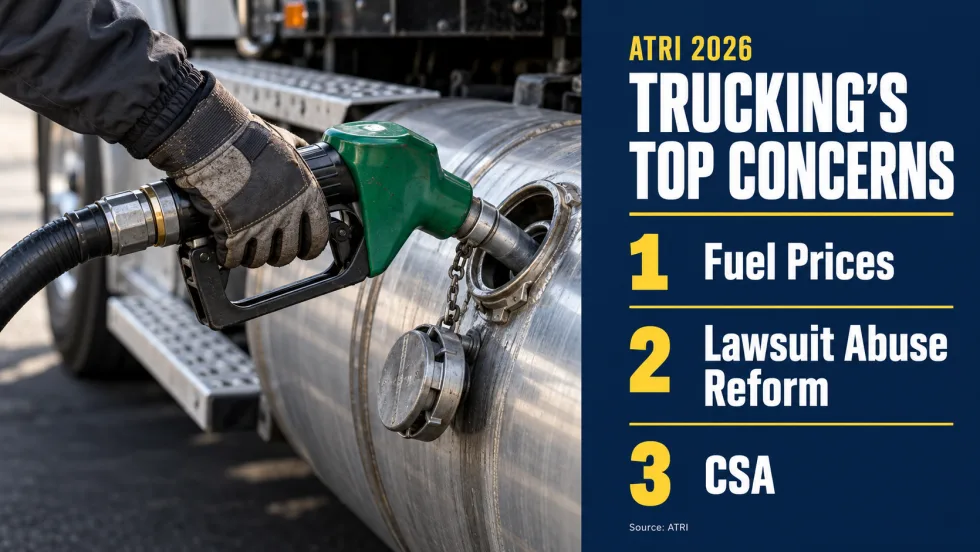
Diesel Prices Hijack Trucking’s Worry List
ATRI’s annual survey finds cautious optimism about freight, but diesel costs, litigation, and insurance continue to squeeze fleets. Drivers have different priorities on several issues.
Read More →
Nomination Deadline Extended for HDT Emerging Leaders
Just a few more days to nominate accomplished trucking fleet professionals under 40 who are making an impact and helping lead the industry forward for the HDT Emerging Leaders award. Deadline extended to October 20!
Read More →
What Will ATA’s New Leader Bring to Trucking's Table?
Incoming President and CEO Mark Colson’s record in Alabama offers clues about his priorities and approach following Chris Spear’s abrupt departure as the head of the American Trucking Associations.
Read More →
Volvo, Waabi Start Commercial Autonomous Operations in Texas
Volvo VNL Autonomous trucks, powered by the Waabi Driver, are hauling freight directly to third-party facilities for a customer in Texas.
Read More →