




National Freight Plan Needs to Address Congestion, GAO Says
Truck and rail traffic are expected to grow, good news for the economy as well as the carriers -- but with growth comes congestion, and transportation planners need more information and better direction from Congress on how to manage the problem. That’s the message from the Government Accountability Office.

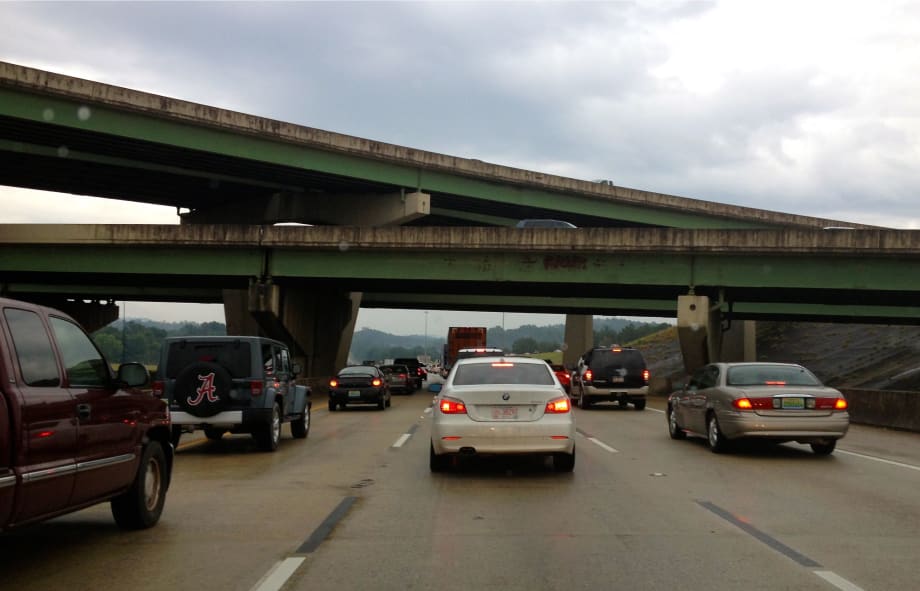
Truck and rail traffic are expected to grow, good news for the economy as well as the carriers, but the benefits are not without drawbacks. With growth comes congestion, particularly in cities, and transportation planners need more information and better direction from Congress on how to manage the problem.
That’s the message from the Government Accountability Office, in response to a request by Sen. John Walsh, D-Mont., for an assessment of national freight flows and their impact on congestion.
Under the current highway program, DOT is undertaking a multi-year effort to measure the scope of freight movements as a way to establish priorities and set goals for a National Freight Plan.
As part of that process the department is working out a highway-based Primary Freight Network that will eventually be the basis of the national plan, but the department’s instructions from Congress do not include specific references to freight congestion, GAO said.
“Freight-related traffic congestion affects communities of all sizes in the U.S.,” GAO said.
In some places it has been a problem for decades due in part to inadequate funding. In other areas, such as the Bakken Region of North Dakota where the fracking industry has exploded, it is a new problem.
“Given that freight volumes are expected to increase over the next 25 years and beyond, a growing number of communities will likely be seeking to devise and fund solutions to mitigate the impacts of freight-related traffic congestion.”
Creation of a National Freight Plan provides an opportunity to address the issue, GAO said.
What’s required is a clearer definition of the appropriate federal role, spelling out the goals, objectives and measures for addressing congestion. And planners need more and better data, GAO said.
Another particular that Congress must address is the size of the freight network.
In its initial instructions in the 2012 highway bill, Congress told DOT that the National Freight Network should be limited to 27,000 centerline miles, although that could be expanded to 30,000 miles if necessary.
But in its initial work on the Network, the Federal Highway Administration found that it could not pack all of Congress’s requirements into that number of miles. The agency said the number should be more like 41,500 miles. GAO said Congress needs to either bump up the number, or change other expectations it has for the freight network.
It recommended that DOT take steps to help states define the impact of freight movements on their communities, including standards for data collection and analysis.
And it suggested that the National Freight Strategic Plan include a statement spelling out the federal role in freight-related traffic congestion.
DOT agreed with GAO’s assessment, and said that the Obama administration’s proposed highway bill, the GROW America Act, takes up these issues. It would establish a Multimodal National Freight Network that addresses community issues and collects data through a public process. It also would establish an incentive program that states could use to relieve congestion, and it would require states to develop freight plans that include the impact on communities, DOT said.
Sen. Walsh is a member of the Senate Commerce, Science and Transportation Committee, which is responsible for drafting a portion of the next highway bill.
More Fleet Management

Why Private Fleets Are Taking More Freight
Private fleets are putting their own trucks on demanding customers and high-cost lanes as companies seek greater control over service, costs, and capacity.
Read More →
Color Match Smarter: Tools That Restore & Perform
For fleet managers and collision repair professionals keeping heavy-duty trucks on the road, getting the color right the first time isn't just about appearance — it's about efficiency, turnaround time, and bottom-line results. Discover how today's digital color tools are transforming the repair process from guesswork to precision.
Read More →
FMCSA Pauses Biennial-Update Enforcement Amid Motus Transition
Carriers whose updates were due on or after June 1 have more time, while FMCSA works to stabilize its new registration system and warns of phishing sites impersonating its new carrier registration system, Motus.
Read More →


2026 Blueprint for Countering Smarter Supply Chain Theft
Cargo theft is no longer just the cost of doing business. It's a multi-billion-dollar criminal enterprise exploiting vulnerabilities across your fleet, drivers, and supply chain.
Read More →
How Telematics Improves Visibility, Control, and Performance in Refrigerated Fleets
Explore how telematics help refrigerated fleets improve visibility, uptime, efficiency, compliance, and cargo protection across connected cold chain operations.
Read More →
What the U.S.-Canada Trade War Means for Trucking
Escalating U.S.-Canada tariffs could disrupt cross-border freight, reduce truck volumes, raise costs, and create new uncertainty for carriers on both sides of the border.
Read More →
What Are Trucking’s Top Concerns for 2026?
The American Transportation Research Institute wants to know what's worrying trucking fleet managers, drivers, and other stakeholders in its annual Industry Issues survey.
Read More →
American Trucking Associations Looks for a New Leader
ATA President and CEO Chris Spear abruptly left his job at the association on August 21, at a pivotal time for the trucking industry.
Read More →
Public Wi-Fi Cybersecurity Risks: How Truck Drivers and Fleets Can Protect Their Data
Public Wi-Fi can expose truck drivers and fleets to credential theft, malware, and other cyber threats. Here’s how to reduce the risk on the road.
Read More →
For Nicky Cupp, Fleet Innovation Starts With Frustration
HDT Truck Fleet Innovator Nicky Cupp turns everyday pain points at Fraley & Schilling into opportunities for better technology and smarter processes.
Read More →