




Mica Says He Will Challenge Any Changes to Hours Rule
Rep. John Mica, chairman of the House Transportation and Infrastructure Committee, warned President Obama that he will challenge any changes to the current hours of service rules. "We will aggressively oversee any attempt by the U.S. Department of Transportation to impose new regulatory burdens on the trucking industry by making changes to the current hours of service rules," Mica and three fellow Republicans wrote in a Sept. 23 letter to the president
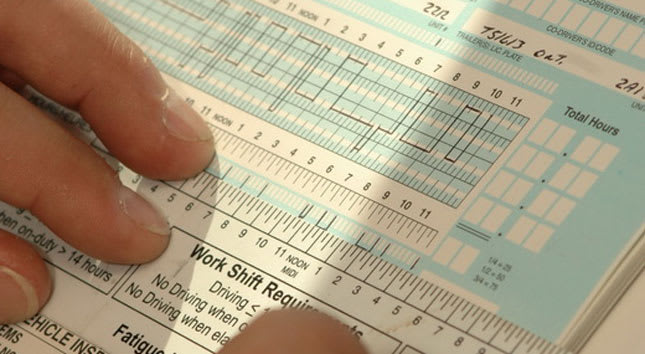
Rep. John Mica, chairman of the House Transportation and Infrastructure Committee, warned President Obama that he will challenge any changes to the current hours of service rules.
"We will aggressively oversee any attempt by the U.S. Department of Transportation to impose new regulatory burdens on the trucking industry by making changes to the current hours of service rules," Mica and three fellow Republicans wrote in a Sept. 23 letter to the president.
The Federal Motor Carrier Safety Administration has been working on revisions to the rule for two years and is scheduled to post its final version Oct. 28. Whether it will meet that deadline remains to be seen. The final rule was slated to be sent to the White House Office of Management and Budget Aug. 30, but it still is being reviewed in the secretary's office at the Department of Transportation.
The agency is revising the rule in order to resolve a long-running legal fight with Public Citizen, the Teamsters union and other groups. Twice since 2003 these groups won rulings in which the court ordered the agency to tighten work hours, and each time the agency came back with a defense of the rule. Then in 2009 the agency reversed course, agreeing to revisit the rule while Public Citizen suspended its suit. Public Citizen reserved the right to renew its suit if it does not like the new rule.
Proposed changes
The agency has proposed many changes, key among them a possible reduction in daily driving time from 11 to 10 hours.
Another proposed change would give drivers a one-hour break during the day by limiting actual duty time within the 14-hour driving window to 13 hours. And a third significant change would modify the 34-hour restart to include two periods between midnight and 6 a.m., to be used only once a week.
The trucking and shipping community view these possible changes with alarm, arguing that they will do nothing to improve safety and will add significant costs to doing business.
Mica's letter presents the industry's view of the issue. He and his colleagues say they have seen no evidence that the current rules, which have been in effect for seven years, need to be changed. Truck safety has been improving since the rules went into effect, and the proposed changes would lead to more trucks and drivers on the road, they say.
"The last thing our government should be doing is artificially increasing the costs of almost every consumer good with unneeded regulation."
Signing the letter with Mica were Reps. John Duncan, R-Tenn., chairman of the Highways and Transit Subcommittee, Bill Shuster, R-Pa., and Sam Graves, R-Mo.
Industry objections
The letter picks up on themes that American Trucking Associations has been sounding for the past couple of years.
ATA senior vice president Dave Osiecki earlier this month told the Office of Management and Budget that if the proposed rule becomes final it will lead to lower wages for hundreds of thousands of drivers, greater costs for carriers and billions in lost productivity.
In a letter to Cass Sunstein, administrator of information and regulatory affairs at OMB, Osiecki applauded the Obama administration's commitment to streamlining regulatory requirements and eliminating red tape. The pending hours rule is a prime candidate for OMB review in light of this commitment, Osiecki said.
Osiecki said he is scheduled to meet with OMB officials on Oct. 7 to discuss the issue.
"I'm optimistic that they are going to be open-minded and perhaps communicate with FMCSA about their concern," he said.
What's next
It is difficult to predict which way this will go. If the agency decides to keep the changes it has proposed, ATA will sue, Osiecki said. And if it sticks with the rule as is, Public Citizen will renew its suit. A final rule that falls somewhere in between could lead in any direction.
If ATA sues, the process will begin with a request for a stay of the new rule pending completion of judicial review, Osiecki said.
Court review of a case like this typically takes a year to 18 months, said Ken Siegel, a veteran transportation attorney with the Washington, D.C., firm of Strasburger and Price. On top of that, if the rule contains significant changes, the agency is likely to schedule a year or two for implementation, he said.
Meanwhile, carriers are considering the operational changes they might have to make if the proposed changes actually go into effect, three to four years from now. Look for continuing coverage on TruckingInfo.com.
More Drivers
When Language Stops the Truck: The Return of ELP Out-of-Service Orders
English language proficiency rules for commercial drivers aren’t new, but renewed out-of-service enforcement has raised the stakes. Here’s what carriers need to know before a driver reaches a roadside inspection.
Read More →
Samsara Launches Custom AI Agent Builder
Agent Studio lets fleets create AI tools for hours-of-service monitoring, reporting and driver support, including agents that communicate by phone.
Read More →
Trucker Path Expands Reserved Parking Network
Trucker Path has added close to 6,000 more truck parking spaces to its Trucker Path Reserved Parking Network with the addition of Safe Truck Parking.
Read More →
EEOC Sues Texas Trucking Company Over Driver Age Limits
The agency says Trancasa USA rejected applicants over 65 and applied tougher driving-record standards to those over 60.
Read More →
Nussbaum, Roehl Announce Second Driver Pay Increase This Year
This year has seen a swath of major truck driver pay increases as freight capacity has tightened.
Read More →
From One Generation to the Next: How Mentorship Builds Safer Truck Drivers
After three decades in trucking, Harold Perry shares what he's learned about driver safety, mentorship, and helping the next generation build confidence behind the wheel.
Read More →
Truck Drivers Need More Than Another Alert
Fleets have more visibility into truck health, safety events, and driver activity than ever. The next challenge is turning all that information into useful guidance for the person who has to decide what to do next.
Read More →
FMCSA Removes 110 Truck Driver Training Schools from Certified ELDT List
Federal regulators also are targeting more than 160 additional training providers and launching a nationwide audit of third-party CDL skills testers as part of a broader crackdown on trucking fraud.
Read More →
Hours of Service Pilot Programs: FMCSA Readies for 2027 Rollout
Two pilot programs could eventually reshape hours-of-service rules, giving truck drivers options to pause their 14-hour clock or use longer split sleeper rest periods.
Read More →
Medical Cards, English Proficiency Reshape Roadcheck Violations
Medical-card violations jumped to the top of the driver out-of-service list during CVSA’s 2026 International Roadcheck, while English-language proficiency violations appeared among the leading violations for the first time.
Read More →