




Mercedes-Benz Announces Upgrades to Metris Van Family
New powertrain offerings and extended range electric options highlight enhancements to the 2020 Mercedes-Benz Metris van.

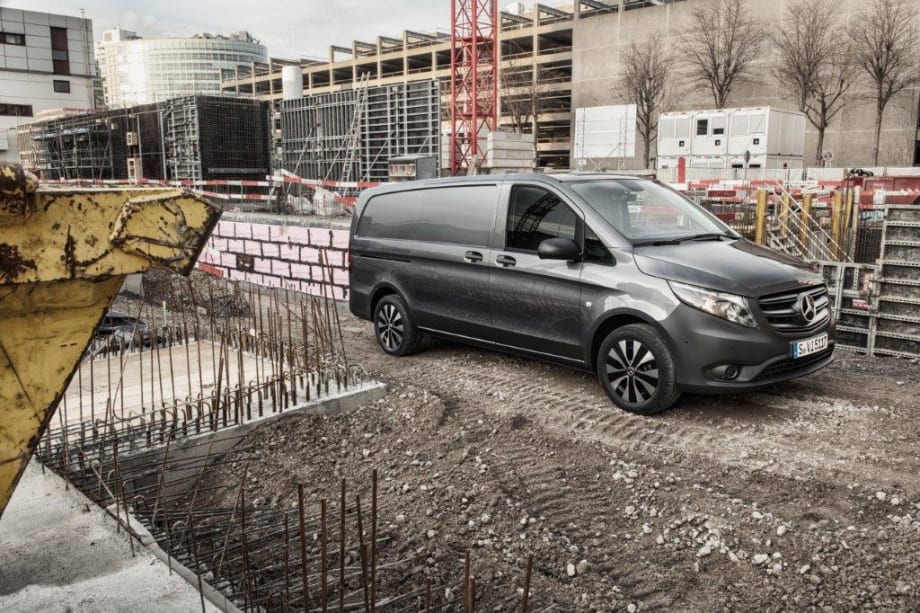
The 2020 Mercedes-Benz Metris van features an air suspension option developed specifically with the North American market in mind.
Photo: Mercedes-Benz
With the Geneva Auto Show cancelled due to concersn about COVID-19, Mercedes-Benz opted to hold a press teleconference on March 10, 2020, to introduce the latest version of its Metris medium van to the world.
The 2020 Metris and eMetris vans (called the “Vito” and “eVito Tourer” in Europe) have received new upgrades on the outside and underneath their sheet metal, including new engine and battery capacity options, as well as a new infotainment center, advanced safety features, and an air ride suspension option.
Pia Herkewitz, product marketing manager, Mercedes-Benz Midsize Vans, noted during the conference call that Metris vans hit a sales record of 440,000 units in 2019, including an 18% increase in sales in the United States, with 45,000 vans sold. "The extensive range of new assistance systems and the new engine generation continues the Metris success story and makes it even more attractive,” Herkewitz said. “The Metris is still uncompromising when it comes to operating costs or the desire for low emissions. As before, the payload and diversity of variants are among the best in the segment. The new infotainment offerings also meet the increased demands of our commercial customers."
Among the upgrades on the Metris pointed out by Herkewitz are a new, “more robust,” four-cylinder diesel engine that is 13% more efficient than its predecessors. Now, according to Herkewitz, power offerings for Metris vans start at 136 hp and top out at 239 hp.
For now, Mercedes will continue to only sell gasoline-powered Metris vans in the United States, with Marcus Breitschwerdt, head of Mercedes-Benz vans, noting that the company feels the gas engine is the “correct” option for North America at the moment.
Breitschwerdt also said a new air suspension option for Metris was developed with North America primarily in mind. “This new suspension provides a great deal of comfort and an unbelievable upgrade in a smooth ride on the highway,” Breitschwerdt said. “We designed this suspension for American roads, and it is a great feature that will give us a unique selling position in North America while strengthening our brand image and market position.”
The eMetris, electric powertrain version of Mercedes’ midsize van also received powertrain enhancements, including a new, zero-emissions battery pack with up to 260 miles range on a single battery charge. Moreover, said Benjamin Kaehler, head of eDrive@VANs at Mercedes-Benz Vans, this new electric drivetrain can be charged from 10% to 80% of a full charge in 45 minutes. “That’s about the length of time it takes for my family to enjoy a nice lunch,” Kaehler quipped. “Assuming the children like what is being served and want to eat it.”
All version of the 2020 Metris van received upgraded safety systems packages and an enhanced, center console-mounted infotainment system with improved graphics and a clearer camera images.
Speaking of camera images, 2020 Metris vans will also feature an improved reverse camera system and an integrated, digital rear-view mirror. This new system allows images from the backup camera to be relayed to the rear-view mirror to display clear views behind the van – even if the van’s cargo bay is stacked full of cargo and blocking the driver’s actual line of sight.
Other new Metris van upgrades include:
Distronic Active Brake Assist advanced safety systems
Improved reversing camera
Digital rear-view mirror
New infotainment portfolio
Enhanced vehicle interior and new seat covers
New radiator grille
The 2020 Metris van will be available for sale in April.
More Equipment

How Volvo Updated Its D13 for EPA 2027 [Watch]
Volvo’s updated D13 promises lower emissions without sacrificing performance or fuel economy. Take a closer look at what changed inside the engine in this HDT Spotlight video.
Read More →
Michelin Tire Improves Efficiency and Durability for Regional Fleets
The Michelin X Multi Energy D2 is a regional haul drive tire engineered to help fleets improve fuel efficiency, durability and traction in demanding stop-and-go operations.
Read More →
ZF Expands Commercial Vehicle Push in North America
ZF is expanding its North American commercial-vehicle presence with new transmission applications, electrification, trailer technology and autonomous-driving systems.
Read More →
Tesla Wants a Self-Driving Semi. Are Cameras Enough?
Could Tesla’s camera-only autonomous driving technology work on an 80,000-pound Semi? In this commentary, HDT's Deborah Lockridge takes a look at Tesla, Cybercab, and how autonomous trucks see the road.
Read More →
Kodiak: Driverless Long-Haul Truck Launch on Track for 2026
Kodiak AI says its driverless long-haul safety case is 93% complete and it remains on track to begin commercial operations by year-end 2026.
Read More →
What DOT’s Automated Vehicle Strategy Means for Trucking
The U.S. Department of Transportation issued a new automated-vehicle strategy that outlines plans for driverless-truck regulations, cross-state freight corridors, and federal safety standards.
Read More →
East Coast Port Launches $45M Electric Truck Push
The Port Authority of New York and New Jersey announced millions in incentives for zero-emission drayage trucks, yard tractors, and new charging hubs near the port.
Read More →
PlusAI Going Public to Fund Autonomous Truck Launch
A SPAC deal could provide PlusAI with up to $300 million as it works toward a 2027 commercial launch of factory-built autonomous trucks.
Read More →
NHTSA Moves to Rewrite Truck Fuel-Economy Rules
The National Highway Traffic Safety Administration says it lacks authority to regulate medium- and heavy-duty truck engines separately from complete vehicles, but the existing standards have not yet been eliminated.
Read More →
Detroit Opens Orders for EPA 2027 Engines
Detroit isn’t starting from scratch to meet EPA 2027 diesel emissions standards. Its Gen 6 DD13 and DD15 engines keep much of today’s platform while updating the fuel and aftertreatment systems.
Read More →