




Little Common Ground at Restart Hearing
The subject at Thursday’s House hearing was truck driver hours-of-service regulations, but the target was federal regulation of business. Anne Ferro, chief of the Federal Motor Carrier Safety Administration, testified that the 34-hour restart provision of the rule will save an estimated 19 lives a year.



The subject at Thursday’s House hearing was truck driver hours-of-service regulations, but the target was federal regulation of business.
Anne Ferro, chief of the Federal Motor Carrier Safety Administration, testified that the 34-hour restart provision of the rule will save an estimated 19 lives a year.
Rep. Tom Rice, R-S.C., said that in percentage terms this number is so small that there is no way to know if the rule has any safety impact at all.
“We don’t know if this will save any lives, but we do know that it will have a tremendous economic effect on the industry,” Rice said.
Rep. Richard Hanna, R-N.Y., chairman of the House Subcommittee on Contracting and Workforce, which held the hearing, said it is clear to him that the rule represents an ideology rather than a solution.
He later explained that, in his view, accidents are inevitable and there is no point in trying to drive the truck-related fatality rate down to zero.
“If the goal is to reduce all deaths to zero, then we would close all our highways and park all our trucks,” he said.
“(Zero deaths is) an unrealistic, impractical goal that burdens the industry and is philosophically based, not reality based.
He added, “As Mr. Rice said, statistically there is no evidence that this rule helps. And there is considerable evidence that by pushing people into morning rush hour that it may actually do the opposite.”
A lot of the industry’s negative reaction to the restart is more about a regulatory process that demonstrates arrogance on the part of the agency, he said.
The rule inflicts pain on truck drivers, he said. “Why is the agency so numb to the industry, which is committed to safety?”
Ferro strongly denied that the agency is arrogant and numb.
The 19 lives are an estimate but each life is precious, she said.
Rep. Tim Huelskamp, R-Kan., said he appreciated the reference to life being precious since “that’s not the official line of the administration,” and then moved on to question Ferro about the field study of the restart rule that was mandated by last year’s highway bill.
Echoing a concern expressed by the trucking community, he asked if the agency should have completed the study before the rule took effect.
Ferro explained that when Congress ordered the study it did not connect the completion of the study to the effective date of the rule. The rule went into effect July 1, and the study was due Sept. 30.
The agency missed that deadline but Ferro said the study is being reviewed and she hopes it will be ready in the first quarter of next year.
She added that the restart, which requires two successive periods between 1 a.m. and 5 a.m., is based on laboratory studies that show drivers perform better if they get their restorative sleep at night.
Rep. Hanna asked Ferro if she is open to rolling back the rule.
“Absolutely not,” Ferro said, adding that discussions about changes and improvements should continue.
Ferro challenged a study released earlier this week by the American Transportation Research Institute, the research arm of American Trucking Associations.
The study has provided much of the ammunition in the trucking industry’s fight against the rule. It uses a survey to show that carriers and drivers are losing productivity and pay as a result of the rule.
Ferro said that a logbook analysis in the survey shows that the rule has had practically no impact on driver’s schedules.
Less than one-third of 1% of the logbooks showed a difference in times before and after the rule took effect, she said.
A trucking witness, Duane Long, chairman of Longistics, told the panel that the restart rule makes it more difficult for some of his driver teams to meet Monday morning delivery requirements.
His teams are experienced and know how to manage their routines to get the work done and get enough rest, he said.
“They resent the intrusion of the government on their daily work routine, they resent the new restart restrictions, and the effect they are having on their ability to make a living,” he said.
Long, who was testifying on behalf of American Trucking Associations, said Congress should suspend the restart provision until the field study is done and the Government Accountability Office has reviewed the data.
Hanna and others have introduced legislation in the House that would do just that.
Hanna said Thursday that he is close to signing up a champion on the Senate side, but close followers of the issue on the Hill say the bill has little chance of passage.
Paul Jovanis, Professor of Civil and Environmental Engineering at Pennsylvania State University, outlined the scientific research that has been done on hours of service and driver fatigue.
The research shows that crash risk increases as driving time increases and that the 10-hour off-duty requirement lowers crash risk.
Trucking interests object to the 30-minute rest break requirement in the hours of service rule, but Jovanis said the benefits of such breaks are overwhelmingly clear. A study he did found that two breaks, as is required in the European Union, reduced the risk of a crash by 30%.
And he referenced the two laboratory studies that Ferro cited as evidence of the need for the new restart rule.
The main finding of the first study was that the subjects who worked daytimes and got their rest at night showed no decline in performance after their 34-hour restart, while those who worked at night and got their rest during the day did show a decline.
The second study looked at night drivers who got a 58-hour restart, which resulted in no performance degradation, he said.
Tilden Curl, an independent who represented the Owner-Operator Independent Drivers Association, said that the restart rule actually causes more fatigue than it prevents.
Drivers try to maximize their miles and hours because they only get one restart in a seven-day period, he said.
In his own personal experience, he said, the effect of the rule is to put him on the streets of his home city, Seattle, during morning rush hour, a situation he could avoid before the rule changed.
He’d like to see the agency put more flexibility back into the rule by allowing drivers to pause their duty clocks while on break. And OOIDA strongly supports a rule to set standards for entry-level driver training, he said.
In one area, at least, OOIDA and Anne Ferro are in agreement: both think Congress should take on the issue of driver detention.
“Because of the industry’s pay-by-mile system, the vast majority of truckers are not compensated for any of the time spent not driving or for any non-driving activities,” he said.
The solution is more flexibility so drivers can manage their daily and weekly schedules, he said.
In this he echoed Ferro, who told the panel that driver pay and loading dock delays significantly impact drivers’ ability to be safe and productive.
“In short, uncompensated delays force drivers to press legal and physical limits to capture a day’s pay,” she said.
“The logistics industry gets this time free on the backs of the drivers, hurting. Uncompensated detention time needs your attention, because what makes the job better, often makes the job safer.”
More Fleet Management

Trimble’s New AI Agent Takes Aim at Fleet Back-Office Busywork
Arc Agent works across Trimble TMS products to automate repetitive tasks such as freight orders, maintenance, invoices, fuel costs and more.
Read More →
How HDT’s 2026 Truck Fleet Innovators Are Rethinking Fleet Operations
Meet five trucking leaders who are challenging assumptions, solving operational problems, and putting innovative ideas to work.
Read More →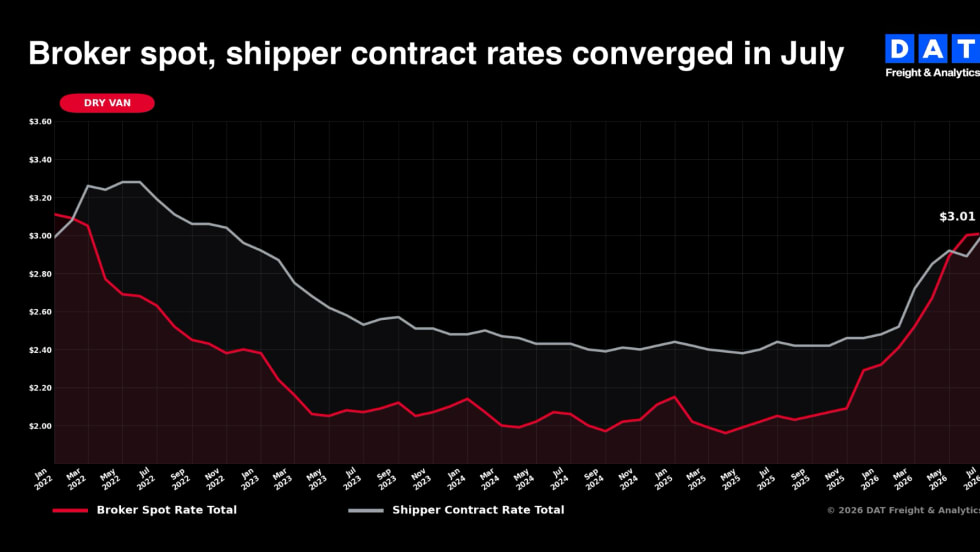
Tight Trucking Capacity Pushes Rates Higher Even as Freight Volumes Fall
“Spot rates moving ahead of contract rates have historically signaled a tightening market, but we haven’t seen a capacity-driven market quite like this one,” said DAT's Dean Croke.
Read More →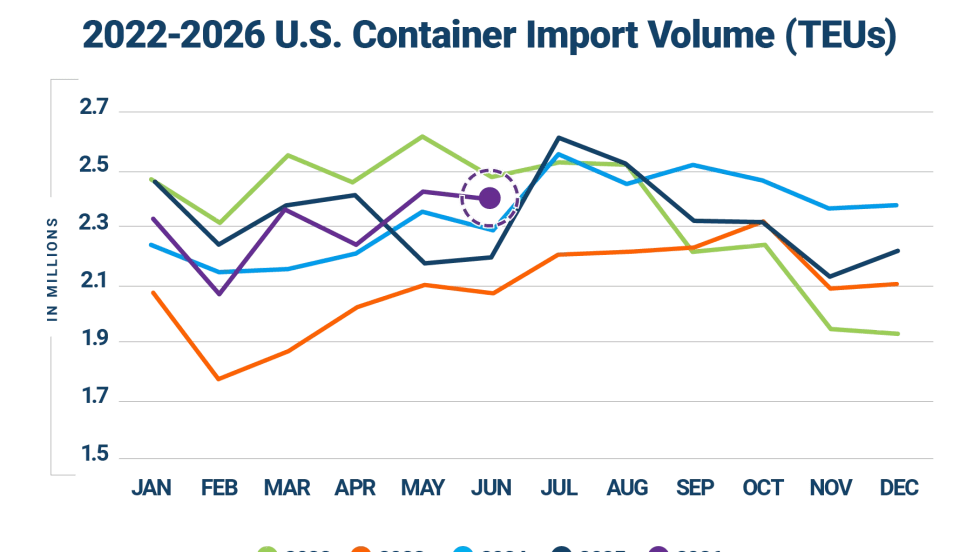
Import Cargo’s Early Peak Season is Winding Down
There was an early start to peak season this year at the nation's gateway ports, as retailers brought in merchandise ahead of tariff changes in late July and responded to other supply chain uncertainties,
Read More →
Fewer Cargo Thefts, Bigger Losses: Criminals Target Higher-Value Loads
CargoNet says organized theft rings are stealing fewer shipments but choosing more valuable freight, including metals and technology, resulting in record losses.
Read More →
How Innovative Trucking Leaders Turn Change Into an Advantage
As the pace of change accelerates in trucking, the fleets that adapt best have more than the latest technology. They have cultures that embrace improvement.
Read More →
Freight Broker Bonds Just Got Harder to Get. Here's What That Means for Your Fleet.
When it gets harder for a freight broker to prove they are financially sound, the ones who cannot clear that bar get pushed out of the market. And those are exactly the brokers who used to leave motor carriers holding the bag.
Read More →
Long-Awaited Canadian Border Bridge to Open in Detroit
For trucking, the bridge opening should offer immediate improvements in efficiency and reliability, with new customs facilities, expanded inspection capacity, and direct freeway-to-freeway connections.
Read More →
Aurora Rolls Out Next Generation of Driverless Trucks for Commercial Freight
Aurora's latest autonomous trucks it's rolling out with International feature lower-cost hardware designed for a million miles as the company expands commercial driverless freight operations across the U.S. Sun Belt.
Read More →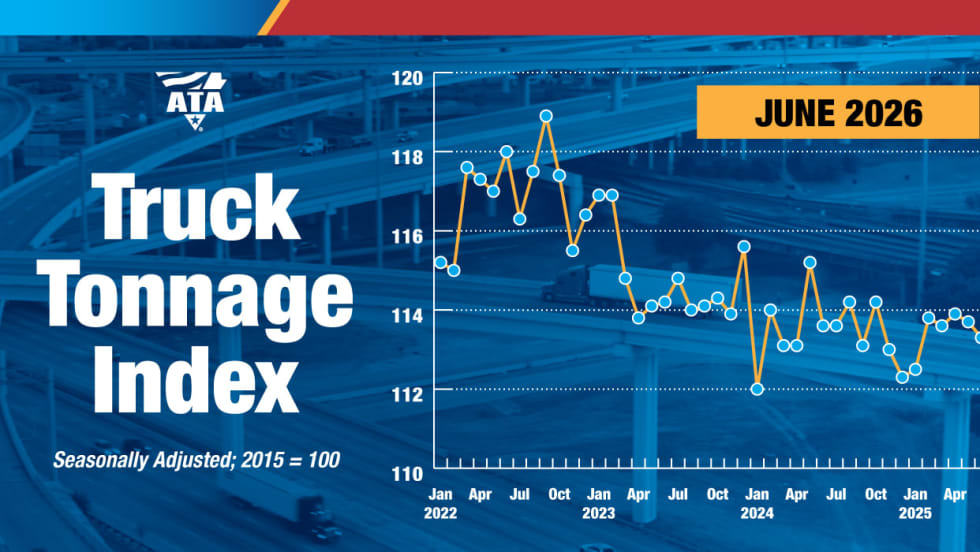
Freight Tonnage Down, Rates up, as Lower Capacity Powers Trucking Recovery
The recovery from the freight recession continues to be driven by reduction in capacity rather than by increased demand.
Read More →