




Jacobs Says Cylinder Deactivation Saves Fuel, Reduces NOx
Better fuel economy and lower emissions, already proven in extensive tests by Jacobs, have now been independently measured.

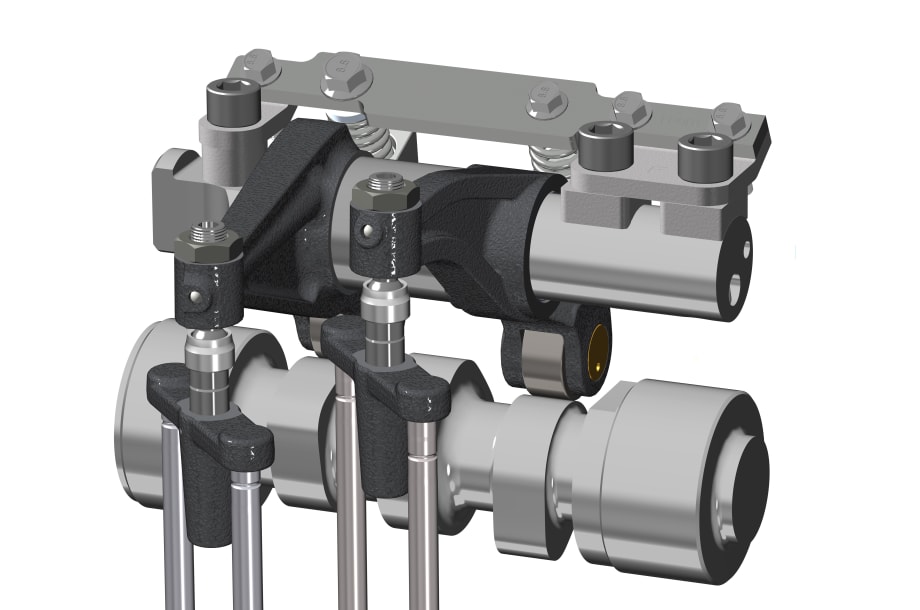
Better fuel economy and lower emissions, already proven in extensive tests by Jacobs, have now been independently measured.
Photo: Jacobs Vehicle Systems
Jacobs Vehicle Systems has completed testing to quantify the fuel savings and emissions benefits of Jacobs’ Cylinder Deactivation (CDA) technology. Test results showed that CDA reduced fuel consumption by 5% over the baseline in the Hot Federal Test Procedure cycle while increasing exhaust temperatures and limiting the cool-down of the selective catalytic reduction emissions system.
Testing was conducted by an internationally known third-party laboratory and funded by the Environmental Protection Agency on a 13L Navistar engine equipped with CDA. The announcement was made in Atlanta during the Annual Meeting of the American Trucking Associations' Technology & Maintenance Council.
CDA reduces NOx output by creating higher exhaust temperatures in the operating cylinders for optimal SCR operation.
High temperatures necessary for optimal aftertreatment performance are maintained even when the engine is in low-load operation. With three cylinders of a six-cylinder engine deactivated, high exhaust gas temperatures can be maintained in the three operating cylinders. CDA also enables faster warm-up of the aftertreatment system after engine startup and minimizes cooling of aftertreatment substrate during coasting.
To demonstrate the capability of the CDA system, the proposed California Air Resources Board "Low Load" cycle was evaluated, and CDA was found to raise the exhaust temperatures by about 50 degrees C, reducing tail-pipe NOx emissions by 86%. Fuel consumption (and CO2) was reduced by 12%. SCR NOx conversion increased from 48% (baseline) to 95% (CDA).
Laboratory tests focused on the extent to which Jacobs’ CDA reduces NOx emissions during the low-load cycles representative of real-world driving conditions such as cold startups and frequent low-load and idle conditions that typically cause the most pollution due to a cool aftertreatment system. Testing also sought to quantify CO2 improvements at the same time.
CDA is already proven to increase fuel economy and reduce tailpipe emissions in heavy-duty diesel engines, but Jacobs said it welcomed the opportunity to have these benefits independently measured. More extensive tests and results will be published under a joint paper at the April 2020 SAE World Congress.
In November 2018, the EPA announced the need for additional nitrogen oxide (NOx) reductions in its Cleaner Trucks Initiative. This is especially important in areas of the U.S. with elevated levels of air pollution, a focus in California for the same reasons. Current heavy-duty truck rules for NOx, adopted in 2010, are expected to be replaced by new rules in the future.
Jacobs introduced CDA technology last year in a new application of proprietary components originally designed for the company’s High Power Density engine brake. HPD employs mechanisms in the valve train to disable the opening of the intake and exhaust valves. Jacobs is now involved in numerous CDA development and demonstration projects on commercial vehicle powertrains around the world.
More Equipment

How Volvo Updated Its D13 for EPA 2027 [Watch]
Volvo’s updated D13 promises lower emissions without sacrificing performance or fuel economy. Take a closer look at what changed inside the engine in this HDT Spotlight video.
Read More →
Michelin Tire Improves Efficiency and Durability for Regional Fleets
The Michelin X Multi Energy D2 is a regional haul drive tire engineered to help fleets improve fuel efficiency, durability and traction in demanding stop-and-go operations.
Read More →
ZF Expands Commercial Vehicle Push in North America
ZF is expanding its North American commercial-vehicle presence with new transmission applications, electrification, trailer technology and autonomous-driving systems.
Read More →
Tesla Wants a Self-Driving Semi. Are Cameras Enough?
Could Tesla’s camera-only autonomous driving technology work on an 80,000-pound Semi? In this commentary, HDT's Deborah Lockridge takes a look at Tesla, Cybercab, and how autonomous trucks see the road.
Read More →
Kodiak: Driverless Long-Haul Truck Launch on Track for 2026
Kodiak AI says its driverless long-haul safety case is 93% complete and it remains on track to begin commercial operations by year-end 2026.
Read More →
What DOT’s Automated Vehicle Strategy Means for Trucking
The U.S. Department of Transportation issued a new automated-vehicle strategy that outlines plans for driverless-truck regulations, cross-state freight corridors, and federal safety standards.
Read More →
East Coast Port Launches $45M Electric Truck Push
The Port Authority of New York and New Jersey announced millions in incentives for zero-emission drayage trucks, yard tractors, and new charging hubs near the port.
Read More →
PlusAI Going Public to Fund Autonomous Truck Launch
A SPAC deal could provide PlusAI with up to $300 million as it works toward a 2027 commercial launch of factory-built autonomous trucks.
Read More →
NHTSA Moves to Rewrite Truck Fuel-Economy Rules
The National Highway Traffic Safety Administration says it lacks authority to regulate medium- and heavy-duty truck engines separately from complete vehicles, but the existing standards have not yet been eliminated.
Read More →
Detroit Opens Orders for EPA 2027 Engines
Detroit isn’t starting from scratch to meet EPA 2027 diesel emissions standards. Its Gen 6 DD13 and DD15 engines keep much of today’s platform while updating the fuel and aftertreatment systems.
Read More →