




Interstate 45 Lands at Top of Texas' List of Most Congested Roads
Interstate 45 in Harris County, Texas, from SL-8 North to I-610, is the most congested roadway segment in the state, according to the Texas Department of Transportation
Interstate 45 in Harris County, Texas, from SL-8 North to I-610, is the most congested roadway segment in the state, according to the Texas Department of Transportation.
A close second is the U.S. Route 59 between I-610 West and State Highway 288.
On the I-45, the annual cost of delay is $98.03 million, and it accounts for 484,630 hours of delay time per mile, per year.
The results are part of the Texas Department of Transportation's updated list of Texas' 100 most congested roadway segments, released Wednesday. In developing the update, the state used actual traffic speed data to calculate delay, rather than estimations based on traffic volume used in the previous list. Parameters for roadway segment length were also adjusted to better capture congested points in the transportation system.
This time around, the list includes the state highway system, and many city, county or toll road segments. It also now considers both weekday and weekend congestion levels to provide a congestion ranking based on delay experienced all days of the week. The Texas Transportation Institute (TTI) at Texas A&M University collaborated with TxDOT to develop the new list and improved methodology.
"Texans have known for some time that traffic is bad - but this new list accurately pinpoints the traffic hotspots in the state, and will help make sure transportation planners consider these roadways when prioritizing roadway and transit projects," said Dr. Tim Lomax, research engineer with TTI, who coordinated with TxDOT staff to develop the list. "TTI has long distributed reports on congestion levels throughout the United States, including those levels in Texas, but the new methods used in this analysis are on the cutting edge of traffic congestion measurement."
To gather actual travel speed data, TTI contracted with Inrix, a private firm that collects real time travel information nationwide and provides that information to a variety of companies for use by the public through GPS units and smart phone applications. Through the contract, TTI received actual speed data for roadways across the state for 2009 to use with traffic volume data to assess total delay.
Previously, the congestion levels were based on traffic volume and used information about operational characteristics to estimate travel speeds. This analysis showed where large volumes of traffic were likely to move at a slow pace, but did not identify where other problems, such as bottlenecks caused by intersecting roadways or poor roadway geometry, are found.
To view the list, click here.
More Drivers

When Language Stops the Truck: The Return of ELP Out-of-Service Orders
English language proficiency rules for commercial drivers aren’t new, but renewed out-of-service enforcement has raised the stakes. Here’s what carriers need to know before a driver reaches a roadside inspection.
Read More →
Samsara Launches Custom AI Agent Builder
Agent Studio lets fleets create AI tools for hours-of-service monitoring, reporting and driver support, including agents that communicate by phone.
Read More →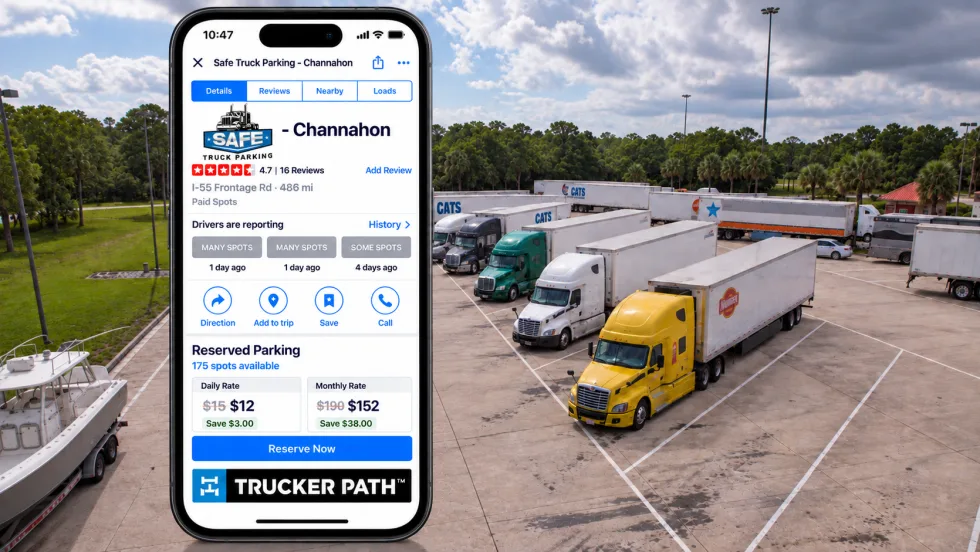
Trucker Path Expands Reserved Parking Network
Trucker Path has added close to 6,000 more truck parking spaces to its Trucker Path Reserved Parking Network with the addition of Safe Truck Parking.
Read More →
EEOC Sues Texas Trucking Company Over Driver Age Limits
The agency says Trancasa USA rejected applicants over 65 and applied tougher driving-record standards to those over 60.
Read More →
Nussbaum, Roehl Announce Second Driver Pay Increase This Year
This year has seen a swath of major truck driver pay increases as freight capacity has tightened.
Read More →
From One Generation to the Next: How Mentorship Builds Safer Truck Drivers
After three decades in trucking, Harold Perry shares what he's learned about driver safety, mentorship, and helping the next generation build confidence behind the wheel.
Read More →
Truck Drivers Need More Than Another Alert
Fleets have more visibility into truck health, safety events, and driver activity than ever. The next challenge is turning all that information into useful guidance for the person who has to decide what to do next.
Read More →
FMCSA Removes 110 Truck Driver Training Schools from Certified ELDT List
Federal regulators also are targeting more than 160 additional training providers and launching a nationwide audit of third-party CDL skills testers as part of a broader crackdown on trucking fraud.
Read More →
Hours of Service Pilot Programs: FMCSA Readies for 2027 Rollout
Two pilot programs could eventually reshape hours-of-service rules, giving truck drivers options to pause their 14-hour clock or use longer split sleeper rest periods.
Read More →
Medical Cards, English Proficiency Reshape Roadcheck Violations
Medical-card violations jumped to the top of the driver out-of-service list during CVSA’s 2026 International Roadcheck, while English-language proficiency violations appeared among the leading violations for the first time.
Read More →