




Innovation, Strong Partnerships Key to Meeting Low-Carbon Challenges, Swiger Says
Innovation and strong partnerships are crucial to meet rising global energy demand at a time when there is growing pressure to lower carbon emissions to combat the risks of climate change, Andy Swiger, senior vice president of Exxon Mobil Corp
Innovation and strong partnerships are crucial to meet rising global energy demand at a time when there is growing pressure to lower carbon emissions to combat the risks of climate change, Andy Swiger, senior vice president of Exxon Mobil Corp.
, said Monday.
In his keynote speech at the Abu Dhabi International Petroleum Exhibition and Conference, Swiger highlighted the need for the continued development of new technologies and the importance of partnerships among international oil companies, national oil companies and host governments to meet future energy challenges.
"In this way, we can work most effectively to achieve a high-energy, low-carbon future, ensuring that the evolution of energy continues to demonstrate the best of human ingenuity and achievement," he said.
On a global scale, energy demand is expected to increase nearly 20 percent between now and 2030, with this enormous increase being more pronounced in developing countries. At the same time, concerns about the risks of climate change are growing, warranting action by governments, industry and consumers to reduce carbon emissions. "Meeting the challenge before us - of ushering in a high-energy, low-carbon era - requires innovation," Swiger said.
Swiger described three areas where ExxonMobil believes innovation has the potential to turn energy challenges into energy solutions: carbon capture and storage (CCS) - including Controlled Freeze Zone (CFZ) technology, development of algae biofuels, and energy efficiency.
Through the company's Controlled Free Zone technology, ExxonMobil is advancing the search for a cost-effective means of separating carbon dioxide and other impurities from natural gas while producing a high pressure liquid suitable for injection into underground storage. "We have committed more than $100 million to develop and test our CFZ technology, which could not only expand the pool of cleaner-burning natural gas resources available for development and delivery to consumers, but also make CCS more affordable and efficient in reducing emissions," Swiger noted.
Swiger also highlighted the need to develop all commercially viable energy supplies to meet economic and environmental demand. One such potential renewable energy resource is algae, Swiger said, which could one day supplement conventional oil to help meet energy demands.
"Last year, ExxonMobil announced a partnership with Synthetic Genomics, Inc. for research and development of next-generation biofuels from photosynthetic algae, and in July we opened a new greenhouse facility in California to enable the next level of research and testing. If milestones are successfully met, ExxonMobil expects to spend more than $600 million on this biofuels program, $300 million of which will be allocated to Synthetic Genomics. We are in the early days in this area of research, and the obstacles we face are formidable, but the potential is great," he said.
Gains in energy efficiency through 2030 are expected to reduce global energy demand growth by approximately 65 percent, and with it, stem associated carbon emissions. "Perhaps the most underestimated avenue for achieving a high-energy, low-carbon future lies in the area of energy efficiency. By producing, delivering and consuming oil and natural gas more efficiently, we not only displace demand and extend the life of the world's hydrocarbon endowment, but we also reduce carbon emissions," Swiger said.
Stressing the importance of strong national oil company partners and supportive host governments to address the dual energy challenge, Swiger said that "national oil companies often have strong, localized knowledge of the resource as well as valuable technical and managerial expertise. Host governments need to support the integration of innovation by upholding sound, stable policy and regulatory frameworks that encourage fair sharing of risk and rewards and establish a vision for their nation's long-term resource development, and economic and social progress."
More Drivers
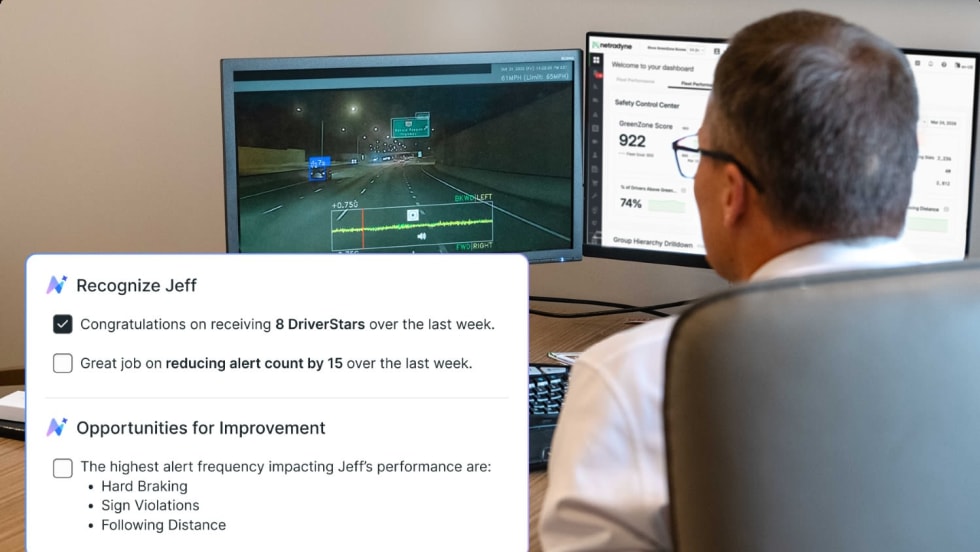
Netradyne Intelligence Uses New AI Agents to Automate Response to In-Cab Camera Data
The company called the next-generation in-cab camera safety platform "a fundamental shift from systems that report on what happened to systems that actively drive what should happen next."
Read More →
Why Truck Detention Keeps Costing Fleets Time and Money
A 2024 ATRI study found detention affects nearly 40% of truckload stops and costs the industry more than $15 billion annually. Despite the toll on drivers, fleets, and supply chains, the problem remains stubbornly persistent.
Read More →
Prime Inc. to Open $7.9M Flagship Used-Truck Dealership
A new driver-focused facility to sell Prime Inc's used trucks and trailers will be the first purpose-built location in the company's history.
Read More →
Short Takes: Inside K&B’s Truck Safety Tech
Listen to learn how K&B Transportation uses cellphone-blocking technology, speed management systems, weather geofencing, bridge avoidance tools, and more to improve driver safety.
Read More →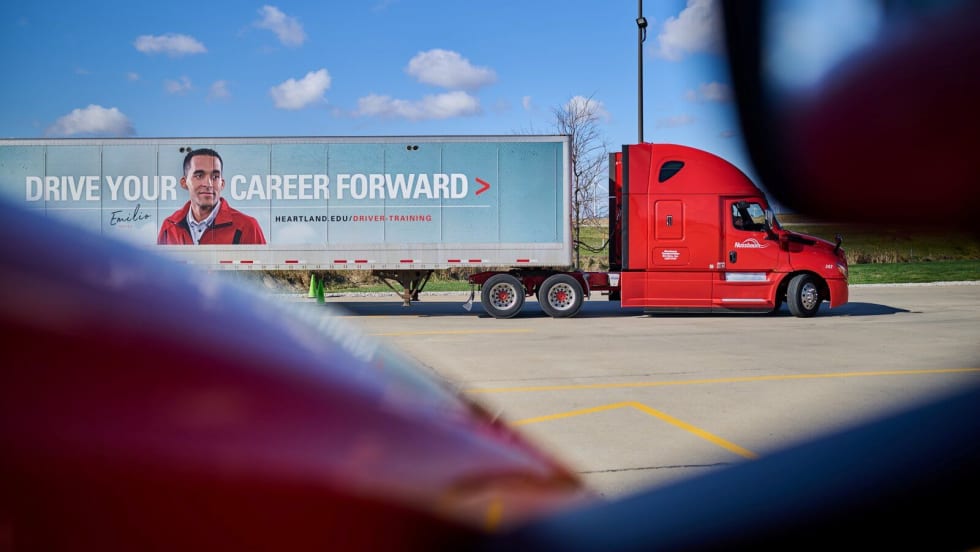
Nussbaum Expands Driver Compensation with Pay Raises, Profit Sharing
Nussbaum Transportation said its latest compensation package could push first-year driver earnings above $90,000 in key hiring markets.
Read More →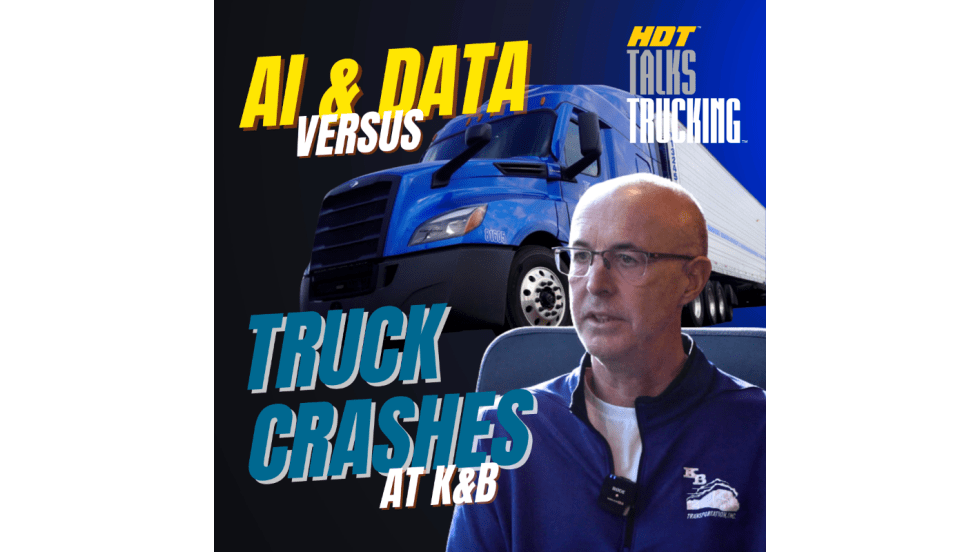
Listen: Inside Modern Fleet Safety: AI, Cameras & Speed Control at K&B Transportation
Fleet safety is evolving fast—and technology is at the center of it. Learn how a former commercial vehicle enforcement officer turned director of safety at K&B Transportation is embracing real-world safety technology.
Read More →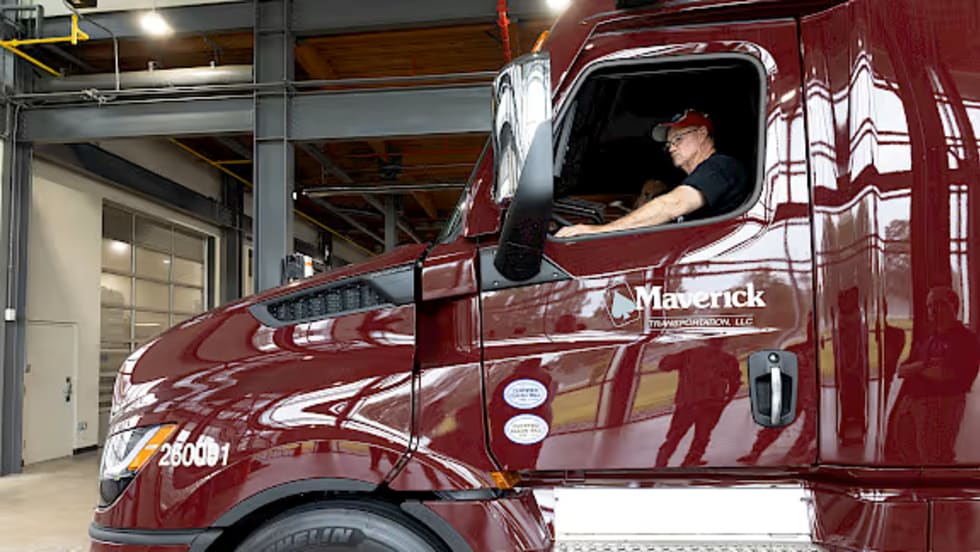
Maverick Announces 2026 Driver Pay Raises
New raises for Maverick Transportation drivers will take effect on May 31, 2026.
Read More →
Illinois Trucker Indicted for Nearly $22,000 in Ohio Turnpike Toll Evasion
Authorities say an Illinois trucker avoided paying tolls for two years, and now faces felony charges, possible prison time, and forfeiture of his Freightliner tractor.
Read More →
New Trojan Driver Cargo Theft Scam Bypasses Carrier Vetting Systems
Cargo theft rings plant operatives as drivers inside legitimate, fully vetted carriers, then execute coordinated thefts that look like a traditional straight theft from the outside.
Read More →
WIM, Trucker Path Name Top 3 Women-Friendly Truck Stops
ATA’s Women In Motion Council and Trucker Path highlight three truck stops that meet all seven safety-focused criteria and rank highest among female drivers.
Read More →