




Industry Reacts to Hours of Service Proposal
Industry associations and safety groups all reacted negatively to the new hours of service rules proposed yesterday by the Dept. of Transportation. The Federal Motor Carrier Safety Administration estimates the rule will cost $3.4 billion
Industry associations and safety groups all reacted negatively to the new hours of service rules proposed yesterday by the Dept. of Transportation. The Federal Motor Carrier Safety Administration estimates the rule will cost $3.4 billion over 10 years but that 2,600 crashes, 115 fatalities and almost 3,000 injuries will be avoided. It estimates that the benefits will be $ 6.8 billion.
But the American Trucking Assns. opposed the new rules, saying they would require thousands of additional drivers and trucks to meet current delivery schedules.
Last fall, ATA announced its own proposal to increase rest time for drivers: 14 hours on-duty in 24 hours, requiring at least 10 hours off between shifts.
Industry officials also expressed concern about recording devices invading the privacy of truckers and said anyone who would fail to keep an honest logbook could also tamper with a recorder.
''This proposal could mean a 50 percent increase in the number of refrigerated and dry van trucks on our already crowded highways; that translates into as many as 180,000 additional drivers and trucks on the road just to keep the current economy moving,'' said ATA president Walter B. McCormick, Jr. ''This all adds up to a threat to the U.S. economy and American jobs.''
The current ''just-in-time'' operations that depend on arrival of parts at factories and goods at stores when needed require flexible trucking schedules, he said.
Safety groups like giving drivers more rest time and putting them on a 24-hour cycle. But they worry that the cumulative effect of 12-hour driving days will result in a significant increase of hours over two-week periods.
"The bad thing is that drivers become fatigued after the sixth, seventh or eighth hour. Rest breaks do not promote recovery," said Gerald Donaldson, senior research director of Advocates for Highway and Auto Safety.
Jackie Gillan of AHAS said allowing 12 consecutive hours of driving would make ''drivers even more exhausted and will result in an increased risk of fatigue-related crashes.''
And Parents Against Tired Truckers issued a statement saying the group was ''stunned'' that the department was proposing to allow longer hours.
But the American Insurance Association backed the new government proposal as a needed step in reducing highway fatalities and injuries.
FMSCA is now seeking comments on the proposal. ''We are open to suggestions and we will be listening,'' Transportation Secretary Rodney Slater said.
The agency hopes to have work on the rule completed by the end of the year and plans to schedule hearings in Atlanta, Denver, Indianapolis, Kansas City, Mo., Los Angeles, Washington, D.C., and the Springfield, Mass.-Hartford, CT. area.
More Drivers

Competition Heating Up for Truck Drivers
New report reveals rising driver hiring costs, the return of sign-on bonuses, growing AI advantages, and the operational factors shaping driver retention.
Read More →
How Fraley & Schilling Improved Logbook Compliance by Over 50%
Fraley & Schilling needed a way to close a compliance workflow gap in its ELD system without adding more work from driver training, reminders, and back-office follow-ups. It found the answer in a custom driver app.
Read More →
Volvo Goes Gaming
Volvo has roared into American Truck Simulator with two new flagship trucks.
Read More →
What the Best Fleets to Drive For Teach About Driver Retention
Survey fatigue, AI-powered routing, owner-operator expectations, and the decline of social media all emerged as themes from this year's Best Fleets to Drive For program.
Read More →
Driver Retention Lessons From the Best Fleets to Drive For
What separates trucking's best workplaces from the rest? Jane Jazrawy shares the biggest lessons from this year's Best Fleets to Drive For program on driver retention, communication, AI, and workforce trends on the HDT Talks Trucking podcast.
Read More →
Farewell, CDL: Why I'm Giving Up My Commercial Driver's License
After more than 20 years as a CDL holder, HDT Executive Editor Jack Roberts is letting his commercial license expire. Not because he wants to — but because trucking's nuclear verdict crisis has made the risks of public-road test drives too great for editors, manufacturers, and everyone involved.
Read More →
How Top Trucking Fleets Improve Driver Retention [Video]
What do healthy snacks, optimized routing, and just picking up the phone have in common? They're all strategies the Best Fleets to Drive For are using to retain truck drivers.
Read More →
Trucker Path Adds Verisk CargoNet Theft Data to Navigation Platform
Trucker Path’s new cargo theft risk overlays give drivers and fleets visibility into high-risk areas, stolen commodity trends, and theft hotspots.
Read More →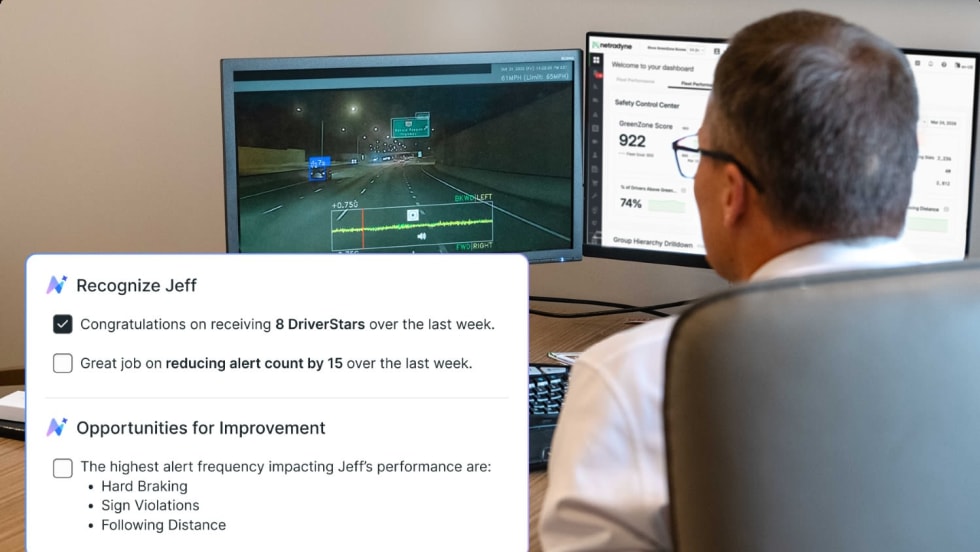
Netradyne Intelligence Uses New AI Agents to Automate Response to In-Cab Camera Data
The company called the next-generation in-cab camera safety platform "a fundamental shift from systems that report on what happened to systems that actively drive what should happen next."
Read More →
Why Truck Detention Keeps Costing Fleets Time and Money
A 2024 ATRI study found detention affects nearly 40% of truckload stops and costs the industry more than $15 billion annually. Despite the toll on drivers, fleets, and supply chains, the problem remains stubbornly persistent.
Read More →