




InCharge Energy Unveils Multi-Electric Vehicle Charging System
At ACT Expo, InCharge Energy showcased its new ICE-600 split system, which offers dynamic power sharing to charge up to 10 EVs simultaneously.

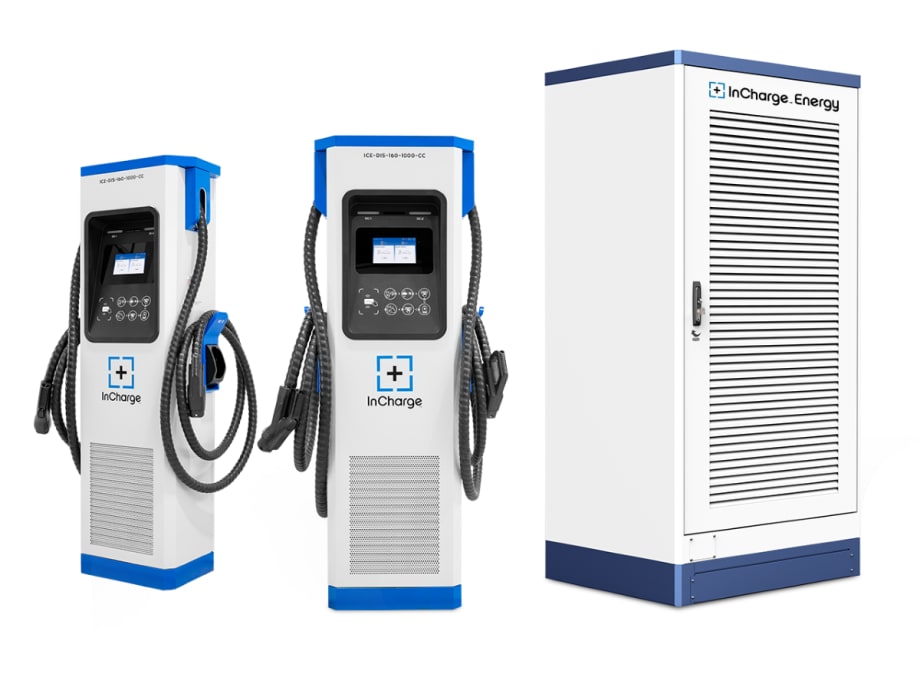
At ACT Expo in May, InCharge Energy debuted three new charging systems – including the ICE-480, the power cabinet, which can charge up to eight EVs plugged at the same time.
Photo: InCharge Energy
InCharge Energy announced the introduction of three next-generation multi-vehicle chargers. The new ICE-600, ICE-480 and ICE Cube are all offered with the North American Charging Standard (NACS) connector option.
InCharge showcased the new system at the Advanced Clean Transportation Expo (ACT Expo) in Las Vegas in May.
Dynamic Power Sharing Capability
Capable of providing up to 500kW from a single connector, the ICE-600 provides dynamic power sharing for faster charging of up to 10 EVs at once and a compact footprint to accommodate locations with space limitations.
“InCharge Energy is listening closely to what commercial fleets tell us they need,” said Nikolas Runge, chief technology officer, InCharge Energy. “Our new charging solutions address a pressing need for more powerful solutions that charge a variety of fleet vehicles simultaneously and dynamically, even within constrained spaces. As the industry and the demand for electrification grows, we continue to develop reliable, interoperable solutions that meet the needs of fleets of every size, with seamless charging experiences for drivers and fleet operators alike – so their vehicles are ready to hit the road on schedule. Our three new charging systems – including the ICE-600, with its ultra high charge rate and 10 EV simultaneous charging capabilities - are the most recent examples of just that.”
Multiple Charging Options
ICE-600: The ICE-600 split system is engineered to accommodate up to 10 EVs at one time. It can charge at either ten “Micro” single-cable dispensers or at five “Slim Line” dual-cable dispensers. The system provides dynamic power sharing offered in 60kW increments and, as a vehicle’s charging session ends, auto-reroutes the now-available power to vehicles still being charged. The Slim Line dispenser is capable of providing an ultra high charge rate of up to 500kW on a single connector and can be installed on a pedestal or near a wall. The Micro dispenser, capable of providing up to 180kW on one connector, can be mounted overhead or under a loading dock. When paired with Micro dispensers, the ICE-600 can also be utilized with the new external human-machine interface (HMI) terminal to manage charger access via PIN, RFID or credit card reader (CCR) verifications. This HMI will display the battery states of charge (SOCs) of all EVs being charged, together on a single screen. Customer deliveries of the ICE-600 are expected to begin in Q4 of 2024.
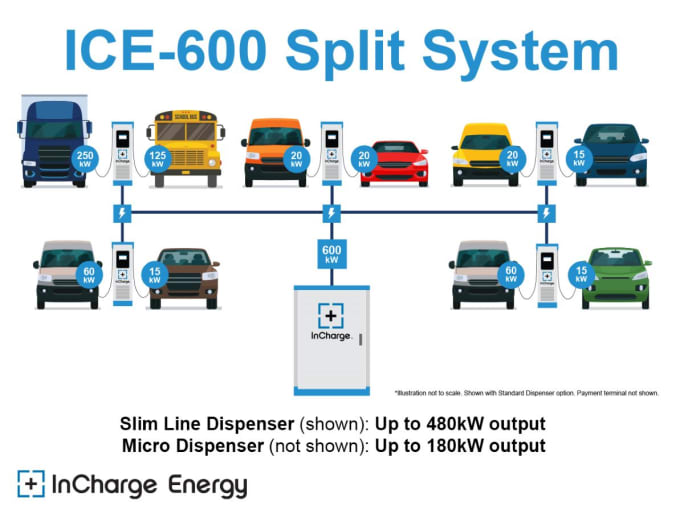
InCharge Energy's ICE-600 split system is engineered to accommodate up to 10 EVs at one time.
Graphic: InCharge Energy
ICE-480: With the ICE-480, the power cabinet and up to four Slim Line dispensers can be positioned approximately 100 yards apart, with up to eight EVs plugged in at the same time – making this solution ideal for quicker “en route” charging or space-constrained depots. Four vehicles can be charged sequentially while four others are “asleep” in standby, to be “awakened” automatically by the charger once the other vehicle's charging session has been completed. With four vehicles charging simultaneously, power is shared dynamically in 120kW increments, with a single connector capable of providing up to 480kW if no other connectors are in use.
ICE Cube: The Ice Cube is a 240kW split EV charging system with integrated battery storage of 200kWh, which can be optionally increased to 800kWh – ensuring that vehicle charging can still occur even during peak periods. The split system dispenser configuration has capacity for four vehicles to be plugged in at two dispensers, with two EVs actively charging while the other two are in an idle state. The charging system can utilize its local grid, a solar panel, power modules or battery packs to charge EVs – providing additional cost efficiencies and optimizing fleet availability.
More Fuel Smarts

How Volvo Updated Its D13 for EPA 2027 [Watch]
Volvo’s updated D13 promises lower emissions without sacrificing performance or fuel economy. Take a closer look at what changed inside the engine in this HDT Spotlight video.
Read More →
Diesel Price Spike Shortens Payback for Natural Gas Trucks, Report Says
Energy Vision estimates fleets could recover the higher purchase price of an RNG-fueled Class 8 tractor in 1.3 to 2.8 years under current fuel-price scenarios.
Read More →
Calstart Becomes Catalyst Mobility, Reflecting Broader Focus
Calstart is now Catalyst Mobility, reflecting the nonprofit’s growing national role in clean transportation, including zero-emission trucks, infrastructure and incentive programs.
Read More →

Record Diesel Prices Squeeze Trucking Fleets
Average U.S. diesel prices have climbed to nearly $6 a gallon, surpassing the 2022 record as tight refinery capacity and Middle East disruptions keep fuel costs elevated.
Read More →
How Fuel Delivery Shapes Engine Performance
Fuel delivery depends on more than what happens at the injector. For fleet, maintenance and technical professionals, looking at the full path from pump to injector can provide useful context for understanding engine performance.
Read More →
East Coast Port Launches $45M Electric Truck Push
The Port Authority of New York and New Jersey announced millions in incentives for zero-emission drayage trucks, yard tractors, and new charging hubs near the port.
Read More →
California Bill Could Shed Light on Electric Truck Prices
Why do battery-electric Class 8 trucks remain so expensive? A California bill headed to Gov. Gavin Newsom would give fleets and state agencies more visibility into what manufacturers charge.
Read More →
Detroit Opens Orders for EPA 2027 Engines
Detroit isn’t starting from scratch to meet EPA 2027 diesel emissions standards. Its Gen 6 DD13 and DD15 engines keep much of today’s platform while updating the fuel and aftertreatment systems.
Read More →
Zero-Emission Truck Corridor Planned for West Coast
California, Oregon, Washington, British Columbia and Baja California are coordinating plans for truck charging and hydrogen fueling from Canada to Mexico.
Read More →
A Closer Look at Kenworth’s Electric T880E Vocational Truck [Video]
Learn more about Kenworth's T880E battery-electric vocational truck at the Paccar Technical Center, including its range, applications, upfitting considerations, and PTO options, in this HDT Spotlight video.
Read More →