





Related: Hyundai Eyes an Alt-Fuel Entry into the North American Truck Market
Hyundai TransLead Shows Nitrogen-Powered Reefer Concept
A new, refrigeration unit for food transport by Hyundai has zero emissions, and uses ultra-cold nitrogen gas to hold interior trailer temperatures at precise levels during transport.
October 29, 2019
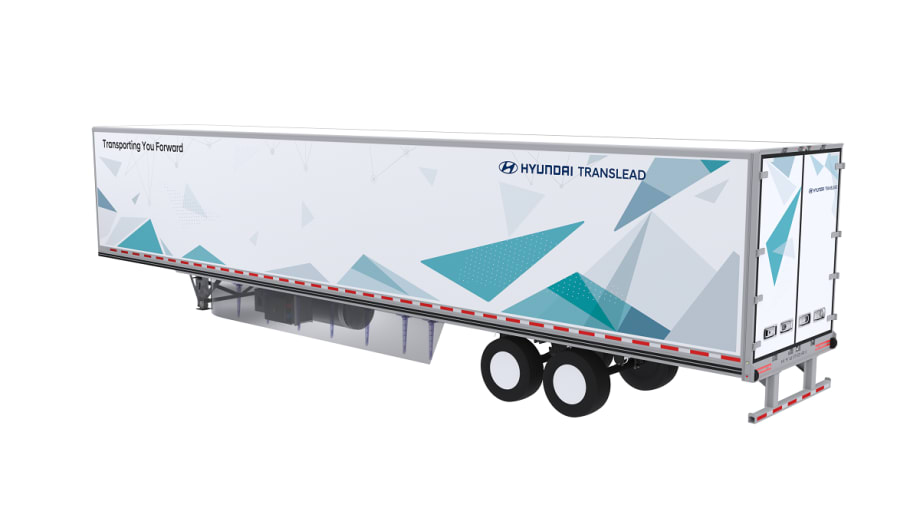
The Nitro ThermoTech concept trailer shown by Hyundai Translead at the 2019 NACV Show features a nitrogen-powered refrigeration unit that emits no noise or harmful exhaust gases into the atmosphere.
Image: Hyundai Translead
2 min to read
While Hyundai’s Neptune 6 hydrogen concept truck was attracting all the crowds at the North American Commercial Vehicle Show in Atlanta (NACV), and equally interesting concept from the Hyundai Translead trailer division offered a glimpse at how the future of zero emissions reefer units may evolve.
Hyundai said its new, Nitro ThermoTech concept trailer on display on the NACV Show Floor features a nitrogen-powered refrigeration unit that emits no pollutants into the air and uses nitrogen gas for cooling cold chain products. According to Stuart James, the chief strategy office for Hyundai Translead, the Nitro ThermoTech can reduce temperatures more quickly than a traditional refrigeration unit and can also maintain precise control of desired temperatures. The intelligent control system and independent cooling power maximize thermal efficiency. The HT Nitro ThermoTech concept trailer is not affected by outside temperatures. Maximum power is always available, even when the truck’s engine is off or idling.
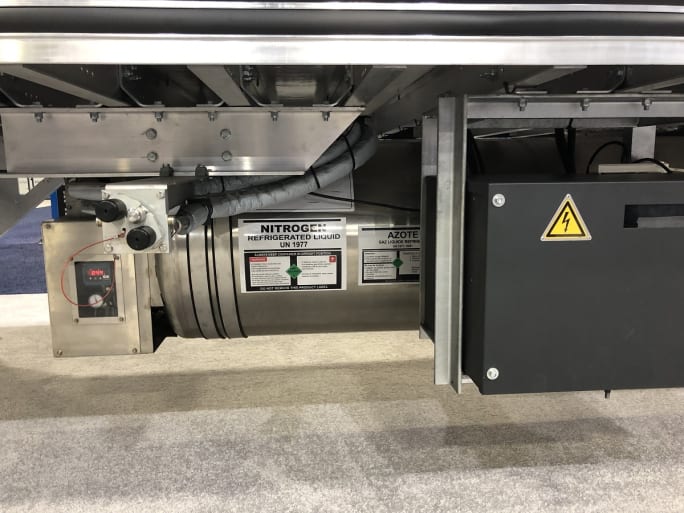
The Hyundai Translead Nitro ThermoTech trailer carries a supply tank of super-cold nitrogen gas to keep trailer temperatures at precise levels all during transport. The nitrogen gas vents harmlessly into the atmosphere once it loses its cooling properties.
Photo: Jack Roberts
Thanks to its nitrogen-powered refrigeration unit, James added, the HT Nitro ThermoTech concept trailer cooling unit is virtually noiseless which significantly reduces noise pollution for drivers as well as at the point of deliveries. He pointed out that this is a significant advantage for night-time deliveries in urban and suburban neighborhoods where noise can be distracting.
“This refrigerated trailer concept represents a significant advancement in our continued commitment to corporate social responsibility,” Bongjae Lee, Chief Executive Officer of Hyundai Translead during a press conference at NACV on Oct. 29, 2019. “By developing innovative technology, Hyundai Translead is helping address climate change. The HT Nitro ThermoTech reduces pollutants and emissions while providing reliable and effective cold chain food transportation.”
The Nitro ThermoTech concept trailer also features new, enhanced structural designs, James added. The side wall, front wall, and roof are each constructed as a one-piece, structural sandwich foam panel with Fiber Reinforced Polymer (FRP) skins. The materials are made without posts and roof bows. The one-piece structural foam panel design creates a lighter weight trailer with increased wall strength and enhanced thermal efficiency, while maintaining the same cubic trailer volume. The improved structure panels are bonded to the rails, which reduce thermal bridges, remove potential water intrusion, and provide a cleaner finish.
Hyundai Translead noted that currently the Nitro ThermoTech trailer is a concept unit undergoing both performance evaluation while registering feedback and interest from potential North American fleet customers. No timeline was given for an eventual entry into the North American reefer market during the show.
More Fuel Smarts
Cummins Adjusts 2027 Engine Rollout After EPA Proposal
The engine maker will gradually introduce its new Model Year 2027 diesel engines while continuing to offer current models during the transition, citing the EPA's proposed emissions rule changes.
Read More →
EPA Proposal Could Ease 2027 Truck Costs and Buying Uncertainty
The proposal doesn't change the tougher NOx standard, but it would revise key implementation requirements that manufacturers say have driven up costs and complicated fleet purchasing decisions.
Read More →
Cummins, Paccar Ease DEF Derates After EPA Guidance
Updated diesel engine software gives truck operators more time to address emissions-system issues while staying compliant with EPA emissions standards.
Read More →
Maintenance in the Messy Middle Part 3: Biodiesel
Biodiesel can reduce emissions, improve fuel-system lubricity and use existing diesel infrastructure. But NACFE’s Messy Middle maintenance report says fleets must actively manage storage, cold-weather operation, filters and oil drain intervals to avoid problems.
Read More →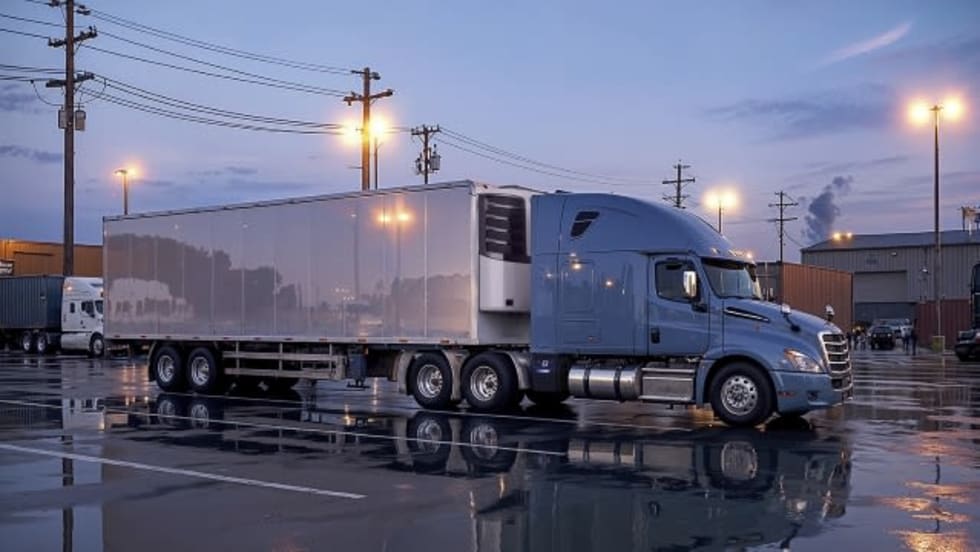
Enhance Fleet Performance with High-Efficiency Auxiliary Power Units
Drive sustainable cost savings while increasing driver comfort during short- and long-haul logistics operations.
Read More →
Maintenance in the ‘Messy Middle’ Part 2: Renewable Diesel Fuel
NACFE's latest Messy Middle Powertrain Service & Maintenance report says renewable diesel gives fleets an opportunity to reduce carbon emissions without changing trucks, fueling infrastructure or maintenance practices. But technicians still need to understand several important operational differences.
Read More →
The Diesel Engine Enters NACFE’s ‘Messy Middle’
NACFE’s new Messy Middle Powertrain Service & Maintenance report says keeping modern diesel engines running now depends as much on software, diagnostics and data as traditional mechanical service.
Read More →
DTNA Software Update Gives Truckers More Time Before DEF Derates Take Effect
The changes reflect EPA guidance aimed at reducing downtime caused by emissions-system faults while maintaining compliance requirements.
Read More →
New Agentic Predictive Maintenance Report Demonstrates How Degraded Aftertreatment Systems Waste Fuel
Questar analyzed a large mixed-class fleet and discovered it was wasting as much as $30 in fuel per vehicle, per day, because of mechanically degraded aftertreatment systems.
Read More →
New York City's Microhub Project is Delivering Results
Trucking, last-mile delivery companies, and environmental advocates like what they are seeing so far with New York's microhub program.
Read More →