




House Highway Bill Would Allow Heavier Trucks
The House of Representatives yesterday unveiled its version of a new highway program that would spend $260 billion over five years. The bill trims the Department of Transportation by consolidating or eliminating programs, gives states a greater say in how they spend federal money and speeds up the project approval process
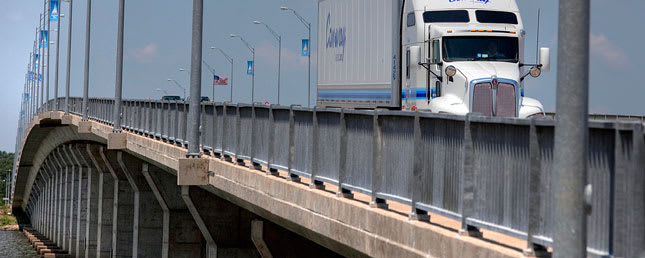
The House of Representatives yesterday unveiled its version of a new highway program that would spend $260 billion over five years. The bill trims the Department of Transportation by consolidating or eliminating programs, gives states a greater say in how they spend federal money and speeds up the project approval process.
One provision that already is stirring controversy would allow states to let trucks weighing up to 126,000 pounds to run up to 25 miles on Interstate segments.
One trucking interest, American Trucking Associations, applauded the move. "Allowing states to choose to open their interstate highways to more productive trucks is an important step to reducing costs to American consumers and reducing congestion on our highways," said ATA Chairman Dan England in a statement.
But long-time opponents of heavier trucks are gearing up to fight the provision. The Teamsters union and safety groups are planning a press conference today, and Association of American Railroads President and CEO Ed Hamberger said in a statement that the public does not want heavier trucks that do not pay their share of highway costs.
The fight over truck weights will spill over to the Senate, which is working on a bill that so far does not contain such a provision.
While there are some similarities between the House and Senate measures - both, for instance, focus on streamlining DOT and speeding up the project approval process - there are differences that will be difficult to surmount in the two months left before the current program expires.
The major difference is the term of the bills. The Senate is putting together a $109 billion, two-year bill, which will be hard to reconcile with the five-year term proposed by the House.
Neither side has gone public with details of how it will fund its bill. The House Natural Resources Committee is meeting today to discuss the idea of levying fees for expanding oil and gas drilling, and Sen. Max Baucus, D-Mont., chairman of the Senate Finance Committee, has said he expects to find the $12 billion to $15 billion needed for the Senate bill.
Another important item in the House bill is a requirement that the Federal Motor Carrier Safety Administration begin a field study of the impact of the new 34-hour restart provision in the hours of service rule.
More details of the bill will be available after the House Transportation and Infrastructure Committee debates and votes on the measure tomorrow.
More Drivers

FMCSA Removes 110 Truck Driver Training Schools from Certified ELDT List
Federal regulators also are targeting more than 160 additional training providers and launching a nationwide audit of third-party CDL skills testers as part of a broader crackdown on trucking fraud.
Read More →
Hours of Service Pilot Programs: FMCSA Readies for 2027 Rollout
Two pilot programs could eventually reshape hours-of-service rules, giving truck drivers options to pause their 14-hour clock or use longer split sleeper rest periods.
Read More →
Medical Cards, English Proficiency Reshape Roadcheck Violations
Medical-card violations jumped to the top of the driver out-of-service list during CVSA’s 2026 International Roadcheck, while English-language proficiency violations appeared among the leading violations for the first time.
Read More →
Driver Trust Can Make or Break the Success of Fleet Safety Technology
New Teletrac Navman research suggests that onboarding, transparency about driver data, and positive feedback can play a significant role in how commercial drivers respond to safety and coaching technology.
Read More →
EEOC Sues KLLM Over Alleged Sex Discrimination in Driver Training
KLLM is facing a federal sex-discrimination lawsuit over policies the EEOC alleges put female truck driver trainees at a disadvantage.
Read More →
FMCSA Moves to Codify English Language Requirements for Commercial Drivers
By changing regulations on English-language proficiency requirements for commercial drivers, rather than relying on a guidance memo, the FMCSA said future administrations won't be able to walk back the Trump administration's stricter enforcement with just a memo.
Read More →
Drivers Put Western Star Trucks to the Test at Star Nation Experience
Watch to get an inside look at the Western Star trucks, technology, and community behind the Star Nation Experience 2026!
Read More →
Trump Administration Looks to Put More Veterans Behind the Wheel
The Freedom Haulers program pulls together existing and expanded programs at several federal agencies to recruit veterans to drive commercial heavy-duty trucks and cut the red tape for them to get a CDL, training, and employment.
Read More →
Putting Mack’s Command Steer to the Test
A test drive of Mack’s Command Steer active steering system evaluates how it can make truck driving easier and less tiring.
Read More →
Competition Heating Up for Truck Drivers
New report reveals rising driver hiring costs, the return of sign-on bonuses, growing AI advantages, and the operational factors shaping driver retention.
Read More →