




HOS Roundtable: Onboard Recorders, Driver Categories, Exemptions
The Federal Motor Carrier Safety Administration last week wrapped up six days of roundtable discussions on its massive hours-of-service proposal
The Federal Motor Carrier Safety Administration last week wrapped up six days of roundtable discussions on its massive hours-of-service proposal.
Practically all aspects of the rule are controversial, but there is one provision, covered in the last roundtable, that divides the trucking industry like no other: electronic onboard recorders. The rule requires longhaul and regional operations to replace their paper logbooks with recorders
to keep track of driver hours. Some are inalterably opposed to the technology as an unconstitutional invasion of their privacy – or as completely unnecessary. Others are ready to embrace it as a useful business tool and a signal to the public that they have nothing to hide.
According to Jim Johnston, president of the Owner-Operator Independent Drivers Assn., the
recorders are a form of electronic surveillance that amounts to “unreasonable search” in violation of the Fourth Amendment to the Constitution.
Johnston’s formal presentation at the roundtable included a document that could be seen as a prelude to a lawsuit against the recorder requirement, citing legal cases that support OOIDA’s position.
Other major trucking companies oppose the recorders because they see no safety benefit
in them.
The unionized LTL trucking companies have no need for recorders, said Timothy Lynch,
president of the Motor Freight Carriers Assn. Among the members of that association are
three of the largest general freight carriers, Consolidated Freightways, Roadway Express and Yellow Freight System.
“Unionized drivers are in virtual 100% compliance with the hours of service rules,” Lynch said. “A device on the truck will not increase compliance, or improve safety.”
But there are equally large trucking companies on the opposite side. Lane Kidd, president of the Arkansas Trucking Assn., said his group supports recorders on all trucks weighing more than 26,000 pounds, with no exceptions, provided the technology is workable. Among the members of the Arkansas association: J.B. Hunt, Arkansas Best Corp., USA Truck, American Freightways, Wal-Mart Stores, Tyson Foods and Daymark Group.
Kidd said that when he broached the subject of recorders to his board, he was surprised
by their attitude. The trucking executives said drivers have been laboring under an antiquated system of paper logs for decades, and that privacy is not an issue since drivers already have to record their activities on paper logs.
As Kidd put it, this was the message from the Arkansas carriers: “We like to profess that
our companies operate safely, so what are we afraid of with these recorders?”
The Arkansas truckers recalled how drivers initially did not like satellite communications or data transponders, for the same reasons that now are used against onboard recorders. Yet now these devices are prized by drivers, they said.
Another benefit, Kidd continued, is that the recorders would level the competitive playing field. Trucking companies that obey the hours of service rules are at a disadvantage against those that do not – and the recorders would make it harder to cheat. And the cost of the devices is not a factor, since prices will be driven down as production goes up.
Kidd added that two other state trucking associations, Tennessee and California, have adopted similar positions.
A good deal of the discussion at the roundtable revolved around a point of persistent confusion about the recorder requirement. The safety agency has repeatedly explained that it is not requiring recorders that automatically track the truck’s position. Still, much of the criticism of
this provision includes references to automated positioning.
That may be because ambiguity in the language permits the interpretation that automated
positioning is necessary. Cliff Harvison, president of the National Tank Truck Carriers, pointed to language that implies that the device has to record the place and location code of a change in duty status without driver input. The only way to get that information into the system without the driver putting it in is to use a global positioning system, Harvison said.
But the safety agency does not intend to require automatic input of driver location information, said FMCSA attorney Charles Medalin. “The proposal is supposed to track as closely as possible the current rules. We did not intend to require the device to automatically list towns and cities at a change of duty.”
The representative of a major supplier of recorders, Tony Reynolds of VDO North America, said his company’s digital tachograph can be programmed to scroll through any and all locations and codes, to simplify driver input.
VDO developed its device to meet the requirements of a new onboard recorder standard in the European Union, but it also complies with the proposed FMCSA standards, Reynolds said. It uses smart cards to store and transfer data, and has a printer so safety inspectors can check a driver’s log. As original equipment, it would sell for $300, and as a retrofit item it would cost
$500, he said. (See Digital Tachograph Said to Meet Proposed Onboard Recorder Requirement," June 7, 2000.)
Opponents of the requirement pointed out that the devices cannot prevent cheating. The driver will have to punch information into the recorder, so logs still can be falsified and, as OOIDA’s Johnston pointed out, team drivers can trade their smart cards.
“It comes down to an honor system,” Johnston said. “There is no way to make the recorder
completely tamper-proof.”
Replied Reynolds: “The safety benefit of the recorder comes from the attitude of the company that uses it. The benefit won’t come if the company does not care. You need a driver feedback loop to correct unsafe behavior.”
David Snyder, vice president and senior counsel for the American Insurance Assn., said he would submit data showing that fleets with onboard recorders have fewer fatal crashes.
Cirillo pointed out, however, that it is difficult if not impossible to make a direct link between onboard recorders and accident reduction. “Accidents are complex,” she said. To create
such a link, investigators would have to hold all other factors static. “It does not work
that way. To expect that out of any proposal is ridiculous.”
Cirillo went on: “I don’t think we have indicated that any of the things we have proposed is the silver bullet to the truck safety problem. What we have said is that we think that drivers are getting fatigued, and that research shows when they get fatigued they will have more accidents. If we can manage hours of service we can have some impact on fatigue, and then on accidents.”
Categories of Operations: Drafting the proposal, the safety agency went to great lengths to accommodate the variety of operations in the truck and bus industries. Warned beforehand that one size of rule cannot fit all drivers, it created five separate categories of drivers, with different schedules for each. Categories 1 and 2 cover longhaul and regional drivers, respectively. Categories 3, 4 and 5 cover various types of shorthaul drivers, such as local pickup and delivery (3), split shift (4), and work truck (5).
But there is general concern among truckers and enforcement officials alike that the
agency missed its mark. The major problem is that on any given day, depending on the type
of operation, a driver can shift from one category to another. This will lead to confusion that reduces the effectiveness of the rule, said the roundtable participants. “The descriptors (in the proposal) are really a type of driver rather than a category of operation," said Timothy Lynch of MFCA. Unionized LTL carriers "don’t fit any of the five categories. We recommend that (the
agency) find a way to better define carrier operations.”
Earl Eisenhart, representing the National Private Truck Council, noted that many private fleets have driver
More Drivers

Competition Heating Up for Truck Drivers
New report reveals rising driver hiring costs, the return of sign-on bonuses, growing AI advantages, and the operational factors shaping driver retention.
Read More →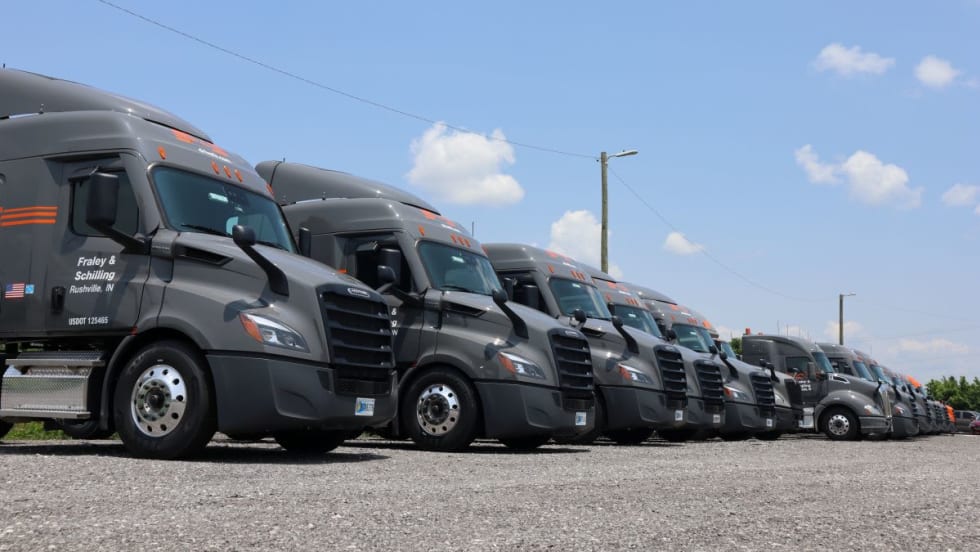
How Fraley & Schilling Improved Logbook Compliance by Over 50%
Fraley & Schilling needed a way to close a compliance workflow gap in its ELD system without adding more work from driver training, reminders, and back-office follow-ups. It found the answer in a custom driver app.
Read More →
Volvo Goes Gaming
Volvo has roared into American Truck Simulator with two new flagship trucks.
Read More →
What the Best Fleets to Drive For Teach About Driver Retention
Survey fatigue, AI-powered routing, owner-operator expectations, and the decline of social media all emerged as themes from this year's Best Fleets to Drive For program.
Read More →
Driver Retention Lessons From the Best Fleets to Drive For
What separates trucking's best workplaces from the rest? Jane Jazrawy shares the biggest lessons from this year's Best Fleets to Drive For program on driver retention, communication, AI, and workforce trends on the HDT Talks Trucking podcast.
Read More →
Farewell, CDL: Why I'm Giving Up My Commercial Driver's License
After more than 20 years as a CDL holder, HDT Executive Editor Jack Roberts is letting his commercial license expire. Not because he wants to — but because trucking's nuclear verdict crisis has made the risks of public-road test drives too great for editors, manufacturers, and everyone involved.
Read More →
How Top Trucking Fleets Improve Driver Retention [Video]
What do healthy snacks, optimized routing, and just picking up the phone have in common? They're all strategies the Best Fleets to Drive For are using to retain truck drivers.
Read More →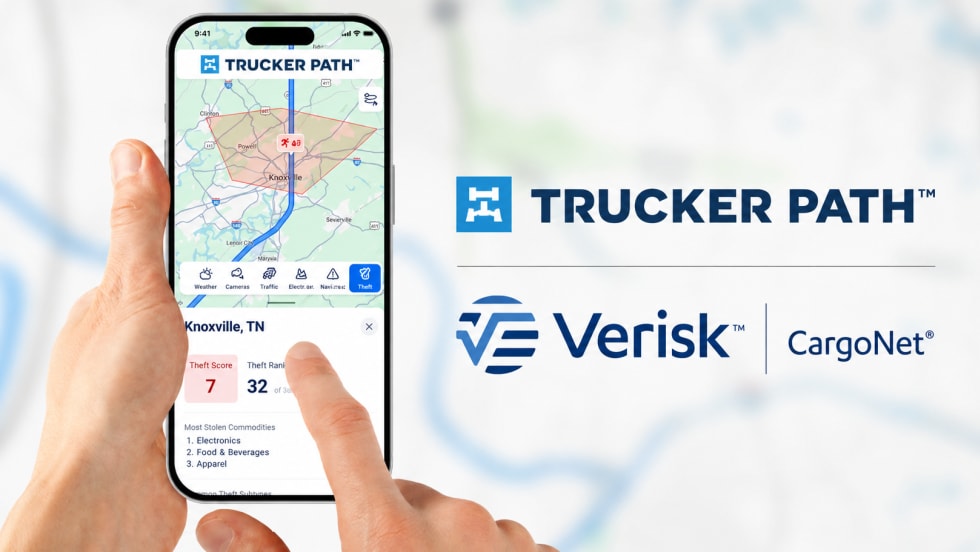
Trucker Path Adds Verisk CargoNet Theft Data to Navigation Platform
Trucker Path’s new cargo theft risk overlays give drivers and fleets visibility into high-risk areas, stolen commodity trends, and theft hotspots.
Read More →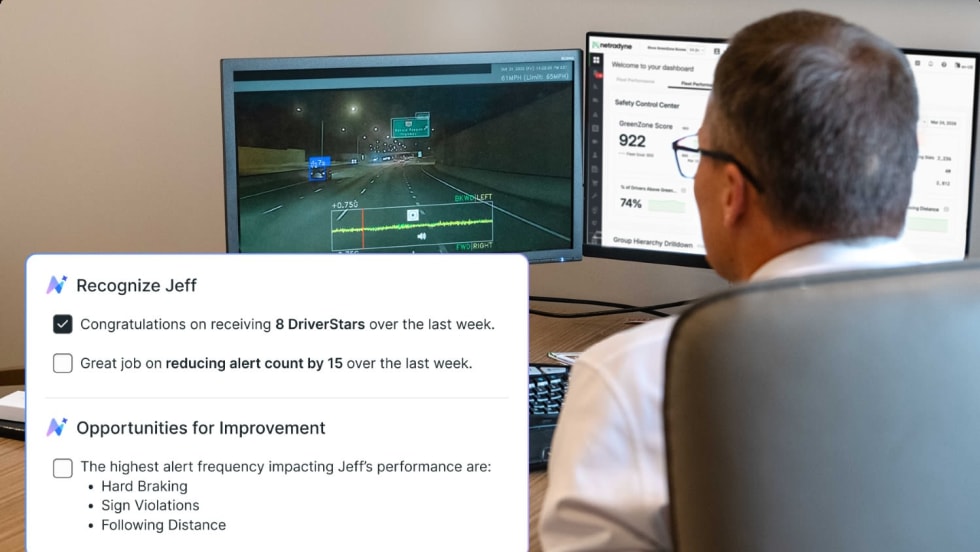
Netradyne Intelligence Uses New AI Agents to Automate Response to In-Cab Camera Data
The company called the next-generation in-cab camera safety platform "a fundamental shift from systems that report on what happened to systems that actively drive what should happen next."
Read More →
Why Truck Detention Keeps Costing Fleets Time and Money
A 2024 ATRI study found detention affects nearly 40% of truckload stops and costs the industry more than $15 billion annually. Despite the toll on drivers, fleets, and supply chains, the problem remains stubbornly persistent.
Read More →