




Heartland Wary of Economy Despite Improvements
Heartland Express saw increased revenue and earnings per share in the second quarter, but operating revenues dropped as a result of a reduction in fuel surcharge revenues and the economic downturn
Heartland Express saw increased revenue and earnings per share in the second quarter, but operating revenues dropped as a result of a reduction in fuel surcharge revenues and the economic downturn.
"This extended economic downturn is the worst experienced in the history of our company," the company said in a press release. "There continues to be excess capacity in our industry combined with the continued decline in available freight, resulting in extreme pressure on freight rates. The company has not seen any strong indicators of improvements in the demand for freight services that would increase our levels of business in the near future."
Despite that grim assessment, second-quarter earnings per share jumped 5.6 percent to 19 cents from 18 cents in the same quarter of 2008. Net income was boosted 2.2 percent, landing at $17.6 million, compared with $17.2 million in the 2008 period. Over the first six months of 2009, earnings per share were favorable, increasing 6.1 percent from 2008. Net income for the same period was down 0.4 percent to $31.8 million from $31.9 million in 2008.
Meanwhile, operating revenues slid 28.9 percent to $117 million, while the same period in 2008 saw $164.6 million. For the six months ending June 30, operating revenue was down 26 percent to $232 million, from $313.6 million in the first six months of 2008.
The company's fuel cost per mile declined 48.1 percent and 47.5 percent for the quarter and six-month periods ending June 30, respectively. The carrier is working hard to control fuel costs by focusing on idle hour reductions, terminal fuel purchases, strategic over-the-road purchases, and the purchase of International Pro Star trucks with increased fuel economy. During the second quarter, the U.S. average cost of fuel was $2.34 per gallon compared to $4.42 for the 2008 period.
For the quarter, Heartland Express posted an operating ratio (operating expenses as a percentage of operating revenues) of 81.4 percent and a 15.1 percent net margin (net income as a percentage of operating revenues) compared to 87.3 percent and 10.5 percent for the same period of 2008. The company reported an operating ratio of 82.4 percent and a 13.7 percent net margin for the six months ended June 30, 2008 compared to 87 percent and 10.2 percent for the same period of 2008.
Heartland added 416 new tractors in the second quarter as well as 45 in the first quarter. The fleet now includes the purchase of 1,036 International ProStar tractors.
More Drivers

Driver Trust Can Make or Break the Success of Fleet Safety Technology
New Teletrac Navman research suggests that onboarding, transparency about driver data, and positive feedback can play a significant role in how commercial drivers respond to safety and coaching technology.
Read More →
EEOC Sues KLLM Over Alleged Sex Discrimination in Driver Training
KLLM is facing a federal sex-discrimination lawsuit over policies the EEOC alleges put female truck driver trainees at a disadvantage.
Read More →
FMCSA Moves to Codify English Language Requirements for Commercial Drivers
By changing regulations on English-language proficiency requirements for commercial drivers, rather than relying on a guidance memo, the FMCSA said future administrations won't be able to walk back the Trump administration's stricter enforcement with just a memo.
Read More →
Drivers Put Western Star Trucks to the Test at Star Nation Experience
Watch to get an inside look at the Western Star trucks, technology, and community behind the Star Nation Experience 2026!
Read More →
Trump Administration Looks to Put More Veterans Behind the Wheel
The Freedom Haulers program pulls together existing and expanded programs at several federal agencies to recruit veterans to drive commercial heavy-duty trucks and cut the red tape for them to get a CDL, training, and employment.
Read More →
Putting Mack’s Command Steer to the Test
A test drive of Mack’s Command Steer active steering system evaluates how it can make truck driving easier and less tiring.
Read More →
Competition Heating Up for Truck Drivers
New report reveals rising driver hiring costs, the return of sign-on bonuses, growing AI advantages, and the operational factors shaping driver retention.
Read More →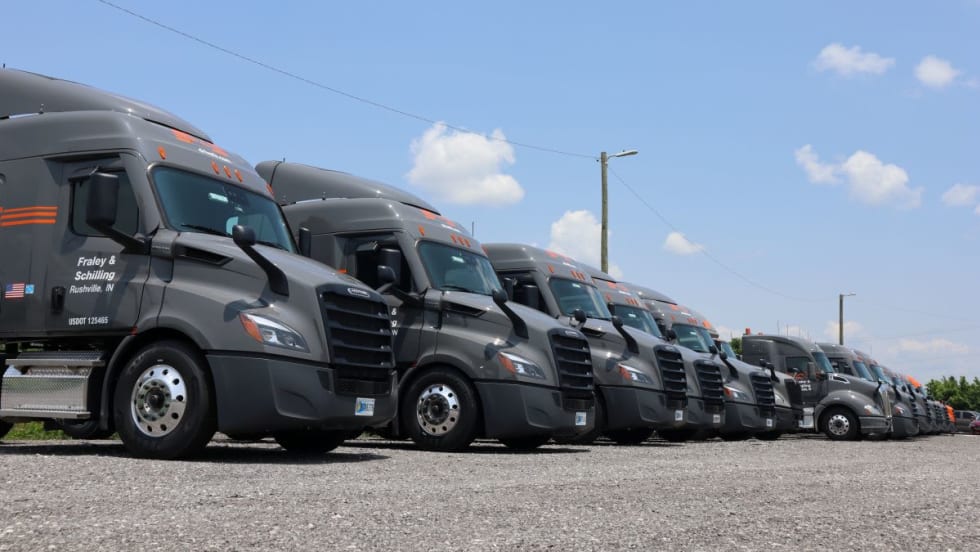
How Fraley & Schilling Improved Logbook Compliance by Over 50%
Fraley & Schilling needed a way to close a compliance workflow gap in its ELD system without adding more work from driver training, reminders, and back-office follow-ups. It found the answer in a custom driver app.
Read More →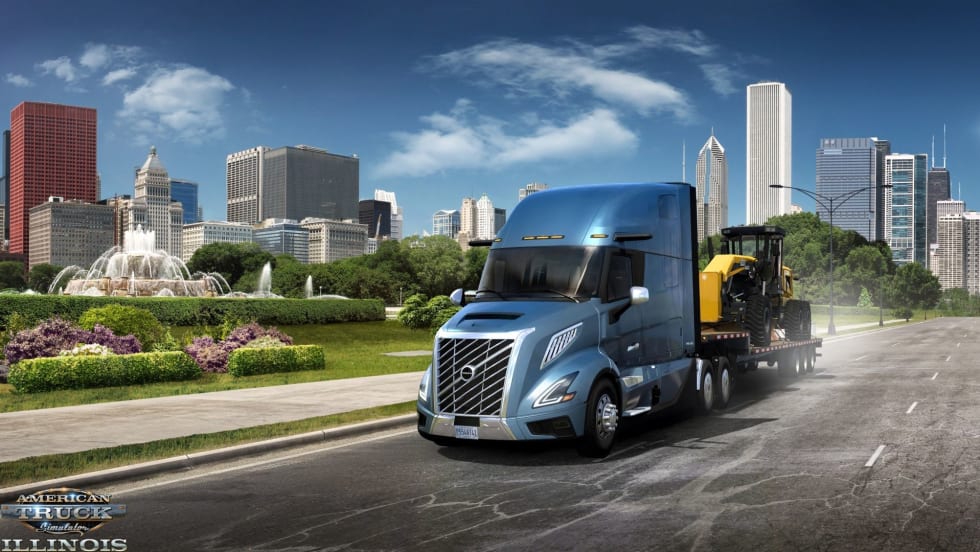
Volvo Goes Gaming
Volvo has roared into American Truck Simulator with two new flagship trucks.
Read More →
What the Best Fleets to Drive For Teach About Driver Retention
Survey fatigue, AI-powered routing, owner-operator expectations, and the decline of social media all emerged as themes from this year's Best Fleets to Drive For program.
Read More →