




Green Fleet Conference: Gridlock, Obama, and What it Means for Green Fleets
PHOENIX -- What should you expect in President Obama's second term? A single word: gridlock. The current government shutdown is just one more symptom of a Congress that hasn't passed a budget since 2007. Yet that might not affect green fleets' investments in clean-burning and alternative fueled vehicles as much as you might think.

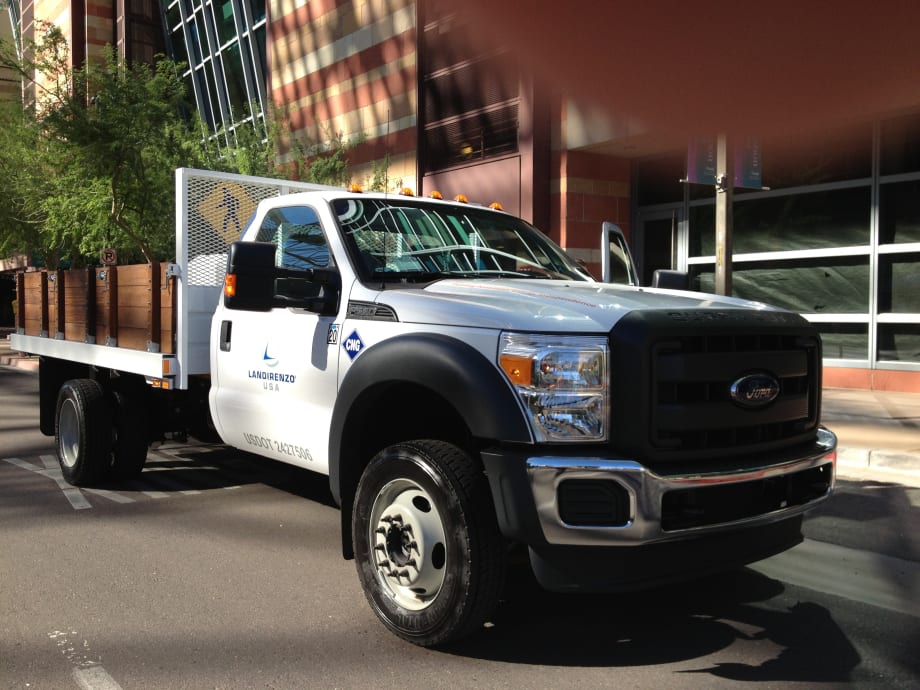
The attractive price of natural gas fuel, like that used in this bi-fuel Ford F-550, could put pressure on other "green" alternatives.
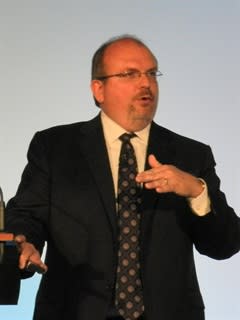
Kipp Coddington, with the Washington, D.C. law firm of Kazmarek Mowrey Cloud Laseter, said there are many factors driving adoption of "green" vehicles that have nothing to do with government incentives or Congressional gridlock.
PHOENIX -- What should you expect in President Obama's second term? A single word: gridlock. The current government shutdown is just one more symptom of a Congress that hasn't passed a budget since 2007. Yet that might not affect green fleets' investments in clean-burning and alternative fueled vehicles as much as you might think, said Kipp Coddington, with the Washington, D.C. law firm of Kazmarek Mowrey Cloud Laseter, Tuesday during the breakfast keynote address of the Green Fleet Conference.
Speaking to a mixture of government, private and for-hire fleets running everything from company cars to medium and heavy duty trucks, Coddington told the audience, "The innovators for the U.S. are sitting here today – they are not sitting inside the Beltway. You should not be distracted by what is going on in Washington, D.C."
The national debt, approaching $17 trillion, or more than $52,000 for each U.S. citizen, is the primary thing motivating the current level of dysfunction in Washington, he said. "People in Washington are saying, 'We don't really understand this, but it's out of control so we're going to shut it down,'" he explained. "Until this is resolved and I don't think it's going to be resolved anytime soon, folks coming to Washington for assistance aren't going to find it."
And that probably includes incentives for buying alternative fueled vehicles, he said. As the government faces continuing expenditures for programs such as social security and healthcare, he said, it will have less money for discretionary spending on things like infrastructure and environmental programs.
For instance, there are a number of alternative fuel tax incentives expiring Dec. 31, he said, including a cellulosic biofuel producer credit and incentives for biodiesel and renewable diesel. Don't expect them to be extended again at the end of this year, he said. "So if you want these incentives, use them now – they won't be here come January."
However, Coddington emphasized, there are many factors driving adoption of "green" vehicles that have nothing to do with government incentives or Congressional gridlock.
Regulations 'Baked In'
"The cake is already baked" in terms of environmental requirements for vehicles and fuels that will take effect during Obama's second term. For instance, he said, "ambient air quality standards are on automatic pilot." Air quality standards for things such as ozone and particulate matter going to continue to get stricter. "They are reviewed every five years and they are never relaxed." As these standards tighten, more cities, regions and states will be in non-attainment status, and will be "scrambling to come up with more stringent emissions controls on fleets. So green fleets are ahead of the game."
Earlier this year, the Environmental Protection Agency proposed Tier 3 standards that would reduce tailpipe and evaporative emissions from light-duty vehicles, medium-duty passenger vehicles and some heavy-duty vehicles between 2017 and 2025.
There are also the new fuel economy/greenhouse gas emissions standards for vehicles. "There are still a small a mount of legal battles on these, but I think they will ultimately withstand legal challenge," Coddington said. "Light-duty standards are baked into the cake till 2025," he added, noting the automotive industry has done an outstanding job of working with the agency instead of fighting it.
For medium and heavy-duty trucks, those new GHG standards go into effect with the 2014 model year and run through MY 2018, the end of Obama's second term. Over the summer, the President announced plans for phase 2 of the program starting with MY 2019 trucks.
"So these standards are largely immune from gridlock in Washington, D.C."
The government is also looking at fuel, with a recent proposal to further reduce sulfur levels in gasoline. California's low-carb fuel standard "has faced a withering blizzard of legal challenges, and to date all those challenges have been parried to the side, although there are a few remaining."
There is a chance that at some point we could see a national low-carbon fuel standard, he said, but it will probably take years and years of regulation-writing. So it won't happen in Obama's second term, "but I don't think this issue will go away."
Meanwhile, the renewable fuel standard, which requires blenders of on-road transportation fuel, primarily gasoline, to blend in increasing amounts of renewable fuels (mostly ethanol), has faced intense scrutiny on Capitol Hill, with some bipartisan opposition, Coddington said. The EPA said it will address some of these issues next year. "I don't think ethanol is going to go away, but it's possible that its peak of political support is behind it."
Coddington also noted that there has been a lot of talk about electricity as a transportation fuel, but more stringent regulations upstream on coal-fired power plants, which provide about 30% of the nation's electricity, could mean higher electricity prices.
Next Page: Market Trends[PAGEBREAK]
Market Trends
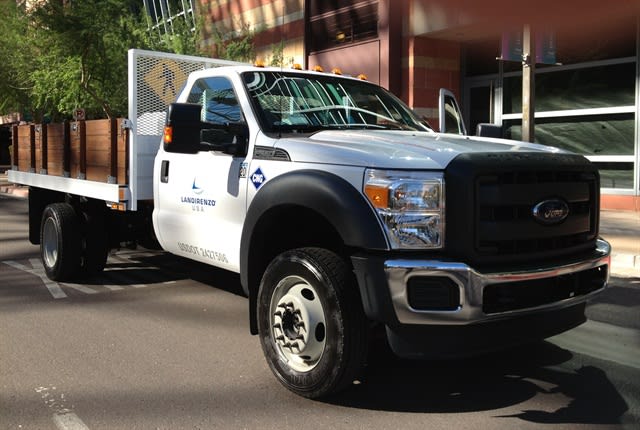
The attractive price of natural gas fuel, like that used in this bi-fuel Ford F-550, could put pressure on other "green" alternatives.
Outside of Washington, Coddington pointed to market factors that will influence green fleets, particularly natural gas. Showing a map of all the "shale plays" in the U.S. where fracking is allowing access to huge natural gas resources, he said. It's hard to look at this and think it's not going to have some impact."
One of those impacts may be pressure on other alternative fuels and "green" vehicles, he said. On the power generation side, he said, natural gas is pressuring not only coal, but it's also pressuring wind, solar, etc., because natural gas for the last several years has been relatively inexpensive. "Could the same thin happen in the transportation market? Is that not going to pressure other renewable technologies that may have a hard time competing on price?"
Another trends involves Department of Energy projections that the energy consumed for all forms of transportation will be the same in 2040 as it was in 2011. With vehicles becoming more fuel-efficient and vehicle-miles traveled expected to grow moderately if at all, the question becomes, how are we going to fund our highways? The traditional per-gallon fuel tax won't work. Recent Congressional Budget Office projections, he said, show the Highway Trust Fund going into the red in 2015.
"I think you're going to see increasing trends of government wanting to impose fees on green vehicles," Coddington predicted. For instance, Virginia just started imposing a fee on hybrid vehicles designed to help make up for the fuel taxes they aren't paying.
Finally, customers and businesses themselves are driving the transportation industry toward more sustainable vehicles and fuels. "If you look at the sustainability policies that the Fortune 500 companies have, most of them have aspirational goals about greening their transportation systems," he said, citing Wal-mart as an example. "It doesn't matter what the government does."
And investors aren't waiting, either. Shareholder resolutions are increasingly demanding that publicly owned companies take environmentally friendly actions such as reducing greenhouse gas emissions.
"Green fleets are uniquely equipped to stay ahead of these curves."
More Fleet Management

Color Match Smarter: Tools That Restore & Perform
For fleet managers and collision repair professionals keeping heavy-duty trucks on the road, getting the color right the first time isn't just about appearance — it's about efficiency, turnaround time, and bottom-line results. Discover how today's digital color tools are transforming the repair process from guesswork to precision.
Read More →
FMCSA Pauses Biennial-Update Enforcement Amid Motus Transition
Carriers whose updates were due on or after June 1 have more time, while FMCSA works to stabilize its new registration system and warns of phishing sites impersonating its new carrier registration system, Motus.
Read More →
2026 Blueprint for Countering Smarter Supply Chain Theft
Cargo theft is no longer just the cost of doing business. It's a multi-billion-dollar criminal enterprise exploiting vulnerabilities across your fleet, drivers, and supply chain.
Read More →


How Telematics Improves Visibility, Control, and Performance in Refrigerated Fleets
Explore how telematics help refrigerated fleets improve visibility, uptime, efficiency, compliance, and cargo protection across connected cold chain operations.
Read More →
What the U.S.-Canada Trade War Means for Trucking
Escalating U.S.-Canada tariffs could disrupt cross-border freight, reduce truck volumes, raise costs, and create new uncertainty for carriers on both sides of the border.
Read More →
What Are Trucking’s Top Concerns for 2026?
The American Transportation Research Institute wants to know what's worrying trucking fleet managers, drivers, and other stakeholders in its annual Industry Issues survey.
Read More →
American Trucking Associations Looks for a New Leader
ATA President and CEO Chris Spear abruptly left his job at the association on August 21, at a pivotal time for the trucking industry.
Read More →
Public Wi-Fi Cybersecurity Risks: How Truck Drivers and Fleets Can Protect Their Data
Public Wi-Fi can expose truck drivers and fleets to credential theft, malware, and other cyber threats. Here’s how to reduce the risk on the road.
Read More →
For Nicky Cupp, Fleet Innovation Starts With Frustration
HDT Truck Fleet Innovator Nicky Cupp turns everyday pain points at Fraley & Schilling into opportunities for better technology and smarter processes.
Read More →
Adam Buttgenbach’s Approach to Electric Trucks: Start With Where They Fit
HDT Truck Fleet Innovator Adam Buttgenbach helped PepsiCo build one of North America’s largest EV fleets by focusing on where electric trucks make operational sense.
Read More →