





Related: State of the Commercial Truck Tire Market: Present & Future
Goodyear Chief Warns of Changing Attitudes, Business Models
Kramer warned attendees at the company’s 2019 North American Dealer Meeting that “inflection points” are already affecting Goodyear, as well as the customers and industries it serves.
January 29, 2019
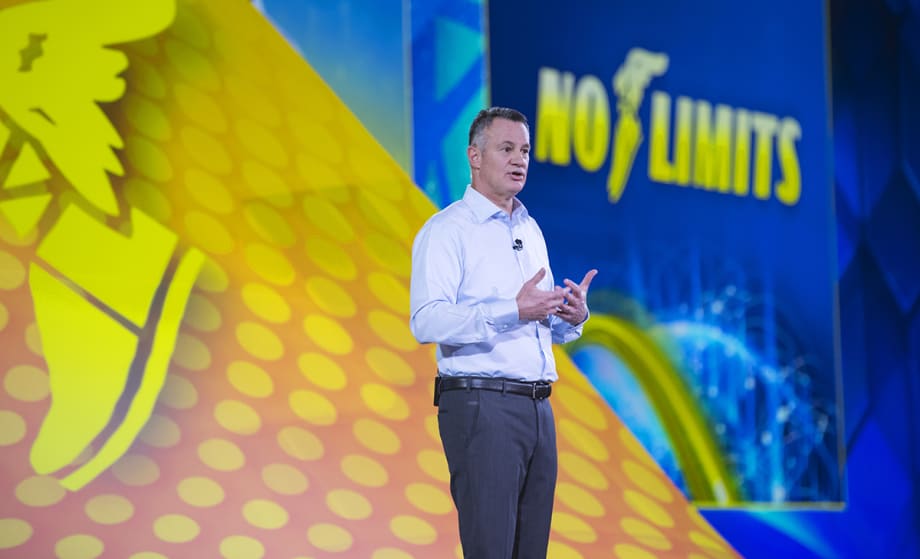
Goodyear CEO and Chairman Rich Kramer said that inflection points are affecting multiple aspects of the tire industry-- and are harbingers of massive changes that are coming soon.
Photo: Goodyear
4 min to read
Goodyear CEO and Chairman Rich Kramer had a blunt warning for attendees of the company’s North American Dealer Meeting in Grapevine, Texas. What he called “inflection points” will massively disrupt Goodyear and the tire industry at large, including the customers, markets, and industries they serve, and they are already disrupting the status quo. That’s the case, he stated in his keynote speech on Jan. 29, even though the full consequences of their impact may not be readily evident for years to come.
He defined an inflection point as a permanent shift in behaviors that change the way people think and act. He then warned Goodyear employees and dealers of four key areas that are already creating disruption and change for the tire industry:
Changing automobile OEM business models;
Changes in attitudes as to what vehicles are and how they should be used by consumers;
Shifts in competition, including startups, and
Changing consumer buying habits.
Looking at the automotive industry as a whole, Kramer noted, “Automobiles have fueled our economy for over 100 years. And now, they will no longer be produced. That is an inflection point.”
Kramer praised a book titled “Only the Paranoid Survive” by Andrew S. Grove as heightening his understand of inflection points in business. He noted that the book taught him that, “We don’t always recognize when an inflection point happens. We only recognize it in hindsight.”
As for new OEM initiatives like Ford’s Smart Mobility and GM’s Cruise Automation programs, Kramer said these are clear signs that car companies are changing their business models. And that they would only make such a radical departure from long-established business models because, “They see a profit opportunity in running fleets that is multiple times what they get selling one car at a time. Automobile companies are showing a willingness to shift their business models today to a new economic reality. That is an inflection point, and nothing will be the same after it passes.”
Turning to changing perceptions about vehicle use, Kramer said three main drivers are changing people’s attitudes toward mobility: “People want reliability, with access to on-demand transportation in under two minutes. They are also looking at the costs of personal transportation in a new way. Most cars sit idle 98% of the time, and cost $2 per mile to run. Many people today are questioning the wisdom of those costs when other forms of mobility are becoming increasingly available.”
He said the third driver that is changing attitudes about vehicle use is changing attitudes about the very utility of vehicles — a move away from “do-it-all” types of vehicles toward more highly specialized vehicles that excel in specific applications and are used as needed via some type of shared ownership and use platform.
And, after more than a century of dominance in the industries they serve, Kramer warned his audience that long-established “heritage” tire manufacturers are now vulnerable to a host of new competition, from overseas rivals to startups with sometimes outrageous ideas.
“These new startup companies,” Kramer cautioned, “sometimes all they have is an idea and a benign ignorance of what it takes to establish a tire company. But these startups focus on what is possible – not on what can’t be done. And on that front alone, they can be disruptive forces in their own right that cause great change. And we cannot afford to take them lightly.”
Changing consumer buying habits are also an inflection point that demands attention, Kramer told attendees. While he said the shift toward more online purchases is widely understood, he cautioned against thinking those shifts in buying habits will not affect Goodyear or its dealers. “The tire industry is not immune to broad changes in business models and consumer buying habits,” he warned.
However stark his warnings, Kramer stressed that Goodyear is well positioned to respond to the challenges inflection points present to the company now and in the near future. He urged his audience to begin thinking and acting now about coming changes.
“Adopt with balance,” he said. “And keep in mind that our business is strong and will be for a long time to come. Even the most advanced, futuristic vehicle imaginable today will still need tires. But we cannot afford to be complacent or think ourselves immune to change as we move into this new, disruptive future.”
More Fleet Management
Why Private Fleets Are Taking More Freight
Private fleets are putting their own trucks on demanding customers and high-cost lanes as companies seek greater control over service, costs, and capacity.
Read More →
Sponsored•September 16, 2026
Color Match Smarter: Tools That Restore & Perform
For fleet managers and collision repair professionals keeping heavy-duty trucks on the road, getting the color right the first time isn't just about appearance — it's about efficiency, turnaround time, and bottom-line results. Discover how today's digital color tools are transforming the repair process from guesswork to precision.
Read More →
FMCSA Pauses Biennial-Update Enforcement Amid Motus Transition
Carriers whose updates were due on or after June 1 have more time, while FMCSA works to stabilize its new registration system and warns of phishing sites impersonating its new carrier registration system, Motus.
Read More →


Sponsored•September 14, 2026
2026 Blueprint for Countering Smarter Supply Chain Theft
Cargo theft is no longer just the cost of doing business. It's a multi-billion-dollar criminal enterprise exploiting vulnerabilities across your fleet, drivers, and supply chain.
Read More →
Sponsored•September 1, 2026
How Telematics Improves Visibility, Control, and Performance in Refrigerated Fleets
Explore how telematics help refrigerated fleets improve visibility, uptime, efficiency, compliance, and cargo protection across connected cold chain operations.
Read More →
What the U.S.-Canada Trade War Means for Trucking
Escalating U.S.-Canada tariffs could disrupt cross-border freight, reduce truck volumes, raise costs, and create new uncertainty for carriers on both sides of the border.
Read More →
What Are Trucking’s Top Concerns for 2026?
The American Transportation Research Institute wants to know what's worrying trucking fleet managers, drivers, and other stakeholders in its annual Industry Issues survey.
Read More →
American Trucking Associations Looks for a New Leader
ATA President and CEO Chris Spear abruptly left his job at the association on August 21, at a pivotal time for the trucking industry.
Read More →
Public Wi-Fi Cybersecurity Risks: How Truck Drivers and Fleets Can Protect Their Data
Public Wi-Fi can expose truck drivers and fleets to credential theft, malware, and other cyber threats. Here’s how to reduce the risk on the road.
Read More →
For Nicky Cupp, Fleet Innovation Starts With Frustration
HDT Truck Fleet Innovator Nicky Cupp turns everyday pain points at Fraley & Schilling into opportunities for better technology and smarter processes.
Read More →