





From the Archives (2008): Fuel Crisis Survival
Get Ready for $5-$6 Diesel Fuel
Oil and diesel prices, already spiking, may get worse with President Biden's move to cut off crude oil imports from Russian in the wake of the invasion of Ukraine.
March 8, 2022
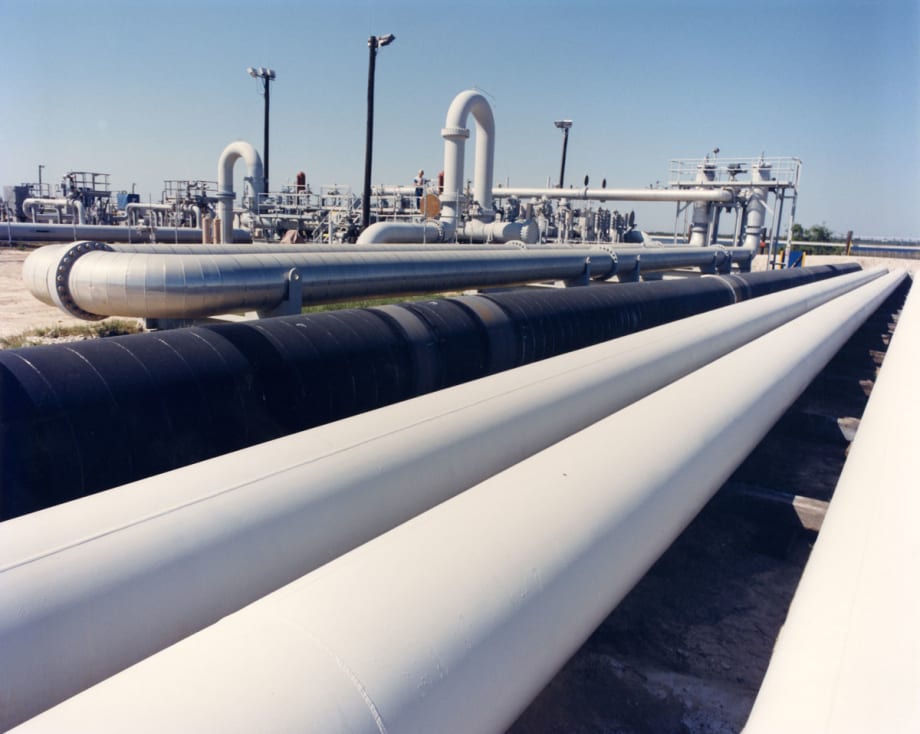
The U.S. Department of Energy already committed to releasing 30 million barrels of crude oil from the U.S. Strategic Petroleum Reserve to ensure an adequate supply of petroleum in response to Russia’s further invasion of Ukraine.
Photo: File, Strategic Petroleum Preserve
3 min to read
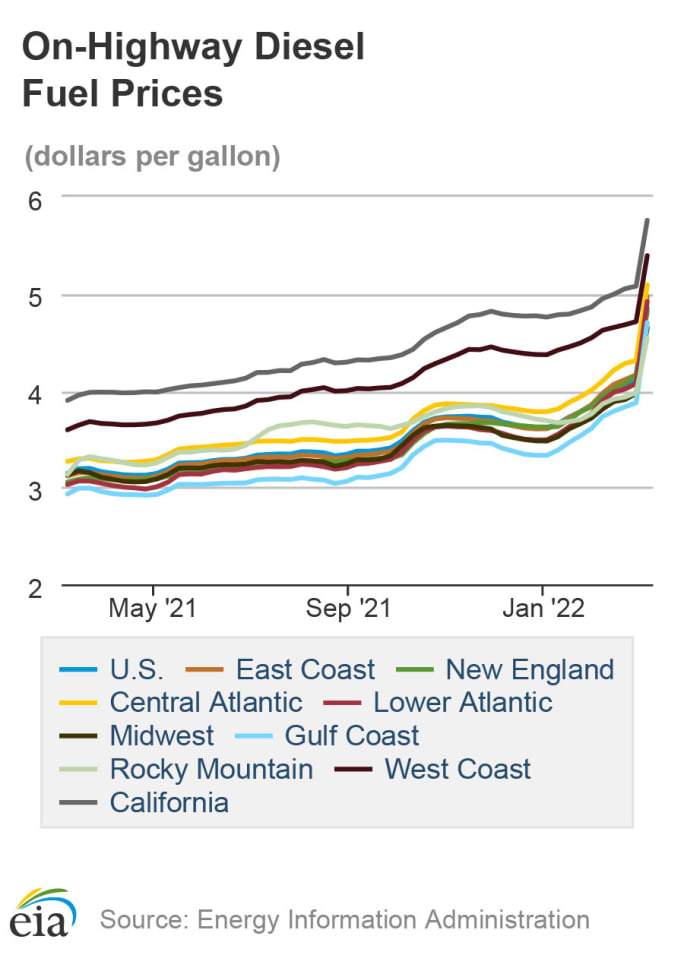
The average retail price of ultra-low-sulfur diesel has risen nearly a dollar per gallon in the past month, and prices are likely to go higher as crude oil prices spike and President Biden announced a ban on Russian oil imports.
Figures from the Department of Energy show the national weekly average as of March 7 of $4.85, up from $3.95 a month earlier. The 90-cent jump is the biggest in the Department of Energy’s records going back to February 2007 and also the highest average price. The last time it was this close was $4.771 in July 2008.
Unless something drastic happens, we are headed to pump prices of more than $5 a gallon for diesel, said Tom Kloza, head of global energy analysis at Oil Price Information Services.
Diesel is once again the power mover in US markets. All-time high record pump price of $4.8448 gal (7/17/08) gets breached tomorrow and $5 gal national average is in sight. California is targeting $6 gal by the weekend.
— Tom Kloza (@TomKloza) March 8, 2022
Russian Oil Ban
On March 8, President Biden announced that as part of the West’s economic sanctions it has been taking against Russia in response to the attack on Ukraine, that the federal government is banning all imports of Russian oil and gas and energy.
Oil futures rose in response, with West Texas Intermediate crude rising as much as 7% to trade above $128 per barrel, according to CNBC; It ended the day 3.6% higher at $123.70. Brent crude oil, the international benchmark, jumped 7.7% to $132.75; at the end of the session the contract stood 4.3% higher at $123.21.
“The market has already been self-sanctioning the Russian energy complex, with buyers avoiding the nation’s oil,” CNBC pointed out.
The U.K. also announced it would phase out Russian oil imports by the end of the year. However, so far other European countries have not announced bans.
A senior administration official explained in a call why the U.S. is able to take this action even though our allies in Europe are not doing the same. The official pointed out that in 2021, Russian oil was just under 10% of U.S. overall imports of oil but a third of Europe’s imports.
In addition, this official said, “the U.S. produces far more oil domestically than any of our allies. In fact, we’re a net exporter, the leading oil and gas producer in the world.”
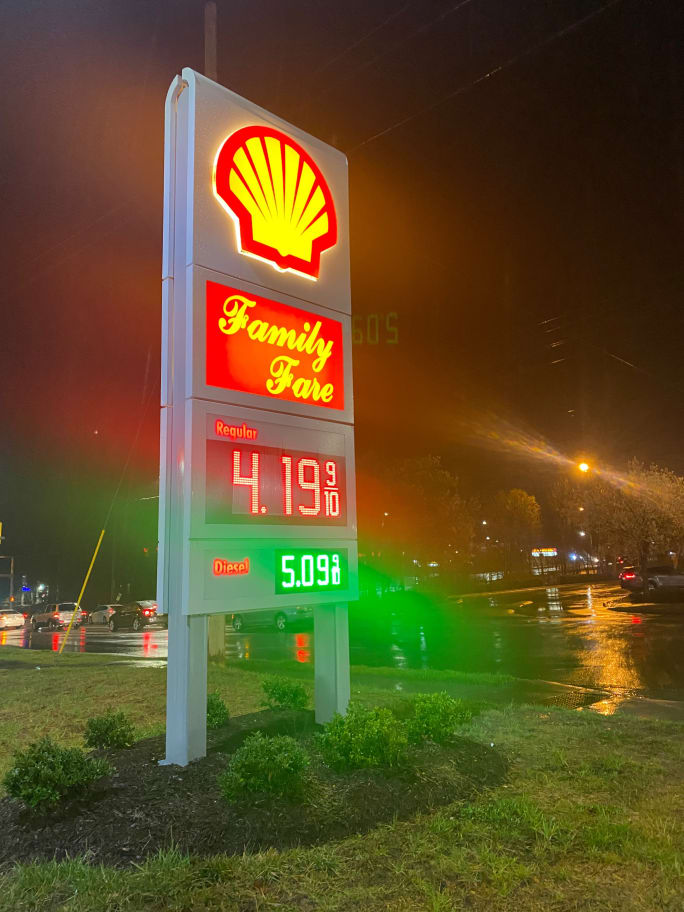
Gas prices were already above $4 and diesel prices over $5 per gallon on March 8 in Durham, North Carolina.
Photo: Wes Platt
“The United States is able to take this step because of our strong domestic energy production and infrastructure. And we recognize that not all of our Allies and partners are currently in a position to join us.”
Some critics have said Biden administration policies limiting oil drilling are hampering U.S. oil production, but the official said that “U.S. oil and gas production is approaching record highs while thousands of drilling permits on federal lands go unused. So federal policies are not limiting the production of oil and gas.”
The administration also used the situation to push the transition away from fossil fuels.
“In the long run, the way to avoid high gas prices is to speed up, not slow down, our transition to a clean energy future. The reality is we can’t drill our way out of dependence on a global commodity that’s controlled, in part, by foreign nations and their leaders, including Putin. The only way to eliminate Putin’s and every other producing country’s ability to use oil as an economic weapon is to reduce our dependency on oil.”
More Fuel Smarts

How Volvo Updated Its D13 for EPA 2027 [Watch]
Volvo’s updated D13 promises lower emissions without sacrificing performance or fuel economy. Take a closer look at what changed inside the engine in this HDT Spotlight video.
Read More →
Diesel Price Spike Shortens Payback for Natural Gas Trucks, Report Says
Energy Vision estimates fleets could recover the higher purchase price of an RNG-fueled Class 8 tractor in 1.3 to 2.8 years under current fuel-price scenarios.
Read More →
Calstart Becomes Catalyst Mobility, Reflecting Broader Focus
Calstart is now Catalyst Mobility, reflecting the nonprofit’s growing national role in clean transportation, including zero-emission trucks, infrastructure and incentive programs.
Read More →

Record Diesel Prices Squeeze Trucking Fleets
Average U.S. diesel prices have climbed to nearly $6 a gallon, surpassing the 2022 record as tight refinery capacity and Middle East disruptions keep fuel costs elevated.
Read More →
Sponsored•September 9, 2026
How Fuel Delivery Shapes Engine Performance
Fuel delivery depends on more than what happens at the injector. For fleet, maintenance and technical professionals, looking at the full path from pump to injector can provide useful context for understanding engine performance.
Read More →
East Coast Port Launches $45M Electric Truck Push
The Port Authority of New York and New Jersey announced millions in incentives for zero-emission drayage trucks, yard tractors, and new charging hubs near the port.
Read More →
California Bill Could Shed Light on Electric Truck Prices
Why do battery-electric Class 8 trucks remain so expensive? A California bill headed to Gov. Gavin Newsom would give fleets and state agencies more visibility into what manufacturers charge.
Read More →
Detroit Opens Orders for EPA 2027 Engines
Detroit isn’t starting from scratch to meet EPA 2027 diesel emissions standards. Its Gen 6 DD13 and DD15 engines keep much of today’s platform while updating the fuel and aftertreatment systems.
Read More →
Zero-Emission Truck Corridor Planned for West Coast
California, Oregon, Washington, British Columbia and Baja California are coordinating plans for truck charging and hydrogen fueling from Canada to Mexico.
Read More →
A Closer Look at Kenworth’s Electric T880E Vocational Truck [Video]
Learn more about Kenworth's T880E battery-electric vocational truck at the Paccar Technical Center, including its range, applications, upfitting considerations, and PTO options, in this HDT Spotlight video.
Read More →