




GAO Slams Homeland Security Department Over TWIC Card Readers
A new Government Accountability Office report to Congress has some far from kind words about the Transportation Security Administration and biometric readers used in the Transportation Worker Identification Credential program, overseen by the U.S. Department of Homeland Security and coordinated along with the U.S. Coast Guard.

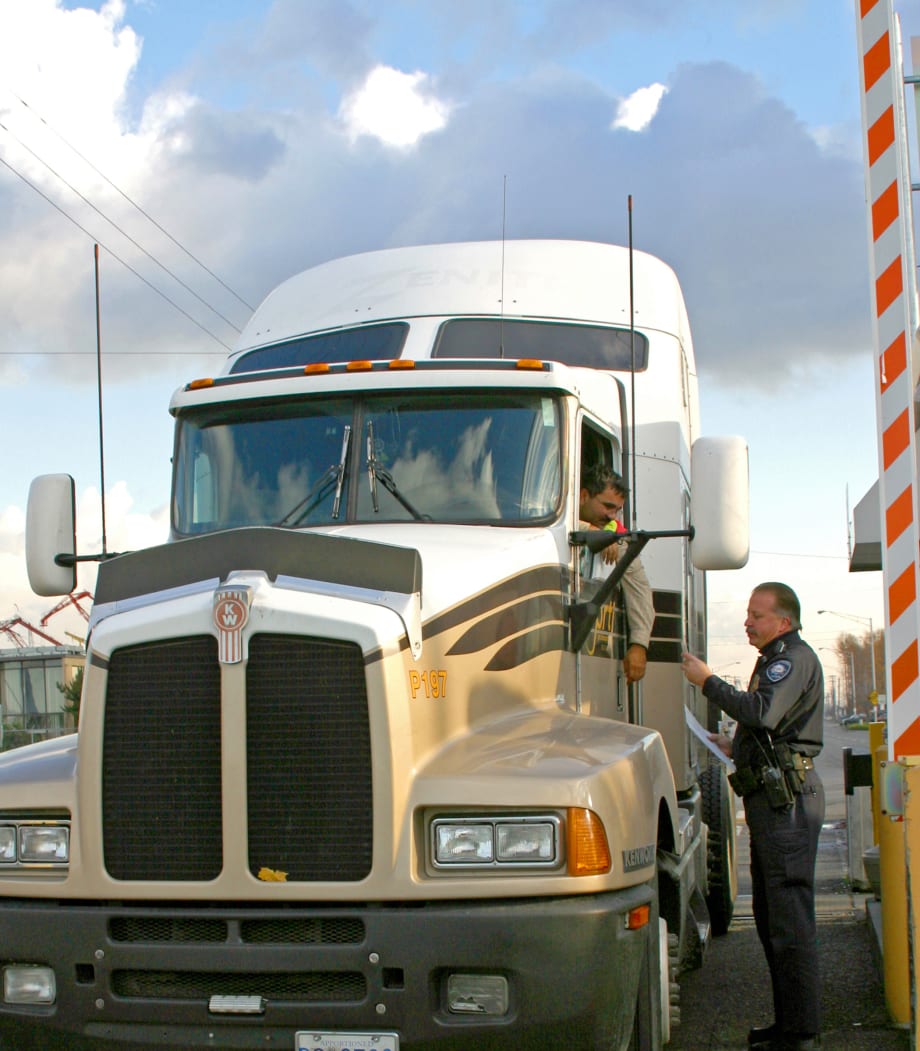
An official manually checks a driver's TWIC credentials at the Port of Tacoma.
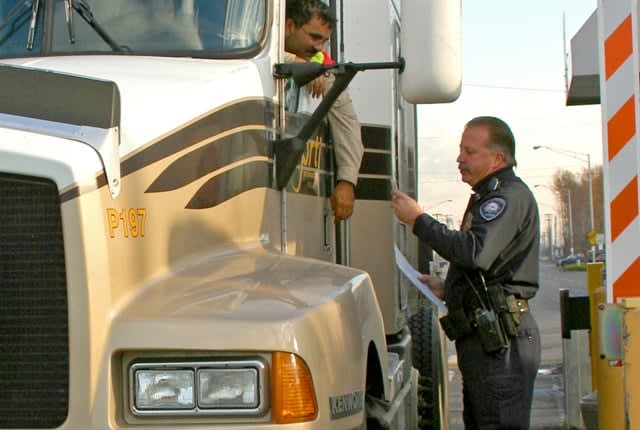
An official manually checks a driver's TWIC credentials at the Port of Tacoma.
A new Government Accountability Office report to Congress has some far from kind words about the Transportation Security Administration and biometric readers used in the Transportation Worker Identification Credential program, overseen by the U.S. Department of Homeland Security and coordinated along with the U.S. Coast Guard.
The TWIC program, launched shortly after the 9/11 attacks on the United States, uses background checks with special cards issued to more than a million people that have applied for them, including truck drivers who need unescorted access to transportation facilities, especially the nation’s ports.
The problem, says GAO, is not with the cards, which cost nearly $130 for five years, but rather with DHS still having problems developing and installing card readers at facilities in a pilot effort. This in essence renders the cards as little more than an expensive form of identification.
“DHS’s assumption that the lack of a common credential could leave facilities open to a security breach with falsified credentials has not been validated,” said GAO in the report. “Eleven years after initiation, DHS has not demonstrated how, if at all, TWIC will improve maritime security.”
It recommended that at a minimum, DHS should consider s comprehensive comparison of alternative credentialing approaches.
GAO also blamed DHS and TSA because they did not correct planning shortfalls that GAO identified in November 2009.
“TSA officials said challenges, such as readers incapable of recording needed data, prevented them from collecting complete and consistent pilot data,” the GAO report said. “Thus, TSA could not determine whether operational problems encountered at pilot sites were due to TWIC cards, readers, or users, or a combination of all three.
It is recommending that Congress should halt DHS’s efforts to promulgate a final regulation until the successful completion of a security assessment of the effectiveness of using TWIC.
The 72-page report is available online.
More Drivers

Truck Drivers Need More Than Another Alert
Fleets have more visibility into truck health, safety events, and driver activity than ever. The next challenge is turning all that information into useful guidance for the person who has to decide what to do next.
Read More →
FMCSA Removes 110 Truck Driver Training Schools from Certified ELDT List
Federal regulators also are targeting more than 160 additional training providers and launching a nationwide audit of third-party CDL skills testers as part of a broader crackdown on trucking fraud.
Read More →
Hours of Service Pilot Programs: FMCSA Readies for 2027 Rollout
Two pilot programs could eventually reshape hours-of-service rules, giving truck drivers options to pause their 14-hour clock or use longer split sleeper rest periods.
Read More →
Medical Cards, English Proficiency Reshape Roadcheck Violations
Medical-card violations jumped to the top of the driver out-of-service list during CVSA’s 2026 International Roadcheck, while English-language proficiency violations appeared among the leading violations for the first time.
Read More →
Driver Trust Can Make or Break the Success of Fleet Safety Technology
New Teletrac Navman research suggests that onboarding, transparency about driver data, and positive feedback can play a significant role in how commercial drivers respond to safety and coaching technology.
Read More →
EEOC Sues KLLM Over Alleged Sex Discrimination in Driver Training
KLLM is facing a federal sex-discrimination lawsuit over policies the EEOC alleges put female truck driver trainees at a disadvantage.
Read More →
FMCSA Moves to Codify English Language Requirements for Commercial Drivers
By changing regulations on English-language proficiency requirements for commercial drivers, rather than relying on a guidance memo, the FMCSA said future administrations won't be able to walk back the Trump administration's stricter enforcement with just a memo.
Read More →
Drivers Put Western Star Trucks to the Test at Star Nation Experience
Watch to get an inside look at the Western Star trucks, technology, and community behind the Star Nation Experience 2026!
Read More →
Trump Administration Looks to Put More Veterans Behind the Wheel
The Freedom Haulers program pulls together existing and expanded programs at several federal agencies to recruit veterans to drive commercial heavy-duty trucks and cut the red tape for them to get a CDL, training, and employment.
Read More →
Putting Mack’s Command Steer to the Test
A test drive of Mack’s Command Steer active steering system evaluates how it can make truck driving easier and less tiring.
Read More →