




GAO Report Underscores Lack of Data in Hours Proposal
Estimates of safety gains from revision of the hours of service rules are based on assumptions, not concrete data – and no one knows if those assumptions are reasonable. That is the message to Congress from the General Accounting Office, the watchdog agency charged with critiquing how government does its work
Estimates of safety gains from revision of the hours of service rules are based on assumptions, not concrete data – and no one knows if those assumptions are reasonable.
That is the message to Congress from the General Accounting Office, the watchdog agency charged with critiquing how government does its work.
In a report to Rep. Frank Wolf, R-VA, chairman of the transportation appropriations subcommittee, GAO pointed out that if the assumptions that underlie the hours proposal are not reasonable, then the benefits could turn out to be significantly different than the Federal Motor Carrier Safety Administration has estimated.
GAO’s observations do not expose any secrets. It is well understood that the safety agency is hampered by a lack of data about what causes accidents. The agency itself, when it proposed the rule, explained that detailed data to support its assumptions does not exist, so it was relying in part on professional judgment.
It estimated, for example, that requiring longhaul and regional truckers to use electronic recorders to track driver hours would lead to 20% fewer fatigue-related accidents and 115 lives saved each year. At the same time, the agency acknowledged that if the recorders produced only a 5% accident reduction, the benefit would be 38 lives saved.
The point is, the numbers are not certain – a circumstance that troubles federal accountants.
By its timing, the GAO report may play into the hours-of-service political struggle now under way in Congress.
Since it highlights the uncertainty in the safety agency’s analysis, the GAO report could provide ammunition to truckers and their allies in Congress who are seeking to delay the proposal.
It comes as House and Senate appropriations panels are supposed to confer on a bill that would cut off funding for the rulemaking process. The Senate version of the Department of Transportation appropriations bill contains that provision, while the House version does not.
Wolf, who will be the House manager of the conference, is adamantly opposed to the delay, which is being pushed by trucking interests led by American Trucking Associations.
But other members of the House have expressed concern about the impact of the proposal on the trucking industry (see “Hart Acknowledges Trucker Concerns About Hours of Service,” 6/23/2000).
GAO’s critique of the hours of service proposal came in the context of a broader critique of FMCSA’s progress toward meeting its safety goals.
Repeating a message it has delivered before, the accounting agency said that FMCSA needs to explain how its safety initiatives will reduce accidents and fatalities. The safety agency’s response is that it does not have the data to produce the kind of estimates GAO wants. It is working on an accident analysis program that will eventually produce that data, but the results still are years away.
More Drivers

Competition Heating Up for Truck Drivers
New report reveals rising driver hiring costs, the return of sign-on bonuses, growing AI advantages, and the operational factors shaping driver retention.
Read More →
How Fraley & Schilling Improved Logbook Compliance by Over 50%
Fraley & Schilling needed a way to close a compliance workflow gap in its ELD system without adding more work from driver training, reminders, and back-office follow-ups. It found the answer in a custom driver app.
Read More →
Volvo Goes Gaming
Volvo has roared into American Truck Simulator with two new flagship trucks.
Read More →
What the Best Fleets to Drive For Teach About Driver Retention
Survey fatigue, AI-powered routing, owner-operator expectations, and the decline of social media all emerged as themes from this year's Best Fleets to Drive For program.
Read More →
Driver Retention Lessons From the Best Fleets to Drive For
What separates trucking's best workplaces from the rest? Jane Jazrawy shares the biggest lessons from this year's Best Fleets to Drive For program on driver retention, communication, AI, and workforce trends on the HDT Talks Trucking podcast.
Read More →
Farewell, CDL: Why I'm Giving Up My Commercial Driver's License
After more than 20 years as a CDL holder, HDT Executive Editor Jack Roberts is letting his commercial license expire. Not because he wants to — but because trucking's nuclear verdict crisis has made the risks of public-road test drives too great for editors, manufacturers, and everyone involved.
Read More →
How Top Trucking Fleets Improve Driver Retention [Video]
What do healthy snacks, optimized routing, and just picking up the phone have in common? They're all strategies the Best Fleets to Drive For are using to retain truck drivers.
Read More →
Trucker Path Adds Verisk CargoNet Theft Data to Navigation Platform
Trucker Path’s new cargo theft risk overlays give drivers and fleets visibility into high-risk areas, stolen commodity trends, and theft hotspots.
Read More →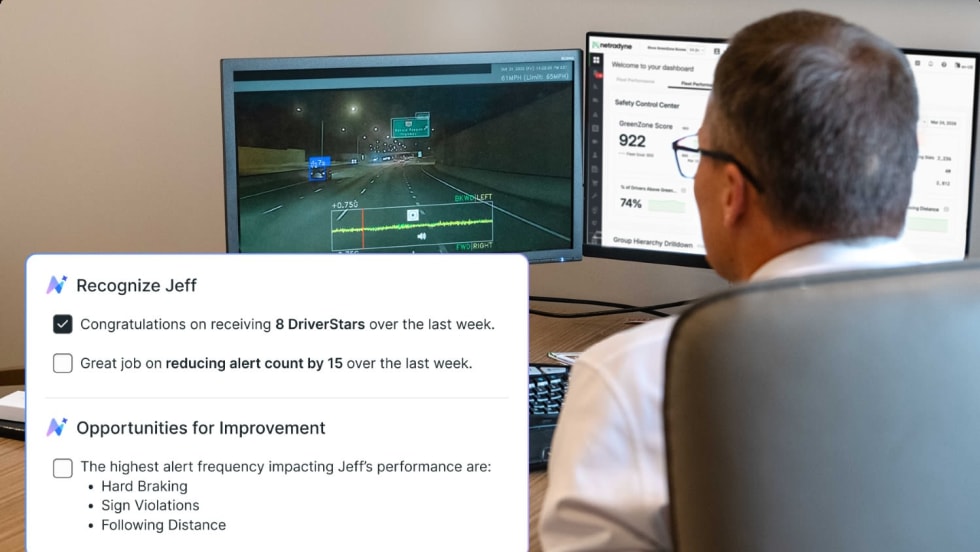
Netradyne Intelligence Uses New AI Agents to Automate Response to In-Cab Camera Data
The company called the next-generation in-cab camera safety platform "a fundamental shift from systems that report on what happened to systems that actively drive what should happen next."
Read More →
Why Truck Detention Keeps Costing Fleets Time and Money
A 2024 ATRI study found detention affects nearly 40% of truckload stops and costs the industry more than $15 billion annually. Despite the toll on drivers, fleets, and supply chains, the problem remains stubbornly persistent.
Read More →