




Fuel Economy Standards Could Reduce Transportation Funds by $57 Billion
Proposed fuel economy standards could result in a $57 billion drop in tax revenue that goes to federal transportation funds, says the Congressional Budget Office. New CAFE standards (or corporate average fuel economy standards), proposed by the National Highway Traffic Safety Administration and the Environmental Protection Agency in 2011, would tighten fuel economy standards for light-duty vehicles manufactured from 2017 to 2025
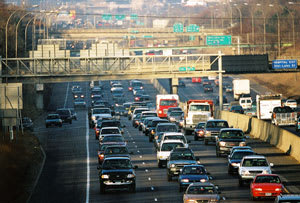
(Photo courtesy of MNDOT)
Proposed fuel economy standards could result in a $57 billion drop in tax revenue that goes to federal transportation funds, says the Congressional Budget Office.
New CAFE standards (or corporate average fuel economy standards), proposed by the National Highway Traffic Safety Administration and the Environmental Protection Agency in 2011, would tighten fuel economy standards for light-duty vehicles manufactured from 2017 to 2025.
That includes cars, sport utility vehicles, pickup trucks, minivans and crossover utility vehicles.
By 2025, the proposed standards are expected to raise the average fuel economy of the new vehicle fleet from 34.1 mpg - the average anticipated for 2016 and beyond under current standards - to 49.6 mpg. The proposed rule also would require gradual reductions in greenhouse gas emissions from light-duty vehicles, which would be accomplished primarily through reduced fuel consumption.
In a recently released report, the Congressional Budget Office estimates that the proposed CAFE standards would gradually lower gasoline tax revenues, eventually causing them to fall by 21%.
CBO estimates that such a decrease would result in a $57 billion drop in revenues credited to the Highway Trust Fund by 2022, a 13% reduction. The full 21% reduction in gasoline tax revenues, however, would not occur for about 30 years.
Policymakers could consider several options to avoid adding to a shortfall in the Highway Trust Fund, including the following:
- Reducing spending on highways and mass transit
- Transferring additional money from the Treasury's general fund to the Highway Trust Fund
- Increasing the gasoline tax or raise revenue from other sources to provide receipts to the trust fund
By 2040, according to EPA's estimates, the proposed standards would reduce annual gasoline consumption by 25% -from 160 billion gallons without the proposed standards to 119 billion gallons with the proposed standards. By that time, nearly all light-duty vehicles on the road either will have been manufactured after 2025, and thus be subject to the 49.6 mpg standard.
To read the full report from the CBO, click here.
More Drivers

EEOC Sues Texas Trucking Company Over Driver Age Limits
The agency says Trancasa USA rejected applicants over 65 and applied tougher driving-record standards to those over 60.
Read More →
Nussbaum, Roehl Announce Second Driver Pay Increase This Year
This year has seen a swath of major truck driver pay increases as freight capacity has tightened.
Read More →
From One Generation to the Next: How Mentorship Builds Safer Truck Drivers
After three decades in trucking, Harold Perry shares what he's learned about driver safety, mentorship, and helping the next generation build confidence behind the wheel.
Read More →
Truck Drivers Need More Than Another Alert
Fleets have more visibility into truck health, safety events, and driver activity than ever. The next challenge is turning all that information into useful guidance for the person who has to decide what to do next.
Read More →
FMCSA Removes 110 Truck Driver Training Schools from Certified ELDT List
Federal regulators also are targeting more than 160 additional training providers and launching a nationwide audit of third-party CDL skills testers as part of a broader crackdown on trucking fraud.
Read More →
Hours of Service Pilot Programs: FMCSA Readies for 2027 Rollout
Two pilot programs could eventually reshape hours-of-service rules, giving truck drivers options to pause their 14-hour clock or use longer split sleeper rest periods.
Read More →
Medical Cards, English Proficiency Reshape Roadcheck Violations
Medical-card violations jumped to the top of the driver out-of-service list during CVSA’s 2026 International Roadcheck, while English-language proficiency violations appeared among the leading violations for the first time.
Read More →
Driver Trust Can Make or Break the Success of Fleet Safety Technology
New Teletrac Navman research suggests that onboarding, transparency about driver data, and positive feedback can play a significant role in how commercial drivers respond to safety and coaching technology.
Read More →
EEOC Sues KLLM Over Alleged Sex Discrimination in Driver Training
KLLM is facing a federal sex-discrimination lawsuit over policies the EEOC alleges put female truck driver trainees at a disadvantage.
Read More →
FMCSA Moves to Codify English Language Requirements for Commercial Drivers
By changing regulations on English-language proficiency requirements for commercial drivers, rather than relying on a guidance memo, the FMCSA said future administrations won't be able to walk back the Trump administration's stricter enforcement with just a memo.
Read More →