




FTR: 2021 Freight Volume, Rates Look Strong, but Risks Remain
The huge increases in freight volume since the economic contraction are slowing, but the trucking industry still looks to see a strong 2021 in terms of both demand and rates.


FTR experts outlined their expectations for freight transportation in 2021.
Screenshot of FTR virtual event
The huge increases in freight volume since the economic contraction are slowing, but the trucking industry still looks to see a strong 2021 in terms of both demand and rates. That was the message from FTR Transportation Intelligence in a virtual session Dec. 10 outlining the firm's outlook for 2021 in freight and commercial vehicles.
FTR estimates that total truck loadings were down about 4% and total truckload rates were up about 2% in 2020. In isolation, those are not metrics to get excited about, but they are quite healthy considering how severe the economic contraction was in the second quarter, said Avery Vise, FTR’s vice president of trucking.
For 2021, FTR forecasts an increase in truck loadings of about 5% and an increase in rates of about 8%, he said. While surging spot rates are largely responsible for mildly higher rates in 2020, contract rates should lead the way in 2021 with a gain of around 10% across all segments.
Temporary or Structural Change?
FTR’s analysts cautioned, however, that some factors that normally would support continued strong demand potentially might instead signal structural changes that could deflate those expectations.
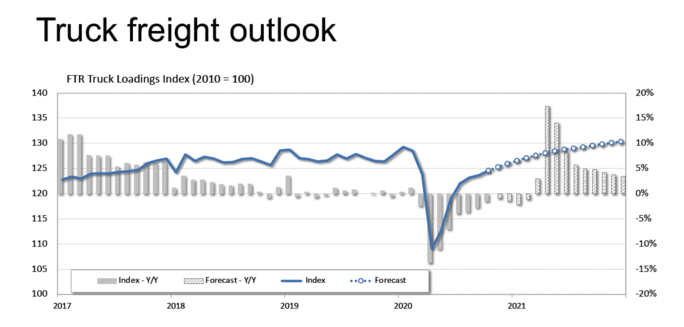
Freight volume surged in the third quarter for various reasons related to the pandemic.
Graph: FTR
Freight volume surged in the third quarter for various reasons related to the pandemic, FTR’s analysts noted in the virtual session. Consumers benefitted from several trillion dollars in government financial support and stimulus, but they spent a greater share of that money on goods than on services because the pandemic limited spending on services such as travel and outside entertainment. Due to high unemployment and other factors, consumers still are not spending quite as much money as they were in February, but spending on services is down nearly 6% while spending on goods is up nearly 8%, benefiting trucking.
How much longer this major shift in consumer spending will continue is unclear, FTR’s analysts said. Given uncertainties over both the near-term consequences of the latest wave of COVD-19 infections and the prospects for significant further stimulus from Washington, “it is really tough to get any sort of a clear picture about how this is going to move in the future,” said Jonathan Starks, FTR’s chief intelligence officer.
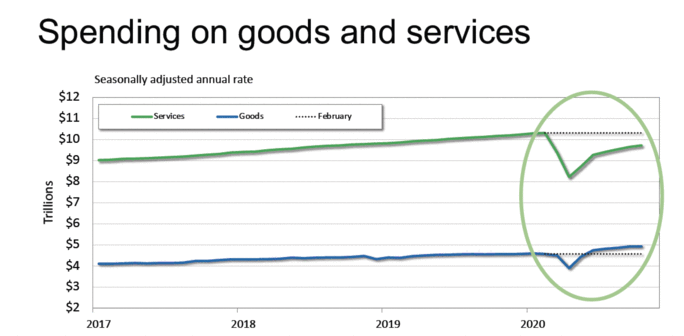
A shift in spending from services to goods has created high freight demand.
Graph: FTR
“I can come up with a clean scenario in which we are able to maintain a strong level of spending on goods well into 2021, continuing to drive strong transportation demand,” Starks said. "And I can come up with a really easy scenario in which that starts to come off pretty quickly as soon as we move into 2021.”
Inventory Changes
Another important stimulant for freight demand has been the inventory situation in retail. The sharp increase in goods spending since the contraction came as manufacturing and imports were constrained for an extended period. The result was a drop in retail inventories just as retail sales were rising sharply. The push to replenish historically lean retail inventories has added to the base freight demand that results from higher consumer spending on goods.
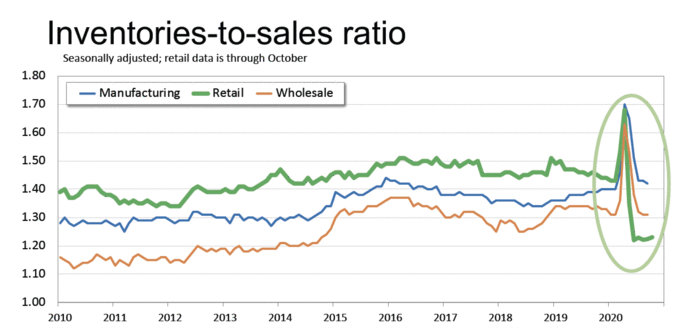
Are inventory shifts simply due to the pandemic, or are there longer term structural shifts at play?
Graph: FTR
Retail inventories are still about 7% below the level in February, but what this means for 2021 is unclear. The fact that inventories are still low implies that a weaking of sales alone would not end the push to replenish inventories, said Vise. Starks agreed. “With the inventories situation still being constrained, that means it probably has some additional legs that we typically would not see,” Starks said.
However, another interpretation of the failure of inventories to rebound is that some level of inventory might be lost permanently, said Clay Slaughter, FTR’s chief strategy officer. People need to consider whether some sectors were overdue for an inventory adjustment at a very foundational level, Slaughter said.
“A prime example I have talked about on multiple occasions is auto dealers,” he said. Dealers might have been wondering for some time whether they really need a parking lot full of cars, and now the current situation has given them the opportunity to act. Vise agreed that this was a possible scenario and cited the example of department stores and other brick-and-mortar outlets that already were under stress from the growing move toward e-commerce and folding or at least reducing locations. Fewer but bigger players in the retail market might not need the same level of total inventory as a larger number of smaller players.
Trucking in 2021
Despite the risks to freight volumes in 2021, the pandemic’s effects on capacity probably will keep trucking companies financially healthy with solid rates, Vise said. November was a very strong month for hiring in trucking, but “we are skeptical that this pace can continue,” he said. In addition to the usual constraints on driver supply, the pandemic has meant fewer new drivers and more retirements and career changes. The drug and alcohol clearinghouse also appears to be at least as big of a factor in culling drivers as most people anticipated, Vise said.
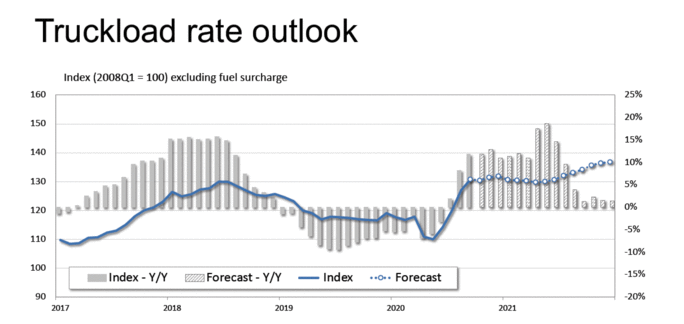
While surging spot rates are largely responsible for mildly higher rates in 2020, contract rates should lead the way in 2021.
Graph: FTR
Another dynamic to watch in 2021 is what impact, if any, the unprecedented surge in newly authorized carriers since June will have on the freight markets, Vise said. The effect on overall capacity is unclear, he explained, because we do not know to what extent these new carriers are adding to capacity or just shifting from capacity leased to carriers to capacity operating under its own authority.
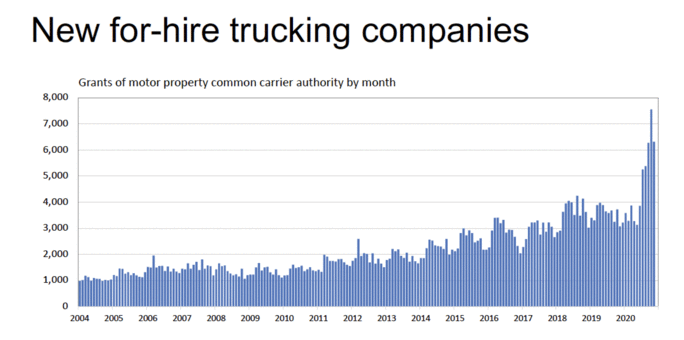
The surge in new for-hire truucking companies is at least partly due to a shift from leased owner-operators to those with their own authority.
Graph: FTR
However, even if overall capacity is not changing, this trend could affect the market in important ways. “This shift matters because what seems to be happening is that capacity that had been linked to carriers is now moving into an environment where they are working more with brokers and third-party logistics companies, both traditional players and what we call ‘tech-enabled’ providers,” Vise said. He cautioned, though, that in many cases the logistics company in some cases is an affiliate of a trucking company.
To view a replay of FTR’s Dec. 10 session and others in the forecasting firm’s Engage virtual speaking series, go to http://www.ftrintel.com/FTRengage.
More Fleet Management

Why Private Fleets Are Taking More Freight
Private fleets are putting their own trucks on demanding customers and high-cost lanes as companies seek greater control over service, costs, and capacity.
Read More →
Color Match Smarter: Tools That Restore & Perform
For fleet managers and collision repair professionals keeping heavy-duty trucks on the road, getting the color right the first time isn't just about appearance — it's about efficiency, turnaround time, and bottom-line results. Discover how today's digital color tools are transforming the repair process from guesswork to precision.
Read More →
FMCSA Pauses Biennial-Update Enforcement Amid Motus Transition
Carriers whose updates were due on or after June 1 have more time, while FMCSA works to stabilize its new registration system and warns of phishing sites impersonating its new carrier registration system, Motus.
Read More →


2026 Blueprint for Countering Smarter Supply Chain Theft
Cargo theft is no longer just the cost of doing business. It's a multi-billion-dollar criminal enterprise exploiting vulnerabilities across your fleet, drivers, and supply chain.
Read More →
How Telematics Improves Visibility, Control, and Performance in Refrigerated Fleets
Explore how telematics help refrigerated fleets improve visibility, uptime, efficiency, compliance, and cargo protection across connected cold chain operations.
Read More →
What the U.S.-Canada Trade War Means for Trucking
Escalating U.S.-Canada tariffs could disrupt cross-border freight, reduce truck volumes, raise costs, and create new uncertainty for carriers on both sides of the border.
Read More →
What Are Trucking’s Top Concerns for 2026?
The American Transportation Research Institute wants to know what's worrying trucking fleet managers, drivers, and other stakeholders in its annual Industry Issues survey.
Read More →
American Trucking Associations Looks for a New Leader
ATA President and CEO Chris Spear abruptly left his job at the association on August 21, at a pivotal time for the trucking industry.
Read More →
Public Wi-Fi Cybersecurity Risks: How Truck Drivers and Fleets Can Protect Their Data
Public Wi-Fi can expose truck drivers and fleets to credential theft, malware, and other cyber threats. Here’s how to reduce the risk on the road.
Read More →
For Nicky Cupp, Fleet Innovation Starts With Frustration
HDT Truck Fleet Innovator Nicky Cupp turns everyday pain points at Fraley & Schilling into opportunities for better technology and smarter processes.
Read More →