




Freightliner Celebrates One Million Cascadia Trucks Built
Freightliner said its Class 8 Cascadia tractor is the first North American truck in history to reach one million units produced.

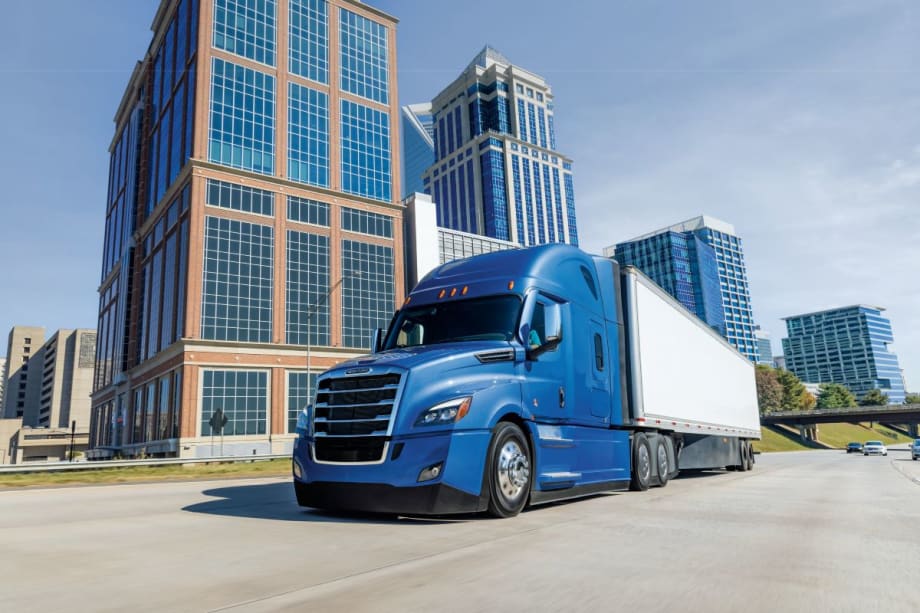
Freightliner is celebrating the production of its 1 millionth Cascadia Class 8 truck.
Photo: Daimler Truck North America
Freightliner has celebrated a significant milestone with the production of the one millionth Cascadia Class 8 tractor. The OEM said the truck is the first North American Class 8 truck to reach that production figure.
What started as an idea to develop a truck with new aerodynamic, lightweight, and uptime-improving features has since evolved through four generations of the platform, the OEM said in a press release.
Since that time, Freightliner adds, the model has become market-leading Class 8 commercial truck in North America. Freightliner credits this to continuous innovations for driver comfort, increased safety, and reduced fuel consumption.
Notably, since its original introduction, the Cascadia has improved its fuel efficiency by more than 35 percent, Freightliner said.
A Versatile Vehicle Platform
The Cascadia continues to be a trailblazer for innovative features in the industry, and the foundation for transformative projects at DTNA. As an example, the Cascadia is serving as the vehicle base for the SuperTruck initiative, the multi-year co-funded project by the Department of Energy (DOE) that investigates next-generation technologies for heavy-duty commercial trucks and potential product integration into series production trucks.
The battery electric Freightliner eCascadia, which launched in 2022, has today driven over 6 million real-world miles with customers across more than 50 fleets in the U.S. And looking even further into the future, DTNA also designed an autonomous-ready Cascadia with redundant safety features, which include braking and steering for a truck tailor-made for autonomous driving functionalities and prepared for the integration of any virtual driver.
Currently, the autonomous-ready Cascadia is being tested as a self-driving truck in real-world operations by Torc Robotics, an independent subsidiary of DTNA since 2019, setting standards for safety on the road.
“For more than 80 years, Freightliner has been dedicated to serving its customers with purposeful and innovative transportation solutions to help businesses succeed. When the Freightliner Cascadia launched in 2007, it was designed to do exactly that, and we are incredibly grateful to our customers who have placed their trust in the Cascadia and Freightliner to help us reach the one million mark,” said David Carson, SVP of sales and marketing at DTNA. “With our flagship Cascadia, our commitment to making a safer, cleaner, and more cost-efficient solution for our customers has never wavered. And we are not done yet.”
Key product developments throughout the history of the Freightliner Cascadia:
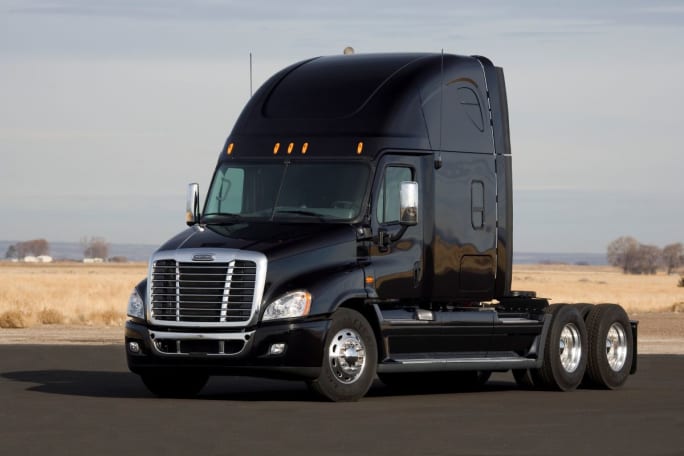
The first generation of the Freightliner Cascadia rolled out in 2007 and features the Detroit Diesel DD15 engine.
Photo: Daimler Truck North America
First Generation Cascadia debuted with the Detroit DD15 (2007): Introduced the all-new Cascadia with the heavy-duty Detroit Diesel DD15 engine platform, which offered excellent performance, improved fuel consumption, and industry-leading power.
Second Generation Cascadia ‘Evolution’ launched (2012): Unveiled the second-generation Cascadia series engineered to increase fuel efficiency. The launch included the introduction of the Detroit DT12, an Automated Manual Transmission (AMT) that combined the operational ease of an automatic with the efficiency of a manual transmission.
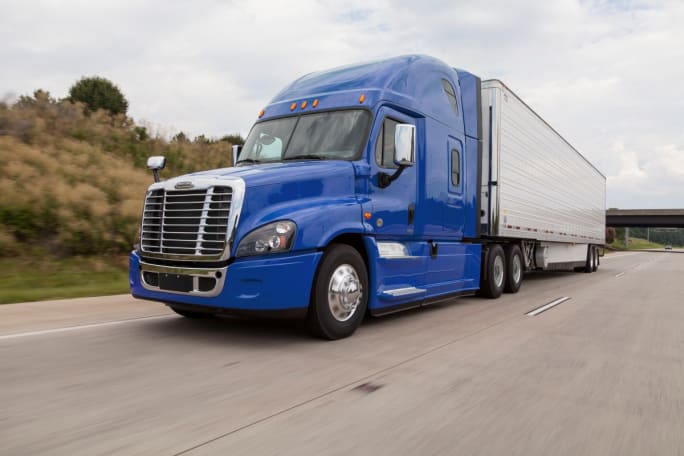
The release of the DT12 automated transmission was a highlight on the second generation Cascadia, which debuted in 2012.
Photo: Daimler Truck North America
Detroit Connect introduced (2013): The introduction of Detroit Connect brought the first OEM-provided, factory-installed connectivity suite to the Cascadia.
Detroit Assurance launched (2015): Detroit Assurance offered as the first OEM-designed proprietary suite of safety systems, fully integrating the Detroit powertrain with safe driving innovations for a higher level of safety and performance in the Cascadia.
Freightliner Inspiration Truck debuted (2015): Utilized the Freightliner Cascadia as a framework for the first licensed automated commercial truck.
SuperTruck I unveiled (2015): Freightliner, DTNA, and its project partners exceed program goals and demonstrate more than 115 percent improvement in overall freight efficiency over a 2009 baseline truck.
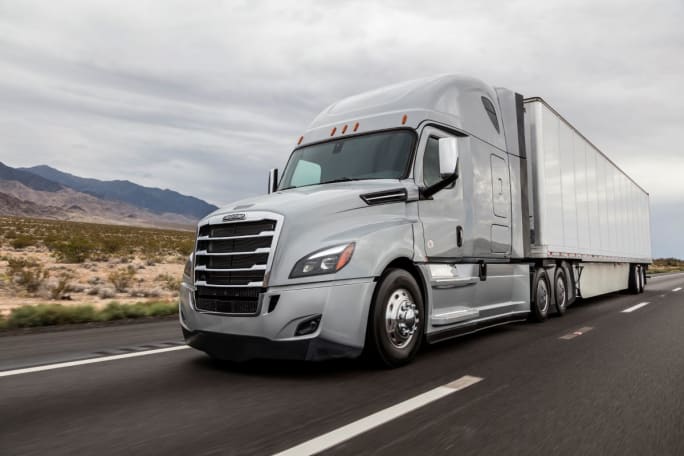
The third generation of the Freightliner Cascadia made strides forward in connectivity and advanced driver safety systems.
Photo: Daimler Truck North America
Third Generation Cascadia launched (2017): The third generation Cascadia brought advanced aerodynamics, improved safety features, connectivity advancements, and driver comfort enhancements to meet the evolving needs for fleets and drivers.
Fourth Generation Cascadia with SAE L2 capabilities introduced (2019): Becomes the first heavy-duty truck in series production in North America with automated feature enhancements capable of both lateral (steering) and longitudinal (acceleration/deceleration) control.
Right-hand drive Cascadia launched (2019): Right-hand drive versions of the Freightliner Cascadia became available in international markets like Australia.
Freightliner eCascadia production started (2022): The battery electric truck, which was initially revealed in 2019 as a customer test vehicle, enters series production.
SuperTruck II launched (2023): Continued improvements are made in efficient freight design and aerodynamics through the SuperTruck program, co-funded by the DOE. The U.S. Department of Energy also announces funding for the Freightliner SuperTruck III program, slated to be unveiled in 2027.
Freightliner Cascadia reaches 1 million: The Cascadia continues to be the most advanced truck ever designed by Freightliner.
“We are backed by an expansive dealer support network,” Carson added, “which includes nearly 500 locations across North America, the Freightliner Cascadia continues to faithfully serve all those who keep the world moving, and we’re looking forward to reaching the 2 million mark.”
More Equipment

How Volvo Updated Its D13 for EPA 2027 [Watch]
Volvo’s updated D13 promises lower emissions without sacrificing performance or fuel economy. Take a closer look at what changed inside the engine in this HDT Spotlight video.
Read More →
Michelin Tire Improves Efficiency and Durability for Regional Fleets
The Michelin X Multi Energy D2 is a regional haul drive tire engineered to help fleets improve fuel efficiency, durability and traction in demanding stop-and-go operations.
Read More →
ZF Expands Commercial Vehicle Push in North America
ZF is expanding its North American commercial-vehicle presence with new transmission applications, electrification, trailer technology and autonomous-driving systems.
Read More →
Tesla Wants a Self-Driving Semi. Are Cameras Enough?
Could Tesla’s camera-only autonomous driving technology work on an 80,000-pound Semi? In this commentary, HDT's Deborah Lockridge takes a look at Tesla, Cybercab, and how autonomous trucks see the road.
Read More →
Kodiak: Driverless Long-Haul Truck Launch on Track for 2026
Kodiak AI says its driverless long-haul safety case is 93% complete and it remains on track to begin commercial operations by year-end 2026.
Read More →
What DOT’s Automated Vehicle Strategy Means for Trucking
The U.S. Department of Transportation issued a new automated-vehicle strategy that outlines plans for driverless-truck regulations, cross-state freight corridors, and federal safety standards.
Read More →
East Coast Port Launches $45M Electric Truck Push
The Port Authority of New York and New Jersey announced millions in incentives for zero-emission drayage trucks, yard tractors, and new charging hubs near the port.
Read More →
PlusAI Going Public to Fund Autonomous Truck Launch
A SPAC deal could provide PlusAI with up to $300 million as it works toward a 2027 commercial launch of factory-built autonomous trucks.
Read More →
NHTSA Moves to Rewrite Truck Fuel-Economy Rules
The National Highway Traffic Safety Administration says it lacks authority to regulate medium- and heavy-duty truck engines separately from complete vehicles, but the existing standards have not yet been eliminated.
Read More →
Detroit Opens Orders for EPA 2027 Engines
Detroit isn’t starting from scratch to meet EPA 2027 diesel emissions standards. Its Gen 6 DD13 and DD15 engines keep much of today’s platform while updating the fuel and aftertreatment systems.
Read More →