




For-Hire Freight Shipments Rebound After One-Month Decline
A measure of the amount of freight moved by the nation’s for-hire transportation industry rose 0.6% in July from June, following a single month decline.


Freight Transportation Services Index, July 2010 - July 2015. Graphic: U.S. DOT
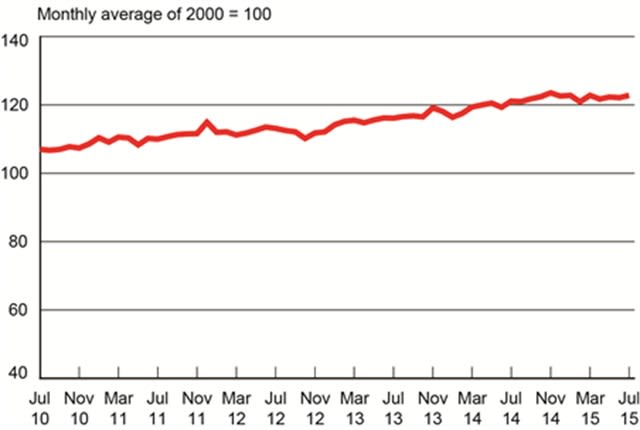
Freight Transportation Services Index, July 2010 - July 2015.Graphic: U.S. DOT
A measure of the amount of freight moved by the nation’s for-hire transportation industry rose 0.6% in July from June, following a single month decline.
The U.S. Transportation Department’s Freight Transportation Services Index registered 122.8, tying the highest level seen so far this year in March and January, and just 0.5% below the record high level of 123.5 in November 2014. The number if 1.4% higher than July a year ago.
The June index was revised to 122.1 from 121.9 in last month’s release. The March, April, and May levels were also revised upward slightly.
The Freight TSI measures the month-to-month changes in freight shipments by mode of transportation in tons and ton-miles, which are combined into one index. The index measures the output of the for-hire freight transportation industry from trucking, rail, inland waterways, pipelines and air freight.
The July increase continued the trend that began after the index peaked in November 2014. The index has alternated months of increases and decreases since then, ranging from 0.5% below the November level to 2.1% lower.
The Freight TSI increase was part of broad economic growth in July that was reflected in several measures that impact transportation, according to the U.S. DOT. The Federal Reserve Board’s Industrial Production Index rose 0.6%, the same percentage increase as the Freight TSI, while personal income, employment and housing starts also moved higher.
The DOT said among the different transportation modes, significant increases in trucking and rail carloads led the TSI Freight index upward in July, along with a smaller increase in air freight. Water, pipeline and rail intermodal declined.
More Fleet Management

Kodiak Lines Up Fleets for Driverless Trucking
An agreement for 75 trucks, a new Texas freight lane, and progress on safety validation move Kodiak closer to its planned driverless highway launch.
Read More →
ITS Logistics Settles Religious Harassment Case
The Nevada-based logistics firm agreed to pay more than $396,000 to settle a religious harassment charge involving an employee's Jewish identity.
Read More →
Your Trucks Are Busy. That Doesn’t Mean They’re Winning.
High utilization doesn’t always mean strong margins. Looking beyond the current load can help fleets make better dispatch decisions and get more value from each truck’s time.
Read More →
Why This Trucking Recovery Is Different
Freight demand remains sluggish, but rising costs and tougher enforcement have taken enough capacity out of the market to change the outlook for motor carriers.
Read More →
Platform Science Adds Dispatch and Safety Tools
Four additions to PS Fleet help fleets monitor loads, manage driver coaching, share truck locations and adjust video system settings.
Read More →
PrePass Intelligence Mines Fleet Bypass, Toll and Safety Data
PrePass Intelligence helps fleets measure bypass savings, flag potential toll overcharges, and spot suspicious transactions by combining data from separate systems.
Read More →
Motive Adds AI Agents for Fleet Operations
New tools automate follow-up on fleet data, from maintenance work orders to driver alerts, with two-way voice conversations planned for later this year.
Read More →
Can You Beat Our Trucking Trivia Challenge?
Test your truck knowledge with 19 trivia questions from Heavy Duty Trucking Exchange. Can you keep up with the fleet pros?
Read More →
BeyondTrucks Adds Rules Checks to Dispatch
New Compatibility Engine checks driver qualifications, equipment requirements and fleet policies before loads are dispatched.
Read More →
Diesel Prices Hijack Trucking’s Worry List
ATRI’s annual survey finds cautious optimism about freight, but diesel costs, litigation, and insurance continue to squeeze fleets. Drivers have different priorities on several issues.
Read More →