




FMCSA Wraps Up Public Hearings on Hours Reform
The struggle over hours of service reform entered a new phase with the end last week of public hearings by the Federal Motor Carrier Safety Administration
The struggle over hours of service reform entered a new phase with the end last week of public hearings by the Federal Motor Carrier Safety Administration.
The hearings, where more than 700 truckers voiced their strong objections to the proposed rule, ended July 7 with a two-day session at Department of Transportation headquarters in Washington, D.C. While there was not much in the testimony that has not been heard before, FMCSA Acting Chief Safety Officer Julie Anna Cirillo had some things to say that may not have been what witnesses wanted to hear.
At the first day of the session, witnesses urged the safety agency to schedule one more hearing in August to be sure that shipper interests get a chance to speak their piece. The proposal will require fundamental changes in transportation practices, particularly in the truckload sector, and the witnesses said that shippers have not had a chance to fully analyze the impact.
But at the second session on the 7th, Cirillo said the agency has no plans to hold more hearings. What the agency wants, she said, is comments and suggestions.
The comment docket will remain open until Oct. 30, and many witnesses asserted that they will be filing extensive comments.
Although little new was introduced at the second and final day of the hearings, Cirillo revealed her thinking on possible changes to the proposal. She took issue with truckers who said the proposal will create inefficiencies with respect to scheduling.
Right now, she noted, truckload carriers complain that the hours proposal will force drivers to stop work before a load is delivered or before they can get home – yet they report that drivers routinely spend as much as 40 hours per week waiting to load or unload freight.
Why does the industry have to live with these inefficiencies, she asked.
“I have great confidence that the industry could coalesce around these inefficiencies the way it has around the hours of service proposal. All inefficiencies and costs cannot be laid at the feet of the hours of service proposal. If the industry could fix some of the dead time, drivers, carriers and the economy would be better off.”
Gene R. Tyndall, executive vice president of global markets and solutions for Ryder System, replied that not all links in the supply chain are inefficient.
“Our relationships work better,” he said. And in some situations, he added, waiting time by a truck driver produces a greater overall efficiency.
Tyndall also said the safety agency has not looked closely enough at the overall costs of the proposed rule. The agency’s cost-benefit analysis looks directly at the industry but does not consider the impact on the national supply chain.
“In fact,” he said, "unintended disruptions to the supply chain and to inventory management practices will result in cost impacts to manufacturers, retailers and consumers. These will be at least as dramatic as those that will be borne by transportation providers.”
David Parker, president and CEO of the large truckload carrier Covenant Transport, said that if he were not concerned about the cost he would see merit in the proposal for regular route carriers, but not for irregular route carriers.
Large carriers would eventually learn to adapt to the rules but smaller ones will not be able to, he said. “For first two years it will be a disaster. It will put the nation into recession and change the distribution network.”
Ken Siegel, a Washington attorney representing the National Intermodal Trucking Assn., raised questions about how the proposal affects intermodal truckers – such as, what requirements do they face when their schedule forces them from one category of driver into another?
Siegel also suggested a return to the negotiated rulemaking process as a way to at least narrow the gaps that separate the various interest groups affected by the rule.
Cirillo let the air out of that trial balloon by indicating that she strongly believes that a negotiated rulemaking is not possible.
Lamont Byrd, director of the Safety and Health Department of the Teamsters union, expressed support for some aspects of the proposal, concern about others.
The Teamsters like the increase of consecutive off-duty time from 8 to 10 hours. “But we wonder what the agency was thinking when it increased driving time to 12 hours,” he said.
Other concerns: some of the language in the proposal is contradictory; enforcement will be difficult; and while Teamsters are not opposed to onboard recorders, they have reservations about how they would be used in this proposal.
The union will file additional comments – and is willing to work within the rulemaking process to fix the proposal, he said.
More Drivers

Competition Heating Up for Truck Drivers
New report reveals rising driver hiring costs, the return of sign-on bonuses, growing AI advantages, and the operational factors shaping driver retention.
Read More →
How Fraley & Schilling Improved Logbook Compliance by Over 50%
Fraley & Schilling needed a way to close a compliance workflow gap in its ELD system without adding more work from driver training, reminders, and back-office follow-ups. It found the answer in a custom driver app.
Read More →
Volvo Goes Gaming
Volvo has roared into American Truck Simulator with two new flagship trucks.
Read More →
What the Best Fleets to Drive For Teach About Driver Retention
Survey fatigue, AI-powered routing, owner-operator expectations, and the decline of social media all emerged as themes from this year's Best Fleets to Drive For program.
Read More →
Driver Retention Lessons From the Best Fleets to Drive For
What separates trucking's best workplaces from the rest? Jane Jazrawy shares the biggest lessons from this year's Best Fleets to Drive For program on driver retention, communication, AI, and workforce trends on the HDT Talks Trucking podcast.
Read More →
Farewell, CDL: Why I'm Giving Up My Commercial Driver's License
After more than 20 years as a CDL holder, HDT Executive Editor Jack Roberts is letting his commercial license expire. Not because he wants to — but because trucking's nuclear verdict crisis has made the risks of public-road test drives too great for editors, manufacturers, and everyone involved.
Read More →
How Top Trucking Fleets Improve Driver Retention [Video]
What do healthy snacks, optimized routing, and just picking up the phone have in common? They're all strategies the Best Fleets to Drive For are using to retain truck drivers.
Read More →
Trucker Path Adds Verisk CargoNet Theft Data to Navigation Platform
Trucker Path’s new cargo theft risk overlays give drivers and fleets visibility into high-risk areas, stolen commodity trends, and theft hotspots.
Read More →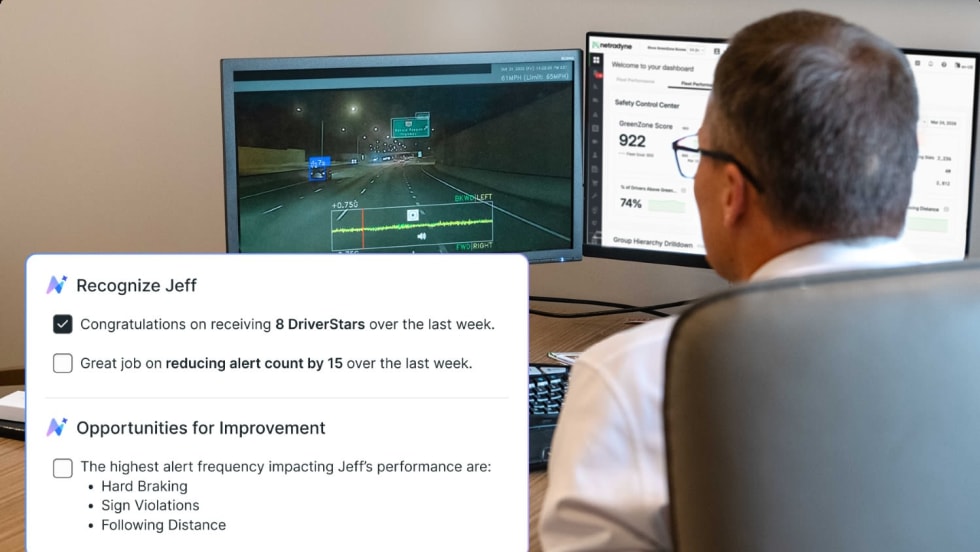
Netradyne Intelligence Uses New AI Agents to Automate Response to In-Cab Camera Data
The company called the next-generation in-cab camera safety platform "a fundamental shift from systems that report on what happened to systems that actively drive what should happen next."
Read More →
Why Truck Detention Keeps Costing Fleets Time and Money
A 2024 ATRI study found detention affects nearly 40% of truckload stops and costs the industry more than $15 billion annually. Despite the toll on drivers, fleets, and supply chains, the problem remains stubbornly persistent.
Read More →