




FMCSA Working on Plan to Correct CSA Scores for No-Fault Crashes
From where Davelene Huellinghoff sits, it makes no sense. She runs a small fleet out of Union, Mo., with a good safety record, yet her CSA crash indicator score jumped from 0% to 44% as a
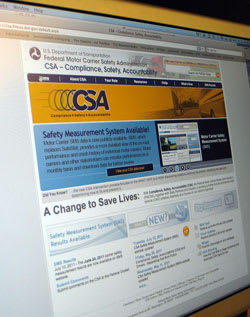
From where Davelene Huellinghoff sits, it makes no sense. She runs a small fleet out of Union, Mo., with a good safety record, yet her CSA crash indicator score jumped from 0% to 44% as a consequence of two accidents that were not the company's fault.
The Federal Motor Carrier Safety Administration intends to build a system that screens out no-fault crashes before they are entered into CSA scores, said senior transportation specialist Bryan Price. But it's not easily done, he said, so the agency is working on a near-term remedy.
In one of the accidents, a motorist ran under a Huellinghoff trailer and is now facing charges. In the other, the Huellinghoff truck was stopped at a red light when the other vehicle drove into its rear.
"We challenged the accidents and received notice from the Missouri Highway Patrol that there was nothing we could do," Huellinghoff said in a letter to HDT.
The only way to get the accidents out of the system is to go through a safety audit, she was told.
"Can they not read the accident reports and see that it was the other vehicles' fault? This would be too simple!"
Working on a remedy
Ralph Craft of FMCSA's Analysis Division described a system in which carriers will be able to use the CSA data correction system, DataQs, to submit a Police Accident Report and get an assessment of accountability on their crashes.
The agency aims to start a program in January in which the accident reports are screened and given different weightings in the CSA system based on accountability. All crashes would still be in the system, but the agency is figuring out how to give non-preventable crashes more weight than preventable crashes, he said.
"We're trying to use every piece of data that we have to figure in a carrier's rating," Craft said. "This will give us another piece, which the industry has requested over and over again and which we feel is a legitimate request to improve the rating system."
Here's how the system will work. All crashes will continue to be entered into the CSA database. If a carrier believes that it was not at fault in a crash, it could mail a copy of the police accident report in to DataQs. The report would not go to the state, as other DataQs challenges do, Craft said. Instead it would go to a team of specialists who would analyze it for accountability.
The specialists are the researchers, contractors to the agency, who prepared the agency's definitive Large Truck Crash Causation Study, and a related study on automobiles prepared for the National Highway Traffic Safety Administration. They have been doing this kind of analysis for the past decade, Craft said.
FMCSA tested this approach by having researchers who had coded data for the automobile study but not the truck study assess accountability based on just the police accident reports that were used in the truck study. The agency found that these researchers matched the accountability in the truck study 92% of the time, Craft said.
"That has given us the confidence that if we code crashes just on the basis of the police accident report, we can get it right almost all the time," he said.
He also said that in order to keep the analysis even-handed, the researchers will look at a post-crash inspection if there is one, and the Motor Carrier Management Information System crash report from the state, as well as the Police Accident Report. The agency will not permit trucking companies to submit data from insurance companies or witnesses. That would overwhelm the system, he said.
It will be possible for a carrier that is not at fault to still be found accountable, he said. For example, if a motorist drives into the back of a trailer stopped at an intersection, the truck driver probably is not at fault. But the carrier would be accountable if, say, the driver is out of service.
There will be an appeals process for carriers that want to challenge a determination of accountability, Craft said. The appeals will be handled by the FMCSA's legal staff.
The agency views this as a short-term solution, said Price. Longer term, it wants to get the necessary reports and analyze them for accountability before the data ever goes into CSA.
Accountability
Price said there are between 120,000 and 140,000 reportable crashes each year. The agency already gets raw accident reports from states today, but these reports do not have enough data to make an accountability determination.
What's missing are the actual Police Accident Reports, which contain the handwritten personal observations of the officer on the scene, and his diagram of the accident. This information is critical to making an accountability judgment, said Ralph Craft.
Price said the agency needs to set up a system in which the Police Accident Reports are forwarded to the screeners as a matter of course. "The real key to this is developing a mechanism in which, in addition to those raw accident reports, we also get the detailed Police Accident Report that we need. That's the hard part."
It's hard because it requires another action by the state and municipal enforcement agencies that are preparing the reports. "They will either have to send it to us or have a mechanism for us to get our hands on it easily," Price said.
So in effect, the short-term solution of having the carriers send in the reports creates both a collection mechanism and an initial screening mechanism. Price said the agency is going to encourage carriers to send in reports only when they believe they are not at fault.
Not as easy as it sounds
The enforcement community has concerns about this process, which is more complicated than it looks, according to Steve Keppler, executive director of the Commercial Vehicle Safety Alliance.
"Crash investigations are many times very subjective," he said. "The officer on the scene is seeing things and talking to people, and once that information leaves the scene you have someone else reviewing it who was not there, based on what the investigating officer said."
It creates problems if the reviewer makes a determination on accountability that is different than the officer's determination, Keppler said. On top of that, insurance companies do their own investigations, which might lead to conclusions that are different than either the officer's or the reviewers. "What do you do with that?"
More Drivers
Platform Science Adds Dispatch and Safety Tools
Four additions to PS Fleet help fleets monitor loads, manage driver coaching, share truck locations and adjust video system settings.
Read More →
When Language Stops the Truck: The Return of ELP Out-of-Service Orders
English language proficiency rules for commercial drivers aren’t new, but renewed out-of-service enforcement has raised the stakes. Here’s what carriers need to know before a driver reaches a roadside inspection.
Read More →
Samsara Launches Custom AI Agent Builder
Agent Studio lets fleets create AI tools for hours-of-service monitoring, reporting and driver support, including agents that communicate by phone.
Read More →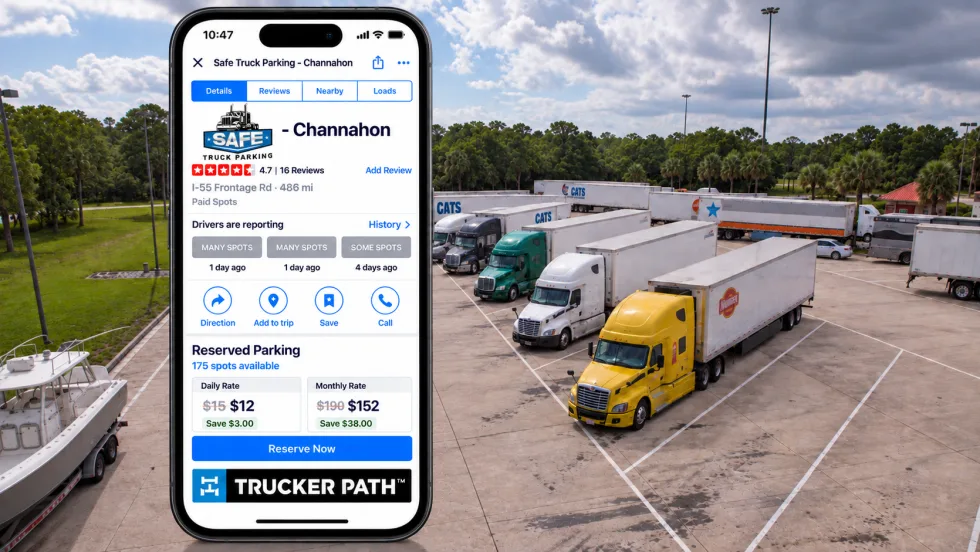
Trucker Path Expands Reserved Parking Network
Trucker Path has added close to 6,000 more truck parking spaces to its Trucker Path Reserved Parking Network with the addition of Safe Truck Parking.
Read More →
EEOC Sues Texas Trucking Company Over Driver Age Limits
The agency says Trancasa USA rejected applicants over 65 and applied tougher driving-record standards to those over 60.
Read More →
Nussbaum, Roehl Announce Second Driver Pay Increase This Year
This year has seen a swath of major truck driver pay increases as freight capacity has tightened.
Read More →
From One Generation to the Next: How Mentorship Builds Safer Truck Drivers
After three decades in trucking, Harold Perry shares what he's learned about driver safety, mentorship, and helping the next generation build confidence behind the wheel.
Read More →
Truck Drivers Need More Than Another Alert
Fleets have more visibility into truck health, safety events, and driver activity than ever. The next challenge is turning all that information into useful guidance for the person who has to decide what to do next.
Read More →
FMCSA Removes 110 Truck Driver Training Schools from Certified ELDT List
Federal regulators also are targeting more than 160 additional training providers and launching a nationwide audit of third-party CDL skills testers as part of a broader crackdown on trucking fraud.
Read More →
Hours of Service Pilot Programs: FMCSA Readies for 2027 Rollout
Two pilot programs could eventually reshape hours-of-service rules, giving truck drivers options to pause their 14-hour clock or use longer split sleeper rest periods.
Read More →