



Related:
FMCSA Study: Costs of Crash Accountability Outweigh Benefits
Commentary - What Does a Skateboarder Have to do with CSA?
 MENU
MENU SEARCH
Findings from a proposed demo program could lead FMCSA to allow the removal of certain non-preventable crashes so they do not count against a carrier’s crash-indicator score.
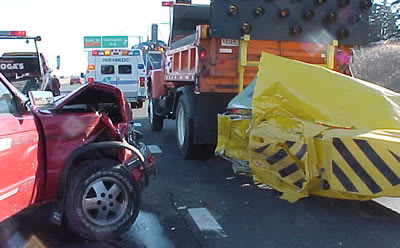
Image: Minnesota DOT
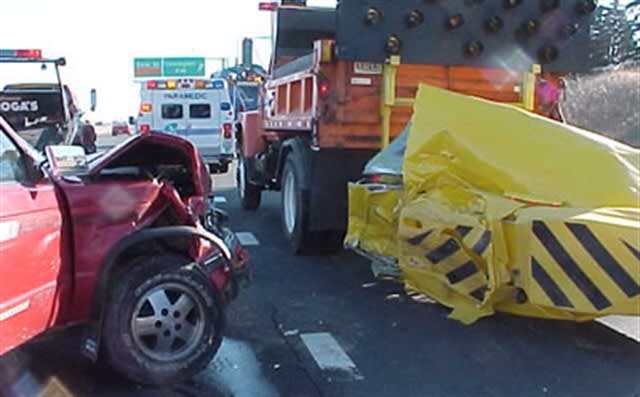
Image: Minnesota DOT
The Federal Motor Carrier Safety Administration is proposing to pilot-test a program to determine the preventability of certain types of “less complex” truck crashes. Findings from the demo program could lead to FMCSA allowing the removal of certain non-preventable crashes so they do not count against a carrier’s crash-indicator score.
During the project, the agency plans to accept Requests for Data Reviews (RDRs) that seek to establish the non-preventability of certain crashes through its DataQs national data-correction system.
FMCSA proposes that, as part of the demonstration program, the agency would accept an RDR when documentation establishes that a crash was not preventable by the motor carrier or commercial driver.
The pilot test may run for about two years, said Joe DeLorenzo, director, FMCSA Office of Enforcement and Compliance, in a July 7 conference call with reporters. He noted that a 60-day comment period on the proposal will commence once it is published in the Federal Register, which he expects will be within the next few business days.
The FMCSA proposal calls for allowing carriers to challenge certain crashes in which it is clearly evident a truck is not at fault, such as when another motorist was driving under the influence; was driving the wrong direction; or struck the truck in the rear or while it was properly parked. Also included would be single-vehicle accidents involving an animal strike, “suicide by truck” or a failure of highway infrastructure.
DeLorenzo said that “interesting feedback" from a study FMCSA conducted on the feasibility of using a motor carrier's role in crashes in the assessment of its safety was the source of the pilot program being proposed.
That study assessed: (1) whether police accident reports provide sufficient, consistent, and reliable information to support crash-weighting determinations; (2) whether a crash-weighting determination process would offer an even stronger predictor of crash risk than overall crash involvement and how crash weighting would be implemented in the Safety Measurement System (SMS); and (3) how FMCSA might manage a process for making crash-weighting determination, including the acceptance of public input.
“We looked at all the issues raised” by commenters on that study, said DeLorenzo, including those who “talked about crashes that are easier to determine as non-preventable and then take off a carrier’s [safety] record.” The agency also wants to consider looking at more documentation than police reports to make a determination whether a crash was preventable or not, as well as whether either determination can be made. He did not rule out that such additional documentation might include video captured in a cab.
“By looking at this over perhaps 24 months or so, we can review the crashes and the impact [of this approach] on the agency, the industry and carriers,” DeLorenzo said.
He added that the demo program would “put some meat on” the agency’s research “before we decided how we might move forward with such a program.”
The American Trucking Associations was quick to endorse the demo proposal.
"Since FMCSA began using crash history to rate motor carriers' safety, ATA has argued that crashes a driver could not have prevented shouldn't be counted on a carrier's safety record," said ATA President and CEO Bill Graves.
He added that the announced project is “a step toward that goal and we appreciate FMCSA adopting ATA's call to provide a way for carriers to strike these tragic, but non-preventable crashes from their record.
"ATA hopes this demonstration project is a step toward a more robust and complete system for carriers to dispute and ultimately strike crashes that were not the fault of the commercial driver," added Graves. "We look forward to monitoring FMCSA's progress as they advance this important program. By improving crash accountability and data, FMCSA can improve the performance and accuracy of the CSA monitoring system – a goal ATA wholeheartedly supports."
Click here to read FMCSA’s notice on the proposal that will be published in the Federal Register.

For fleet managers and collision repair professionals keeping heavy-duty trucks on the road, getting the color right the first time isn't just about appearance — it's about efficiency, turnaround time, and bottom-line results. Discover how today's digital color tools are transforming the repair process from guesswork to precision.
Read More →
Carriers whose updates were due on or after June 1 have more time, while FMCSA works to stabilize its new registration system and warns of phishing sites impersonating its new carrier registration system, Motus.
Read More →
Cargo theft is no longer just the cost of doing business. It's a multi-billion-dollar criminal enterprise exploiting vulnerabilities across your fleet, drivers, and supply chain.
Read More →
Explore how telematics help refrigerated fleets improve visibility, uptime, efficiency, compliance, and cargo protection across connected cold chain operations.
Read More →
Escalating U.S.-Canada tariffs could disrupt cross-border freight, reduce truck volumes, raise costs, and create new uncertainty for carriers on both sides of the border.
Read More →
The American Transportation Research Institute wants to know what's worrying trucking fleet managers, drivers, and other stakeholders in its annual Industry Issues survey.
Read More →
ATA President and CEO Chris Spear abruptly left his job at the association on August 21, at a pivotal time for the trucking industry.
Read More →
Public Wi-Fi can expose truck drivers and fleets to credential theft, malware, and other cyber threats. Here’s how to reduce the risk on the road.
Read More →
HDT Truck Fleet Innovator Nicky Cupp turns everyday pain points at Fraley & Schilling into opportunities for better technology and smarter processes.
Read More →
HDT Truck Fleet Innovator Adam Buttgenbach helped PepsiCo build one of North America’s largest EV fleets by focusing on where electric trucks make operational sense.
Read More →
