




FMCSA Proposes New Rules for Brake Testing
The Federal Motor Carrier Safety Administration wants to change federal safety regulations to establish pass/fail criteria for use with performance-based brake testers that measure the braking performance of commercial motor vehicles
The Federal Motor Carrier Safety Administration wants to change federal safety regulations to establish pass/fail criteria for use with performance-based brake testers that measure the braking performance of commercial motor vehicles.
Fleets, repair shops and law enforcement have traditionally assessed truck and bus braking capability by visual- and sensory-based inspection methods such as visual inspection, measurement of push-rod travel on air-braked vehicles, and listening for air brake system leaks.
Federal and state officials commonly use inspection guidelines established by the Commercial Vehicle Safety Alliance which, FMCSA said, have been successful but do have limitations. For instance, inspectors can falsely identify adequately braked vehicles as unsafe or may miss brake force-related deficiencies that have no apparent defects. Moreover, the time required for a visual and sensory inspection limits the number of vehicles that can be inspected.
A performance-based brake tester is a device that can assess vehicle braking capability through quantitative measure of individual wheel brake forces or overall vehicle brake performance in a controlled test. FMCSA’s proposal addresses several specific types of PBBTs: roller dynamometer, breakaway torque tester, and flat-plate tester. The agency has established functional specifications which would be required for all PBBTs.
FMCSA stressed that the devices cannot replace an inspector in finding brake defects unrelated to immediate brake performance, such as air leaks, chafed brake hose, or thin brake pads. But they can provide an objective and consistent measure of vehicle braking performance without having to crawl underneath the vehicle. PBBTs, the agency noted, are widely used for brake inspection in Europe and Australia.
The proposed brake performance criteria for use with PBBTs would not replace current rules, but could be used as an alternative when the testing devices are used and would allow law enforcement to issue citations based on PBBT results.
Current regulations specify commercial vehicle requirements for minimum braking force as a percentage of GVW and minimum deceleration from 32.2 km/hr (20 mph). The proposed alternative criteria would retain minimum braking force requirements, but FMCSA said it would be “redundant” to also require the deceleration measurement because of the simple mathematical relationship that exists between the two parameters. Braking force and deceleration are included in existing criteria to accommodate certain testing devices, it said. The accommodation is not necessary with PBBTs. Stopping distance requirements would be the same.
The pass/fail criteria would apply to all commercial motor vehicles subject to federal motor carrier safety standards. That would include all vehicles with a gross vehicle weight rating of more than 10,000 pounds, buses, vans that transport passengers for compensation, and all vehicles transporting hazardous materials.
Comments are due October 10. Additional details can be found in two notices published August 9, 2000, in the Federal Register. One covers the use of PBBTs and the proposed brake performance criteria. The second, an final ruling, establishes functional specifications for PBBTs. The Federal Register can be accessed on the Internet at www.nara.gov/fedreg.
More Drivers
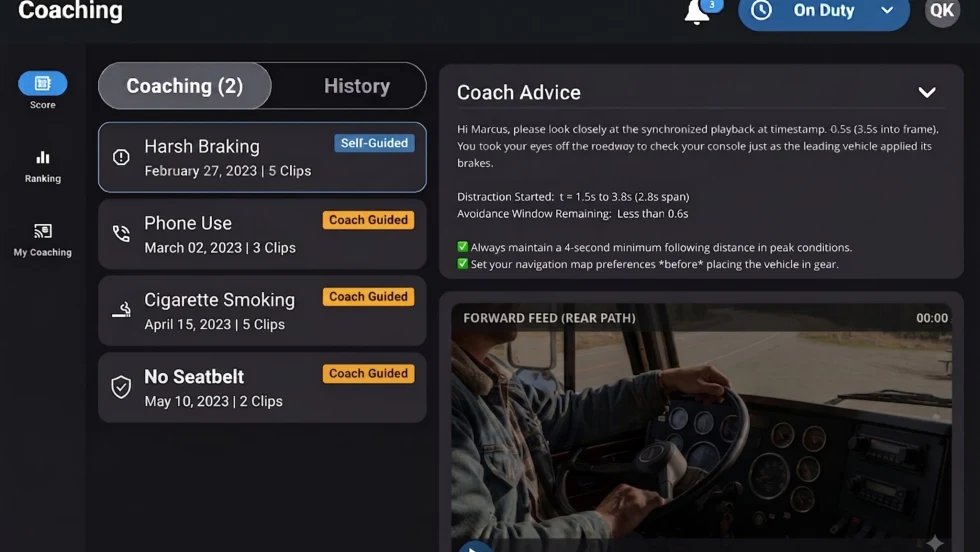
Platform Science Adds Dispatch and Safety Tools
Four additions to PS Fleet help fleets monitor loads, manage driver coaching, share truck locations and adjust video system settings.
Read More →
When Language Stops the Truck: The Return of ELP Out-of-Service Orders
English language proficiency rules for commercial drivers aren’t new, but renewed out-of-service enforcement has raised the stakes. Here’s what carriers need to know before a driver reaches a roadside inspection.
Read More →
Samsara Launches Custom AI Agent Builder
Agent Studio lets fleets create AI tools for hours-of-service monitoring, reporting and driver support, including agents that communicate by phone.
Read More →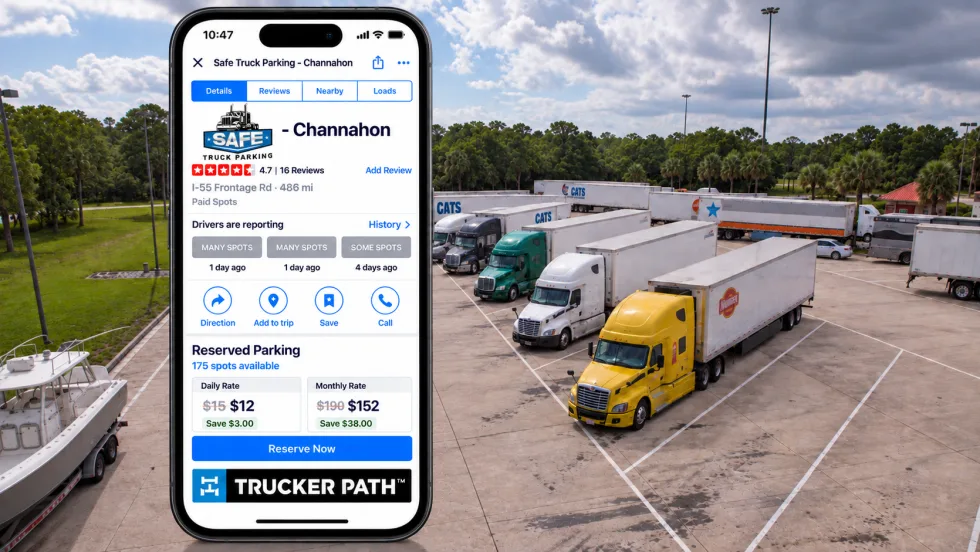
Trucker Path Expands Reserved Parking Network
Trucker Path has added close to 6,000 more truck parking spaces to its Trucker Path Reserved Parking Network with the addition of Safe Truck Parking.
Read More →
EEOC Sues Texas Trucking Company Over Driver Age Limits
The agency says Trancasa USA rejected applicants over 65 and applied tougher driving-record standards to those over 60.
Read More →
Nussbaum, Roehl Announce Second Driver Pay Increase This Year
This year has seen a swath of major truck driver pay increases as freight capacity has tightened.
Read More →
From One Generation to the Next: How Mentorship Builds Safer Truck Drivers
After three decades in trucking, Harold Perry shares what he's learned about driver safety, mentorship, and helping the next generation build confidence behind the wheel.
Read More →
Truck Drivers Need More Than Another Alert
Fleets have more visibility into truck health, safety events, and driver activity than ever. The next challenge is turning all that information into useful guidance for the person who has to decide what to do next.
Read More →
FMCSA Removes 110 Truck Driver Training Schools from Certified ELDT List
Federal regulators also are targeting more than 160 additional training providers and launching a nationwide audit of third-party CDL skills testers as part of a broader crackdown on trucking fraud.
Read More →
Hours of Service Pilot Programs: FMCSA Readies for 2027 Rollout
Two pilot programs could eventually reshape hours-of-service rules, giving truck drivers options to pause their 14-hour clock or use longer split sleeper rest periods.
Read More →