




FMCSA Proposes Hazmat Safety Permit Rules
The Federal Motor Carrier Safety Administration has proposed a safety permit program for motor carriers that transport certain hazardous materials in interstate or intrastate commerce
The Federal Motor Carrier Safety Administration has proposed a safety permit program for motor carriers that transport certain hazardous materials in interstate or intrastate commerce.
The permit program, mandated by federal law, would apply to carriers hauling route-controlled quantities of Class 7 (radioactive) material, more than 25 Kg (55 lbs.) of explosives, more than one liter (1.08 quarts) per package of a "material poisonous by inhalation" or liquefied natural gas in a package with a capacity equal to or greater than 13,248 liters (3,500 gallons).
To obtain a permit, a carrier would have to be registered as a hazmat hauler and would need an U.S. DOT number and a "satisfactory" safety rating assigned by FMCSA or the carrier’s base state.
The new rules would add several hazmat items to the list of acute and critical violations used when determining a rating. Some of the additions include failure to provide security awareness training, offering or transporting hazmat without a security plan, and several regarding the acceptance or transportation of hazardous materials that don’t meet federal packaging and identification requirements.
The proposed rule also includes a temporary permit provision for carriers that don’t have a safety fitness rating.
Permit applicants would need a security plan, including employee training, which meets federal requirements. Each motor vehicle used to transport specified materials would have to be equipped with a communications system that enables the driver to immediately contact the carrier during the course of transportation.
A copy of the permit or other documents showing the permit number would be carried in each vehicle, along with written route plans as required for certain shipments, the telephone number of a carrier employee who has the route plan and is able to determine whether the truck is on the route specified.
Trucks carrying Class 7 explosives would have to undergo pre-trip inspections by federal, state or local employees or contractors trained to determine if the carrier, driver and vehicle are in compliance with federal safety and hazardous material regulations.
Drivers transporting loads requiring safety permits would have to follow the written route plan, unless an alternate route is required by emergency conditions or a law enforcement official, and would have to check in with the carrier at least once every two hours or whenever they deviated from the written route plan. Motor carriers would be required to contact law enforcement authorities if more than three hours elapsed since the last communication.
In order to obtain a safety permit, an intrastate carrier would have to apply for an U.S. DOT number and be subject to a compliance review. However FMCSA said the safety rating would not be posted on its web site and would not be used for any purpose other than determining the carrier’s fitness to hold a safety permit. It also emphasized that Canadian and Mexican carriers transporting hazardous materials in the U.S. would be subject to permit rules.
Safety permits would be good for two years and there would be a two-year phase-in period, starting January 2005, for carriers already transporting specified materials.
Comments are due Oct. 20, 2003 and can be submitted online at dmses.dot.gov. Reference docket number FMCSA-97-2180. The proposal and discussion can also be accessed at that site.
More Drivers

Volvo Goes Gaming
Volvo has roared into American Truck Simulator with two new flagship trucks.
Read More →
What the Best Fleets to Drive For Teach About Driver Retention
Survey fatigue, AI-powered routing, owner-operator expectations, and the decline of social media all emerged as themes from this year's Best Fleets to Drive For program.
Read More →
Driver Retention Lessons From the Best Fleets to Drive For
What separates trucking's best workplaces from the rest? Jane Jazrawy shares the biggest lessons from this year's Best Fleets to Drive For program on driver retention, communication, AI, and workforce trends on the HDT Talks Trucking podcast.
Read More →
Farewell, CDL: Why I'm Giving Up My Commercial Driver's License
After more than 20 years as a CDL holder, HDT Executive Editor Jack Roberts is letting his commercial license expire. Not because he wants to — but because trucking's nuclear verdict crisis has made the risks of public-road test drives too great for editors, manufacturers, and everyone involved.
Read More →
How Top Trucking Fleets Improve Driver Retention [Video]
What do healthy snacks, optimized routing, and just picking up the phone have in common? They're all strategies the Best Fleets to Drive For are using to retain truck drivers.
Read More →
Trucker Path Adds Verisk CargoNet Theft Data to Navigation Platform
Trucker Path’s new cargo theft risk overlays give drivers and fleets visibility into high-risk areas, stolen commodity trends, and theft hotspots.
Read More →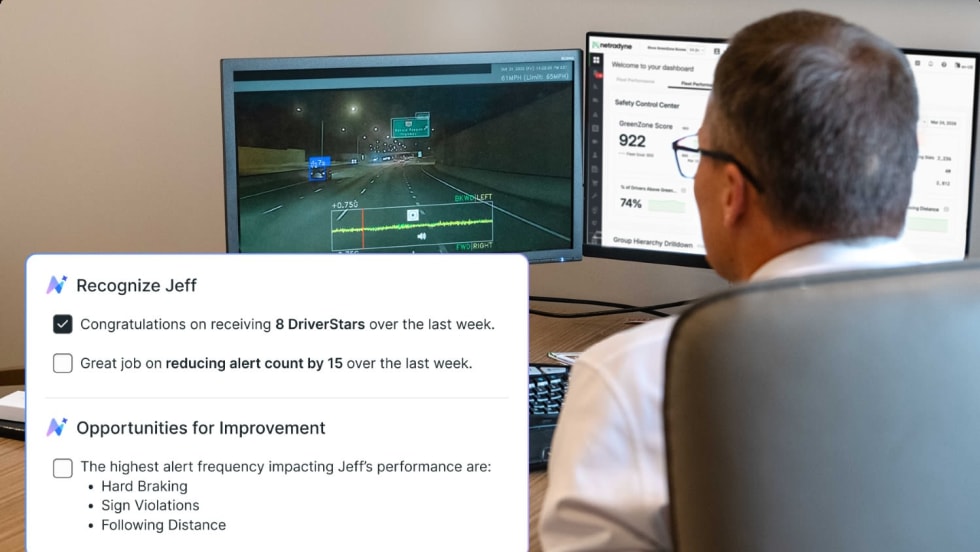
Netradyne Intelligence Uses New AI Agents to Automate Response to In-Cab Camera Data
The company called the next-generation in-cab camera safety platform "a fundamental shift from systems that report on what happened to systems that actively drive what should happen next."
Read More →
Why Truck Detention Keeps Costing Fleets Time and Money
A 2024 ATRI study found detention affects nearly 40% of truckload stops and costs the industry more than $15 billion annually. Despite the toll on drivers, fleets, and supply chains, the problem remains stubbornly persistent.
Read More →
Prime Inc. to Open $7.9M Flagship Used-Truck Dealership
A new driver-focused facility to sell Prime Inc's used trucks and trailers will be the first purpose-built location in the company's history.
Read More →
Short Takes: Inside K&B’s Truck Safety Tech
Listen to learn how K&B Transportation uses cellphone-blocking technology, speed management systems, weather geofencing, bridge avoidance tools, and more to improve driver safety.
Read More →