




FMCSA Issues Revisions to Drug/Alcohol Test Rules
The Federal Motor Carrier Safety Administration has published revisions to controlled substance and alcohol testing rules for commercial drivers
The Federal Motor Carrier Safety Administration has published revisions to controlled substance and alcohol testing rules for commercial drivers.
The changes are intended to incorporate recent modifications by the U.S. Department of Transportation and to clarify certain requirements.
Employers. A revised definition clarifies that owner-operators and other self-employed persons are employers. FMCSA emphasized that the change doesn’t mean that carriers are no longer responsible for owner-operator compliance. In past guidances, the agency has determined responsibility on the basis of control. When an owner-operator is leased to a carrier, federal regulations say that the carrier has control of the driver and equipment. Thus carriers are responsible for compliance by leased owner-operators.
Many who commented on proposed rule changes apparently expressed concern that owner-operators not leased to carriers can easily fall through the cracks. The regulations say that owner-operators must join consortiums. Consortiums or third-party service agents may determine if an owner-operator should submit to a reasonable suspicion, post-accident, return-to-duty or follow-up tests. When authorized by DOT, they may also decide if an owner-operator has refused a required test. However, many service providers feel they should be given full authority, with the owner-operator’s consent, to serve as the designated employee.
FMCSA acknowledged concern and says it is exploring ways to deal with potential problems. At the request of Congress, for instance, it is currently studying a recommendation that medical review officers be required to report verified positive drug tests to the state that issued the driver’s CDL. Presumably, that would establish some traceable record when any driver, including an owner-operator, fails a test.
There have also been suggestions that consortiums or third-party service providers be required to inform FMCSA when an owner-operator fails an alcohol test or tests positive for controlled substance. But the agency largely dismissed that idea, noting that all employers should be treated similarly, regardless of size. Moreover, it said there is no solid evidence to indicate the need for rules that specifically address owner-operators.
Self-admission programs. DOT and FMCSA have established guidelines for employers who want to establish programs or policies that would encourage drivers to voluntarily admit drug or alcohol abuse. Such programs are an option, not a requirement. If implemented, they can’t be used as disciplinary tools (i.e. adverse action is prohibited.) Equally important, they can’t be used to avoid testing, evaluation and treatment, and return-to-duty testing.
Random testing. Revisions emphasize that every driver must have an equal chance of being selected for random tests. FMCSA said some employers are not testing drivers who aren’t available on the predetermined test date. Instead, they move on to the next driver on the list. But the use of alternates should be the exception, not the rule, it said, noting that most employers use quarterly testing cycles, thus should have ample time to test the drivers selected within that cycle.
Post-accident testing. New rules have separate sections for controlled substance and alcohol testing because, according to FMCSA, some employers mistakenly believed that the rule required a drug test or an alcohol test, but not both.
There is also confusion regarding post-accident testing when an citation isn’t issued at the time of the accident. A driver who is issued a citation within eight hours must be tested for alcohol if there is serious bodily injury or disabling vehicle damage. A driver who is issued a citation within 32 hours must be tested for controlled substances if there is bodily injury or disabling vehicle damage. If the accident results in a loss of life, the driver is tested even if he wasn't cited.
The tests should be done "as soon as practicable" following the accident. If an alcohol test isn't done within two hours of an accident, the employer must include an explanation in the file. The employer must stop trying to administer an alcohol test after eight hours, and the reason for not testing should be documented for the file. Efforts to administer a drug test must stop after 32 hours, and reasons for not testing must be documented in the file.
A driver who is subject to post-accident testing must remain readily available for testing or may be deemed by the employer to have refused to submit to testing.
The changes and discussions appeared in the Aug. 17 Federal Register, which can be accessed on the Internet at www.nara.gov/fedreg.
More Drivers

Competition Heating Up for Truck Drivers
New report reveals rising driver hiring costs, the return of sign-on bonuses, growing AI advantages, and the operational factors shaping driver retention.
Read More →
How Fraley & Schilling Improved Logbook Compliance by Over 50%
Fraley & Schilling needed a way to close a compliance workflow gap in its ELD system without adding more work from driver training, reminders, and back-office follow-ups. It found the answer in a custom driver app.
Read More →
Volvo Goes Gaming
Volvo has roared into American Truck Simulator with two new flagship trucks.
Read More →
What the Best Fleets to Drive For Teach About Driver Retention
Survey fatigue, AI-powered routing, owner-operator expectations, and the decline of social media all emerged as themes from this year's Best Fleets to Drive For program.
Read More →
Driver Retention Lessons From the Best Fleets to Drive For
What separates trucking's best workplaces from the rest? Jane Jazrawy shares the biggest lessons from this year's Best Fleets to Drive For program on driver retention, communication, AI, and workforce trends on the HDT Talks Trucking podcast.
Read More →
Farewell, CDL: Why I'm Giving Up My Commercial Driver's License
After more than 20 years as a CDL holder, HDT Executive Editor Jack Roberts is letting his commercial license expire. Not because he wants to — but because trucking's nuclear verdict crisis has made the risks of public-road test drives too great for editors, manufacturers, and everyone involved.
Read More →
How Top Trucking Fleets Improve Driver Retention [Video]
What do healthy snacks, optimized routing, and just picking up the phone have in common? They're all strategies the Best Fleets to Drive For are using to retain truck drivers.
Read More →
Trucker Path Adds Verisk CargoNet Theft Data to Navigation Platform
Trucker Path’s new cargo theft risk overlays give drivers and fleets visibility into high-risk areas, stolen commodity trends, and theft hotspots.
Read More →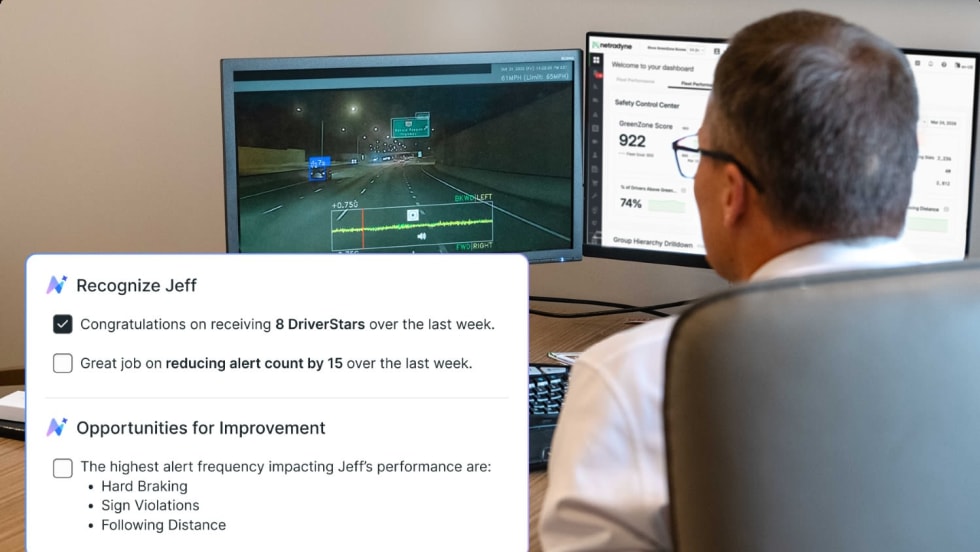
Netradyne Intelligence Uses New AI Agents to Automate Response to In-Cab Camera Data
The company called the next-generation in-cab camera safety platform "a fundamental shift from systems that report on what happened to systems that actively drive what should happen next."
Read More →
Why Truck Detention Keeps Costing Fleets Time and Money
A 2024 ATRI study found detention affects nearly 40% of truckload stops and costs the industry more than $15 billion annually. Despite the toll on drivers, fleets, and supply chains, the problem remains stubbornly persistent.
Read More →