




FMCSA Considering Changes to ELD Rules
The Federal Motor Carrier Safety Administration is asking for comments on how to improve its mandatory electronic logging device regulations, which potentially could result in the first substantial changes to the ELD rules since their implementation.

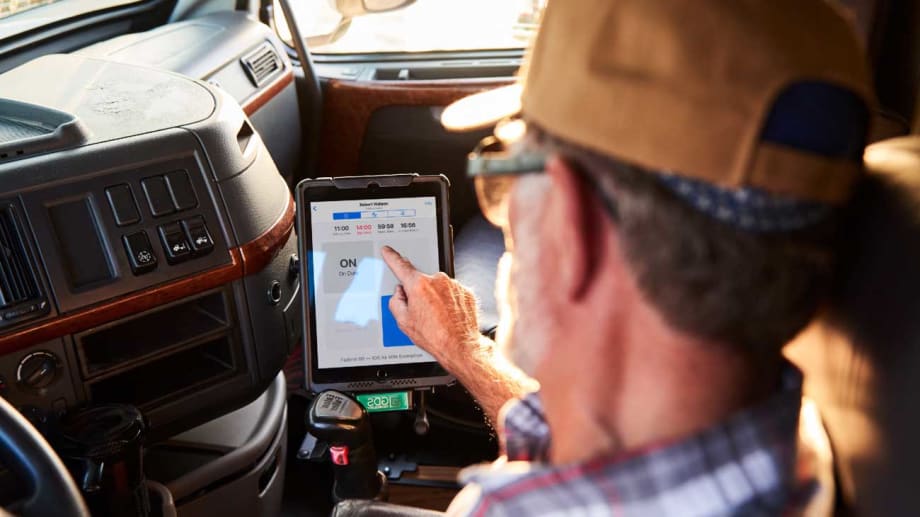
FMCSA is asking for input on potential changes to its electronic logging device (ELD) rules.
Photo: Verizon Connect
The Federal Motor Carrier Safety Administration is asking for comments on how to improve its mandatory electronic logging device regulations, which potentially could result in the first substantial changes to the ELD rules since their implementation.
In an advance notice of proposed rulemaking, FMCSA said it wants to improve the clarity of the current regulations and address concerns about the technical specifications raised by industry stakeholders.
There are five areas where the agency is considering changes:
Applicability to pre-2000 engines.
Addressing ELD malfunctions.
The process for removing ELD products from FMCSA’s list of registered devices.
Technical specifications.
ELD certification.
The December 2015 ELD final rule established minimum performance and design standards for ELDs; requirements for the mandatory use of these devices by drivers; requirements concerning hours-of-service supporting documents; and measures to address concerns about harassment resulting from the mandatory use of ELDs.
In its notice, FMCSA said it “believes that the lessons learned by agency staff, state enforcement personnel, ELD providers, and industry over the last few years can be used to streamline and improve the clarity of the regulatory text and ELD technical specifications and resolve questions that have arisen. In addition, technical specifications could be updated to address concerns raised by affected parties and improve the functionality of ELDs.”
ELD Certification
Although this was the final question in the agency’s notice, it may be the most significant. FMCSA’s self-certification process for ELDs was controversial. In Canada, ELDs must be certified to meet the regulatory requirements by a third-party verification agency approved by the government. FMCSA is asking if it should establish a certification process for ELDs here in the U.S., and if so, what that certification process would look like and the impact of it on the industry and on existing devices.
Removing ELDs From the FMCSA’s List
The agency has several questions about the process for revoking non-compliant ELDs from its list of registered self-certified ELDs:
If an ELD provider goes out of business and fails to self-revoke, should FMCSA be able to immediately remove the device from the registered ELD list?
The ELD rule requires ELD providers to keep their information current. However, the rule does not include a time restriction Should FMCSA require ELD providers to update their listing within 30 days of any change, and/or to confirm their information on an annual basis? Should an ELD provider’s ELD be removed from the list if it fails to confirm or update its listing on an annual basis?
Currently ELD providers must respond to an FMCSA written notice of required corrective action within 30 days to stay on the list. Then the provider is given 60 days after the agency provides a written modification to the notice of proposed removal or notice to affirm the proposed removal. Should FMCSA consider decreasing the 60-day period to 30 days, in order to more quickly remove an ELD with non-compliance issues?
ELD Technical Specifications
The agency has the most questions about ELD technical specifications. In addition to a general question of what FMCSA should do to ensure that ELD specifications remain current with advances in technology, it asks questions such as:
If ELD data output files could contain version numbers of software and firmware.
If certain data elements should be added to every event that could eliminate the requirements of providing power up and shut down events from vehicles a driver has previously operated.
Whether the devices should track certain driving activity more frequently than they currently do.
Whether to make permanent a yard-move exemption it has granted on a temporary basis
Whether ELDs should automatically change a driver’s duty status if he/she powers down without first manually switching the duty status
Whether drivers should be permitted to place themselves in certain exempt statuses.
ELDs and Pre-2000 Engines
The ELD rule exempted vehicles with pre-2000 engines because the belief was they did not have the sophisticated electronics required. However, in its ANPRM, FMCSA said many of those vehicles, and most vehicles with rebuilt pre-2000 engines, do have engine control modules (ECMs) installed that could accommodate an ELD. The agency wants comments on whether it should re-evaluate or modify the applicability of the current ELD regulation for rebuilt or re-manufactured CMV engines or glider kits.
ELD Malfunctions
Currently, drivers are required to switch to paper logs when an ELD malfunctions. They also require a driver to follow the motor carrier and ELD provider recommendations when a data diagnostic event is logged. Whenever an ELD fails to record a driver’s hours, enforcement personnel must be able to review the driver’s paper logs. By contrast, when an ELD malfunctions but continues to record the driver’s hours accurately, the driver should not switch to paper logs. FMCSA is asking whether it should clarify when a driver must switch to paper logs.
You may submit comments identified by Docket Number FMCSA-2022-0078 through the Federal eRulemaking Portal.
Learn more as HDT's Deborah Lockridge Talks to TruckSafe Consulting's Brandon Wiseman on this episode of HDT Talks Trucking:
More Safety & Compliance
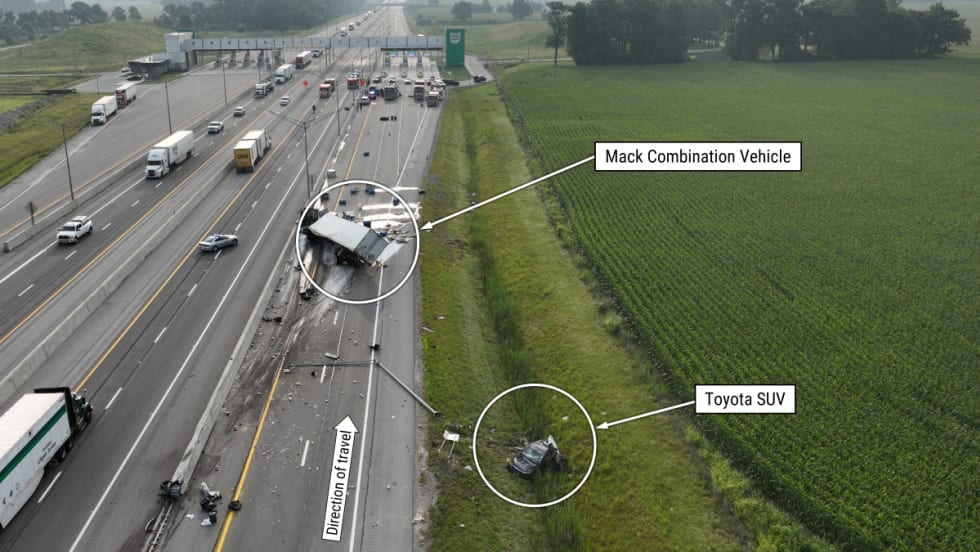
Fatal Crash Exposes Toll Plaza Risks
An NTSB investigation found that last-minute lane changes and large speed differences at an Ohio toll plaza created a hazard the truck driver couldn't avoid in time.
Read More →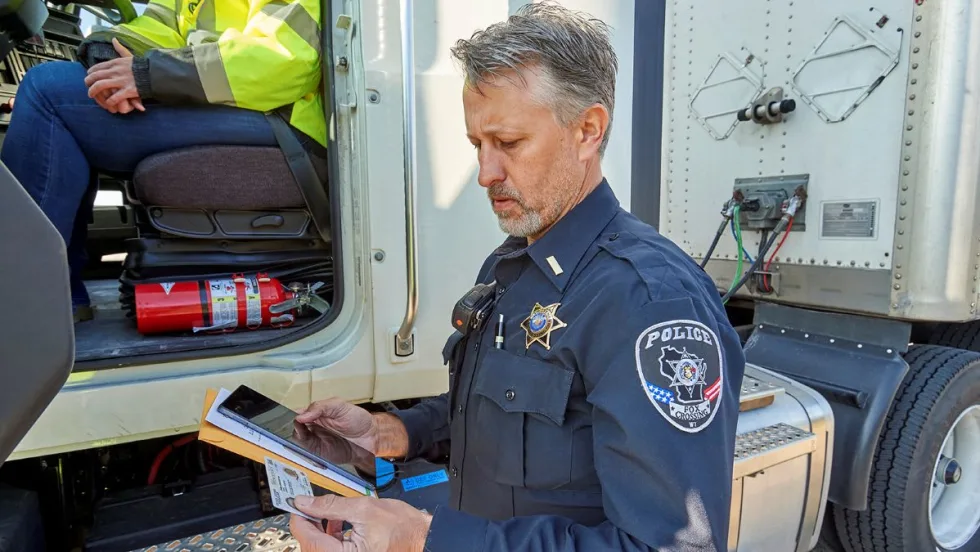
When Language Stops the Truck: The Return of ELP Out-of-Service Orders
English language proficiency rules for commercial drivers aren’t new, but renewed out-of-service enforcement has raised the stakes. Here’s what carriers need to know before a driver reaches a roadside inspection.
Read More →
A Camera Isn't a Safety Program. Here's What Brokers Are Screening for Now
Footage alone may not be enough to pass broker vetting processes. Here's what counts as a defensible safety program now.
Read More →

Marijuana and Trucking’s Drug-Testing Dilemma
Marijuana is getting stronger, laws are changing, and drug tests still can’t reliably establish impairment. What does that mean for truck drivers and the fleets that employ them?
Read More →
PrePass, Kodiak Connect Driverless Trucks to Roadside Enforcement
The system will allow enforcement agencies to verify Enhanced Inspection information and decide whether Kodiak’s autonomous trucks can bypass roadside screening sites.
Read More →
From One Generation to the Next: How Mentorship Builds Safer Truck Drivers
After three decades in trucking, Harold Perry shares what he's learned about driver safety, mentorship, and helping the next generation build confidence behind the wheel.
Read More →
FMCSA Pauses Biennial-Update Enforcement Amid Motus Transition
Carriers whose updates were due on or after June 1 have more time, while FMCSA works to stabilize its new registration system and warns of phishing sites impersonating its new carrier registration system, Motus.
Read More →
ZF Expands Commercial Vehicle Push in North America
ZF is expanding its North American commercial-vehicle presence with new transmission applications, electrification, trailer technology and autonomous-driving systems.
Read More →
Truck Drivers Need More Than Another Alert
Fleets have more visibility into truck health, safety events, and driver activity than ever. The next challenge is turning all that information into useful guidance for the person who has to decide what to do next.
Read More →
Tesla Wants a Self-Driving Semi. Are Cameras Enough?
Could Tesla’s camera-only autonomous driving technology work on an 80,000-pound Semi? In this commentary, HDT's Deborah Lockridge takes a look at Tesla, Cybercab, and how autonomous trucks see the road.
Read More →