




FHWA Develops New Technology For Identifying Congestion
The American Transportation Research Institute and the Federal Highway Administration have developed a way to measure truck congestion as a step toward improving freight distribution
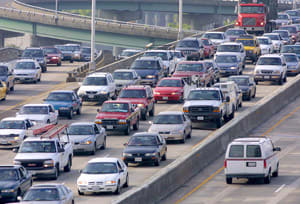
FPMweb can help fleets avoid congested areas around the country. (Photo courtesy of the Virginia Department of Transportation)
The American Transportation Research Institute and the Federal Highway Administration have developed a way to measure truck congestion as a step toward improving freight distribution.
In a report released yesterday called 2009 Bottleneck Analysis of 100 Freight Significant Highway Locations, ATRI and FHWA provide an assessment that gives transportation planners real truck operations data to help with their decisions, said Keith Bucklew, director of freight mobility at the Indiana Department of Transportation.
The research uses global position systems and truck-specific data to create a congestion severity ranking for each of the 100 locations, ATRI said in its announcement.
At the top of the congestion list is the Chicago intersection at I-290 and I-190/I-94. Chicago comes in second, as well, at the intersection of I-90 and I-94 North. Fort Lee, N.J., at I-95 and S.R. 4, comes in third.
"The continued monitoring of freight-significant highways by ATRI and FHWA provides both the private and public sectors with the ability to identify and address deficiencies in the freight system," said Chad England, president of C.R. England North America, in a statement.
"As this research moves forward, the myriad system performance measures that FPM generates will allow decision makers to prioritize highway investment in a way that targets critical needs. Additionally, the private sector can use this research to identify opportunities for routing through congested areas."
How it works
The new Freight Performance Measures web-based tool, FPMweb, measures operating speeds for trucks at any given place and point in time along 25 interstate highways that are considered significant freight routes.
"It's all about using innovative technology to save time and money and to boost commerce and the economy," said Victor Mendez, FHWA administrator. "Timely and accurate information on freight movement will benefit both government and the private sector in making transportation decisions."
FPMweb captures information on truck travel speeds through on board GPS and satellite technology. Low speeds reflect congestion levels at a particular location and time of day.
For the complete study, go to www.atri-online.org.
More Drivers

From One Generation to the Next: How Mentorship Builds Safer Truck Drivers
After three decades in trucking, Harold Perry shares what he's learned about driver safety, mentorship, and helping the next generation build confidence behind the wheel.
Read More →
Truck Drivers Need More Than Another Alert
Fleets have more visibility into truck health, safety events, and driver activity than ever. The next challenge is turning all that information into useful guidance for the person who has to decide what to do next.
Read More →
FMCSA Removes 110 Truck Driver Training Schools from Certified ELDT List
Federal regulators also are targeting more than 160 additional training providers and launching a nationwide audit of third-party CDL skills testers as part of a broader crackdown on trucking fraud.
Read More →
Hours of Service Pilot Programs: FMCSA Readies for 2027 Rollout
Two pilot programs could eventually reshape hours-of-service rules, giving truck drivers options to pause their 14-hour clock or use longer split sleeper rest periods.
Read More →
Medical Cards, English Proficiency Reshape Roadcheck Violations
Medical-card violations jumped to the top of the driver out-of-service list during CVSA’s 2026 International Roadcheck, while English-language proficiency violations appeared among the leading violations for the first time.
Read More →
Driver Trust Can Make or Break the Success of Fleet Safety Technology
New Teletrac Navman research suggests that onboarding, transparency about driver data, and positive feedback can play a significant role in how commercial drivers respond to safety and coaching technology.
Read More →
EEOC Sues KLLM Over Alleged Sex Discrimination in Driver Training
KLLM is facing a federal sex-discrimination lawsuit over policies the EEOC alleges put female truck driver trainees at a disadvantage.
Read More →
FMCSA Moves to Codify English Language Requirements for Commercial Drivers
By changing regulations on English-language proficiency requirements for commercial drivers, rather than relying on a guidance memo, the FMCSA said future administrations won't be able to walk back the Trump administration's stricter enforcement with just a memo.
Read More →
Drivers Put Western Star Trucks to the Test at Star Nation Experience
Watch to get an inside look at the Western Star trucks, technology, and community behind the Star Nation Experience 2026!
Read More →
Trump Administration Looks to Put More Veterans Behind the Wheel
The Freedom Haulers program pulls together existing and expanded programs at several federal agencies to recruit veterans to drive commercial heavy-duty trucks and cut the red tape for them to get a CDL, training, and employment.
Read More →