




Ferro Discusses Split Sleep Study, CSA, Hours of Service, Electronic Logs at MATS Fleet Forum
MATS, LOUISVILLE -- While encouraging audience members to file their comments on recently proposed legislation for mandatory electronic logs and the agency's research into new-entrant requirements, Federal Motor Carrier Safety Administrator Anne Ferro last week also noted that the agency is going ahead with a pilot study of split sleep.

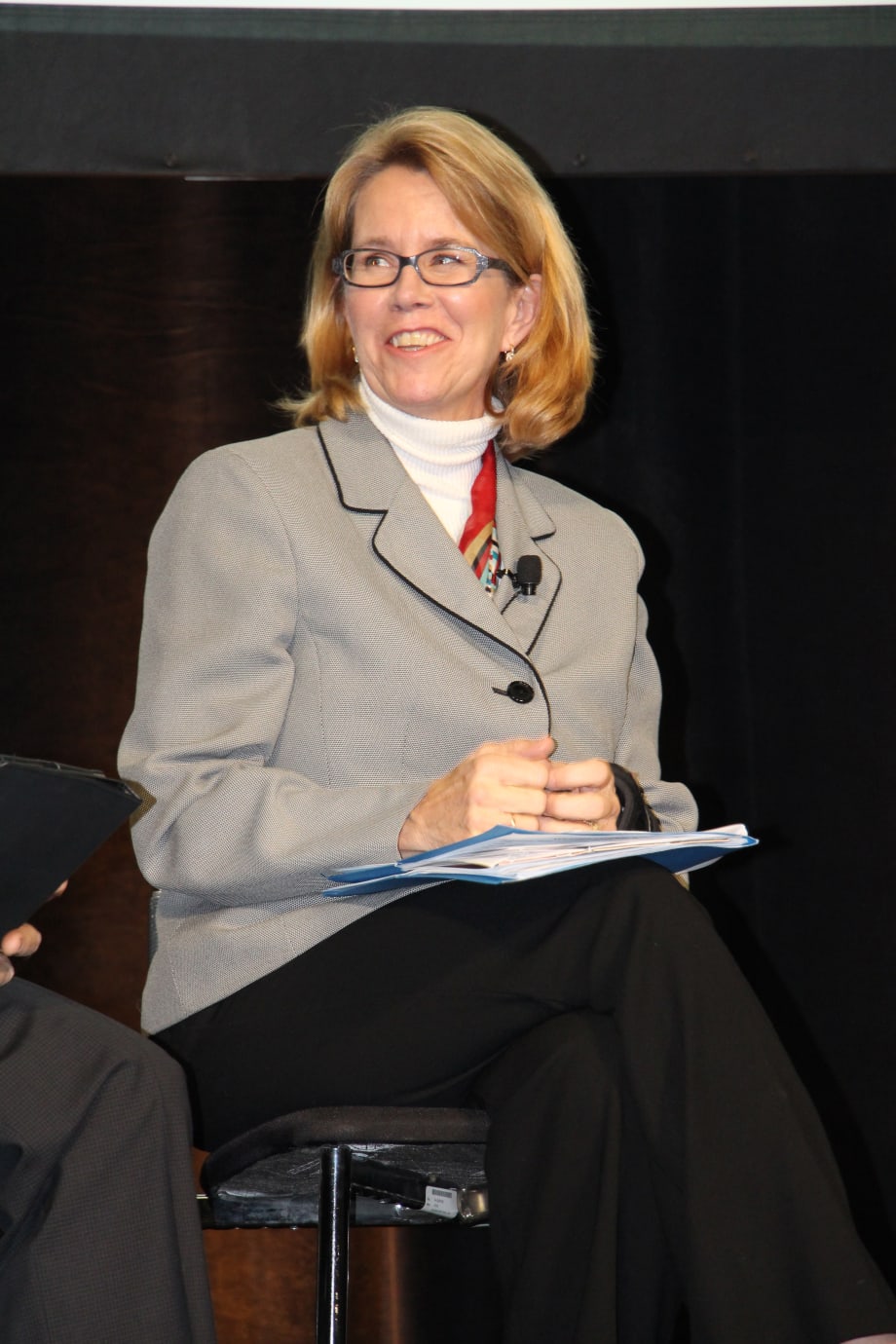
Anne Ferro during the MATS Fleet Forum. Photo: Evan Lockridge
Anne Ferro during the MATS Fleet Forum. Photo: Evan Lockridge
MATS, LOUISVILLE -- While encouraging audience members to file their comments on recently proposed legislation for mandatory electronic logs and the agency's research into new-entrant requirements, Federal Motor Carrier Safety Administrator Anne Ferro last week also noted that the agency is going ahead with a pilot study of split sleep, a provision of revised hours of service regulations that has been sorely missed by some team operations.
Speaking at the Mid-America Trucking Show Fleet Forum event prior to the Mid-America Trucking Show last week, Ferro noted that the agency does respond to feedback and criticism, whether it's from the trucking industry or oversight agencies like the General Accountability Office or the DOT's own inspector general.
Talking about the Compliance, Safety, Accountability enforcement program, Ferro said, "We've got a strong program out there but it’s a program that can always improve. We have an analysis from the GAO, that said we're using too much data … and the NTSB (National Transportation Safety Board) did a scathing analysis and said we're not using our data enough. We're in a little big of a Goldilocks situation."
"Congress has mandated that we reduce commercial motor vehicle crashes, regardless of fault," Ferro emphasized.
One thing you can expect to see, she said, are some changes in the DataQs system, which is used for challenging inaccurate CSA data. When a state violation is dropped, she said, the agency will remove those points from the fleet's CSA scores.
In addition to CSA, another one of FMCSA's recent changes that has drawn industry criticism is last year's new hours of service regulations, particularly the changes to the 34-hour restart.
Ferro addressed criticisms that the changes requiring rest from 1-5 a.m. during the restart are harmful to drivers who regularly drive the night shift.
"Even a nighttime scheduled driver tends to flip back to nighttime sleep when they're off," she said. She said research has shown that daytime sleep is the least recuperative. Night sleep is best, and split sleep is in between.
"Split sleep could be a better option for drivers overnight than what we have today," she said. Recognizing this, she said, and that soon-to-be-mandated electronic logging devices could help police driver behaviors, "we are moving ahead with a pilot study of split sleep to see how you can reintroduce some of that flexibility" that some in the industry lament losing under the latest HOS regs.
The agency is working with the American Trucking Associations, the Owner-Operator Independent Drivers Association and the National Association of Small Trucking Companies to craft a pilot study.
Another thing the agency is studying, she said, is the correlation between payment method and safety. Paying someone by piecework (by the mile) pushes individuals to do more in the same time. Add lengthy unpaid detention times to that, she said, and it can make the situation worse.
"So we are also doing a study on different methods and models of driver compensation. We'll probably have preliminary results on that near the end of 2015."
As head of the Maryland Motor Truck Association before becoming FMCSA Administrator, Ferro said, "I heard time and time again that the key is to get to a level playing field – if the agency is requiring this they need to make sure folks aren't cutting corners.
"We need to continue to work harder to make sure the ones that are cutting corners have what they need to know to get better, the incentives to get better, or the enforcement actions to get them off the street."
However, Ferro noted that "the rules -- the theories, the research and the data analysis behind those rules -- are realized on the road with that driver, that carrier, that piece of equipment. We need to be familiar with the industry and how it's operating within those rules."
To get a better sense of that, she said, last fall she did a ride-along with a small business owner-operator, an overnight trip ("he was kind enough to stay in hotel while I stayed in the truck.")
"I was trying to do more listening than talking as he shared the impact of the hours of service rules, what it was like operating in an environment of tremendous unpredictability."
More Drivers

Truck Drivers Need More Than Another Alert
Fleets have more visibility into truck health, safety events, and driver activity than ever. The next challenge is turning all that information into useful guidance for the person who has to decide what to do next.
Read More →
FMCSA Removes 110 Truck Driver Training Schools from Certified ELDT List
Federal regulators also are targeting more than 160 additional training providers and launching a nationwide audit of third-party CDL skills testers as part of a broader crackdown on trucking fraud.
Read More →
Hours of Service Pilot Programs: FMCSA Readies for 2027 Rollout
Two pilot programs could eventually reshape hours-of-service rules, giving truck drivers options to pause their 14-hour clock or use longer split sleeper rest periods.
Read More →
Medical Cards, English Proficiency Reshape Roadcheck Violations
Medical-card violations jumped to the top of the driver out-of-service list during CVSA’s 2026 International Roadcheck, while English-language proficiency violations appeared among the leading violations for the first time.
Read More →
Driver Trust Can Make or Break the Success of Fleet Safety Technology
New Teletrac Navman research suggests that onboarding, transparency about driver data, and positive feedback can play a significant role in how commercial drivers respond to safety and coaching technology.
Read More →
EEOC Sues KLLM Over Alleged Sex Discrimination in Driver Training
KLLM is facing a federal sex-discrimination lawsuit over policies the EEOC alleges put female truck driver trainees at a disadvantage.
Read More →
FMCSA Moves to Codify English Language Requirements for Commercial Drivers
By changing regulations on English-language proficiency requirements for commercial drivers, rather than relying on a guidance memo, the FMCSA said future administrations won't be able to walk back the Trump administration's stricter enforcement with just a memo.
Read More →
Drivers Put Western Star Trucks to the Test at Star Nation Experience
Watch to get an inside look at the Western Star trucks, technology, and community behind the Star Nation Experience 2026!
Read More →
Trump Administration Looks to Put More Veterans Behind the Wheel
The Freedom Haulers program pulls together existing and expanded programs at several federal agencies to recruit veterans to drive commercial heavy-duty trucks and cut the red tape for them to get a CDL, training, and employment.
Read More →
Putting Mack’s Command Steer to the Test
A test drive of Mack’s Command Steer active steering system evaluates how it can make truck driving easier and less tiring.
Read More →