




Federal HOS Research Studies Flawed, ATA, NIT League Charge
Research into driver fatigue that federal authorities recently added to the hours of service docket is faulty and should not be used to make policy changes to the hours rule, the American Trucking Associations charged
Research into driver fatigue that federal authorities recently added to the hours of service docket is faulty and should not be used to make policy changes to the hours rule, the American Trucking Associations charged.
The National Industrial Traffic League also said the studies are flawed and do not support conclusions by the Federal Motor Carrier Safety Administration.
FMCSA last month cited four studies that generally indicate that safety risk increases as work and driving time increases. They are among arguments the agency is using to try to change current HOS rules.
But two of the studies, one by Penn State and the other by the Virginia Tech Transportation Institute, are flawed in their methodology and conclusions, ATA said Wednesday in a letter to FMCSA Administrator Anne Ferro.
The association's analysis is based on several papers prepared for ATA by Ronald Knipling, a leading truck safety researcher who has worked at both VTTI and FMCSA.
In one paper Knipling explained the importance of distinguishing types of crash causes when analyzing truck safety. He said the Large Truck Crash Causation Study shows that a single-vehicle truck crash is much more likely to be caused by an impairment such as fatigue, or bad behavior, than a crash involving another vehicle.
This paper emphasizes "the acute need to disaggregate crash data in order to understand crash cause and make appropriate policy decisions," ATA's letter said. "Neither the Penn State nor the VTTI study FMCSA recently placed in the hours of service docket do so."
Knipling faulted the methodology of the Penn State study and said, "It would be erroneous and unwarranted to accept Penn State's principal findings and conclusions without extensive re-analysis, internal validation, and external replication."
The VTTI study contains a treasure trove of data but is based on narrow hypotheses, and needs more analysis before its conclusions can be accepted as sound science, he said.
Knipling's research "underscores how weak FMCSA's case for (HOS) change really is," ATA President Bill Graves said in a statement. "We have said from the beginning that changes to the rule must be made based on sound science and hard evidence, not political motivations.
"FMCSA should abandon its ill-advised proposal and turn its focus to improving enforcement of the current, effective hours-of-service rule."
The National Industrial Traffic League, representing member shippers, said in its comments that the feds' studies are not persuasive.
The Penn State study implies that fatigue caused the crash risk and that the risk increased with each driving hour, but it makes no attempt to verify that the crashes were caused by fatigue, the NIT League said.
And the VTTI study does not validate the conclusions that increased crash risk over a 14-hour duty period or after a rest period is a matter of driver fatigue.
"The study shows no appreciable increase in crash risk between the 10th and 11th driving hours, which would support a change to the current rule," the League said.
FMCSA has pushed back the scheduled date for completion of the hours of service revision. Originally it was to done next month but now the agency says it will publish the final rule by October 28.
More Drivers
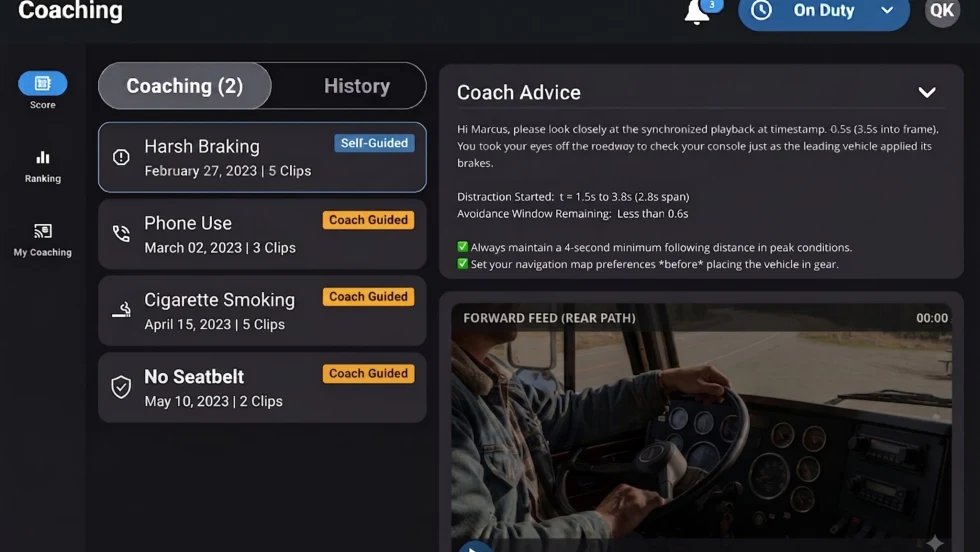
Platform Science Adds Dispatch and Safety Tools
Four additions to PS Fleet help fleets monitor loads, manage driver coaching, share truck locations and adjust video system settings.
Read More →
When Language Stops the Truck: The Return of ELP Out-of-Service Orders
English language proficiency rules for commercial drivers aren’t new, but renewed out-of-service enforcement has raised the stakes. Here’s what carriers need to know before a driver reaches a roadside inspection.
Read More →
Samsara Launches Custom AI Agent Builder
Agent Studio lets fleets create AI tools for hours-of-service monitoring, reporting and driver support, including agents that communicate by phone.
Read More →
Trucker Path Expands Reserved Parking Network
Trucker Path has added close to 6,000 more truck parking spaces to its Trucker Path Reserved Parking Network with the addition of Safe Truck Parking.
Read More →
EEOC Sues Texas Trucking Company Over Driver Age Limits
The agency says Trancasa USA rejected applicants over 65 and applied tougher driving-record standards to those over 60.
Read More →
Nussbaum, Roehl Announce Second Driver Pay Increase This Year
This year has seen a swath of major truck driver pay increases as freight capacity has tightened.
Read More →
From One Generation to the Next: How Mentorship Builds Safer Truck Drivers
After three decades in trucking, Harold Perry shares what he's learned about driver safety, mentorship, and helping the next generation build confidence behind the wheel.
Read More →
Truck Drivers Need More Than Another Alert
Fleets have more visibility into truck health, safety events, and driver activity than ever. The next challenge is turning all that information into useful guidance for the person who has to decide what to do next.
Read More →
FMCSA Removes 110 Truck Driver Training Schools from Certified ELDT List
Federal regulators also are targeting more than 160 additional training providers and launching a nationwide audit of third-party CDL skills testers as part of a broader crackdown on trucking fraud.
Read More →
Hours of Service Pilot Programs: FMCSA Readies for 2027 Rollout
Two pilot programs could eventually reshape hours-of-service rules, giving truck drivers options to pause their 14-hour clock or use longer split sleeper rest periods.
Read More →