




EU Approves Tougher, Broader Heavy-Duty CO2 Emissions Cuts
The European Parliament approved a mandatory target to reduce 90% of CO2 emissions from new heavy trucks by 2040. The regulation sets tougher standards than previous EU legislation and widens the scope of vehicles covered.

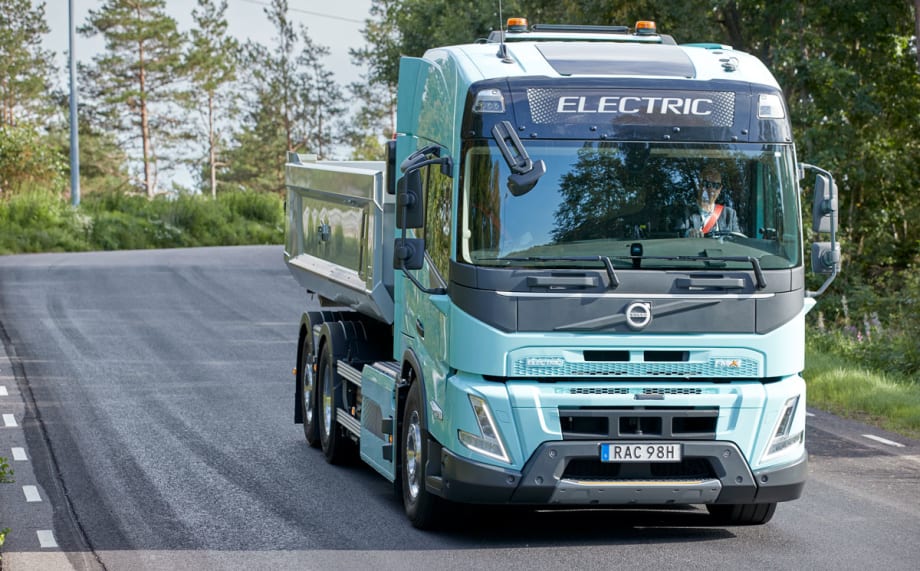
New EU CO2 rules broaden the scope to include vocational trucks.
Photo: Volvo Group
The European Parliament approved a mandatory target to reduce 90% of CO2 emissions from new heavy trucks by 2040. The regulation sets tougher standards than previous EU legislation and widens the scope of vehicles covered.
CO2 emissions from large trucks (including vocational vehicles, such as garbage trucks, tippers or concrete mixers) and buses will have to be reduced by 45% for the period 2030-2034, 65% for 2035-2039 and 90% as of 2040.
By 2030, new urban buses will need to reduce their emissions by 90% and become zero-emission vehicles by 2035.
Emissions reduction targets are also set for trailers (7.5%) and semi-trailers (10%), starting in 2030.
The regulatory scope has been significantly expanded to include more truck types, buses, coaches, trailers, and vocational vehicles such as garbage trucks. Under this new scope, over 90% of all new truck and bus sales are covered by the revised CO2 standards, up from 65% under the original standards.
The law requires the European Commission to conduct a detailed review of the effectiveness and impact of the new rules by 2027. This review will need to assess topics such as:
Whether to apply the rules to small lorries.
The role of a methodology for registering HDVs exclusively running on CO2-neutral fuels.
The role that a carbon correction factor could have in the transition toward zero-emission heavy-duty vehicles.
European Trucking Industry to Experience 'Transformative Shift'
“What seemed inconceivable just years ago is now the unequivocal path forward,” said Felipe Rodríguez, director of the Heavy-duty Vehicle Program at the International Council of Clean Transportation, a research organization advising governments on transport decarbonization.
“This historic legislation offers clarity to industry, leveraging zero-emission heavy vehicles as the most technologically feasible and cost-effective route to meet Europe’s climate goals,” Rodriguez said in a statement, saying that the trucking industry “is about to experience a transformative shift.”
According to ICCT, manufacturers must progressively introduce cleaner vehicles into the market to avert fines. On average, new trucks need to emit 43% less CO2 in 2030 than they did in 2019, 64% less in 2035, and 90% less in 2040.
City buses will witness an even swifter transition, with 90% of sales required to be zero-emission by 2030 and a complete phase-out of fossil-fueled bus sales by 2035.
Although the council still needs to formally approve the agreement, the European Parliament said the deal had been already agreed upon with the Council before the Parliament vote.
Truck and Bus Makers: 'Vital Enabling Conditions' Needed to Meet Ambitious CO2 Goals
13 CEOs of leading European vehicle manufacturers and suppliers met with the EU Commissioner for Climate Action, Wopke Hoekstra, for roundtable to discuss the green transition, according to ACEA, the association representing auto and truck makers in Europe.
During the roundtable, both European truck and bus manufacturers said they are committed to providing the right vehicles to move the road transport industry into fossil-free solutions by 2040, focused on battery-electric and hydrogen-powered vehicles.
Achieving the CO2 reduction targets remains highly ambitious in the near absence of vital enabling conditions, such as a dense network of truck-suitable charging and refuelling stations and a supportive carbon pricing framework to ensure cost parity for zero-emission vehicles, according to ACEA. European vehicle makers called on Europe’s policy makers to take ambitious action to address these concerns.
In addition, the truck and bus makers said, the internal combustion engine will continue to play a long-term role in heavy-duty transport, and that climate-neutral solutions and other complementary technologies will be needed to meet climate targets.
The European Automobile Manufacturers’ Association (ACEA) represents the 15 major Europe-based car, van, truck and bus makers: BMW Group, DAF Trucks, Daimler Truck, Ferrari, Ford of Europe, Honda Motor Europe, Hyundai Motor Europe, Iveco Group, JLR, Mercedes-Benz, Nissan, Renault Group, Toyota Motor Europe, Volkswagen Group, and Volvo Group.
More Fuel Smarts

How Volvo Updated Its D13 for EPA 2027 [Watch]
Volvo’s updated D13 promises lower emissions without sacrificing performance or fuel economy. Take a closer look at what changed inside the engine in this HDT Spotlight video.
Read More →
Diesel Price Spike Shortens Payback for Natural Gas Trucks, Report Says
Energy Vision estimates fleets could recover the higher purchase price of an RNG-fueled Class 8 tractor in 1.3 to 2.8 years under current fuel-price scenarios.
Read More →
Calstart Becomes Catalyst Mobility, Reflecting Broader Focus
Calstart is now Catalyst Mobility, reflecting the nonprofit’s growing national role in clean transportation, including zero-emission trucks, infrastructure and incentive programs.
Read More →

Record Diesel Prices Squeeze Trucking Fleets
Average U.S. diesel prices have climbed to nearly $6 a gallon, surpassing the 2022 record as tight refinery capacity and Middle East disruptions keep fuel costs elevated.
Read More →
How Fuel Delivery Shapes Engine Performance
Fuel delivery depends on more than what happens at the injector. For fleet, maintenance and technical professionals, looking at the full path from pump to injector can provide useful context for understanding engine performance.
Read More →
East Coast Port Launches $45M Electric Truck Push
The Port Authority of New York and New Jersey announced millions in incentives for zero-emission drayage trucks, yard tractors, and new charging hubs near the port.
Read More →
California Bill Could Shed Light on Electric Truck Prices
Why do battery-electric Class 8 trucks remain so expensive? A California bill headed to Gov. Gavin Newsom would give fleets and state agencies more visibility into what manufacturers charge.
Read More →
Detroit Opens Orders for EPA 2027 Engines
Detroit isn’t starting from scratch to meet EPA 2027 diesel emissions standards. Its Gen 6 DD13 and DD15 engines keep much of today’s platform while updating the fuel and aftertreatment systems.
Read More →
Zero-Emission Truck Corridor Planned for West Coast
California, Oregon, Washington, British Columbia and Baja California are coordinating plans for truck charging and hydrogen fueling from Canada to Mexico.
Read More →
A Closer Look at Kenworth’s Electric T880E Vocational Truck [Video]
Learn more about Kenworth's T880E battery-electric vocational truck at the Paccar Technical Center, including its range, applications, upfitting considerations, and PTO options, in this HDT Spotlight video.
Read More →